adolescent literacies

a re-thinking/re-presenting/re-imagining space for all things adolescent

12.02.2009

who am i to do this? poetic musings on cross-cultural research

in 2004, i defended my doctoral dissertation.  this was both a proud and apprehensive moment for me, as i wrestled with questions of representation - had i done my boys justice? how were they being read and known at the end of this long process?  and how would they continue to be known as i made our stories known through my writing in years to come... i'm thinking about deborah appleman's essay titled, "are you making me famous or are you making me a fool?" and in the spirit of ongoing self-reflexivity, i reprint here the opening lines of my dissertation, complete with the opening epigraph:

If you have come to help me, you are wasting your
time. But if you have come because your liberation is
bound up with mine, then let us work together.
-Lila Watson

I am not an African American adolescent boy.
I have not been called a “superpredator,”
Or had prisons built in anticipation of my “delinquency” or on the basis of my third grade
scores on school-based reading assessments.

I am a South Asian American late-twenties woman.
I have been called a “good type of immigrant”
Whose school performance is lauded and whose labor is valued in an increasingly
globalized market economy; though my hue causes labor unrest.

We were a group of five African American boys and a South Asian American woman
Who told stories together
Had fun and played and
Made a place by co-constructing space to talk back, to
Story against and beyond the readily available and overly abundant
Images
of black boys in need
of remediation,
from deficient literacies;
in a state of corrections.
Ours are stories of ample reflection, hopeful digressions, strong critique, and possibilities.

These might be stories that no one wants to hear.
Who am I to do this?

-------------


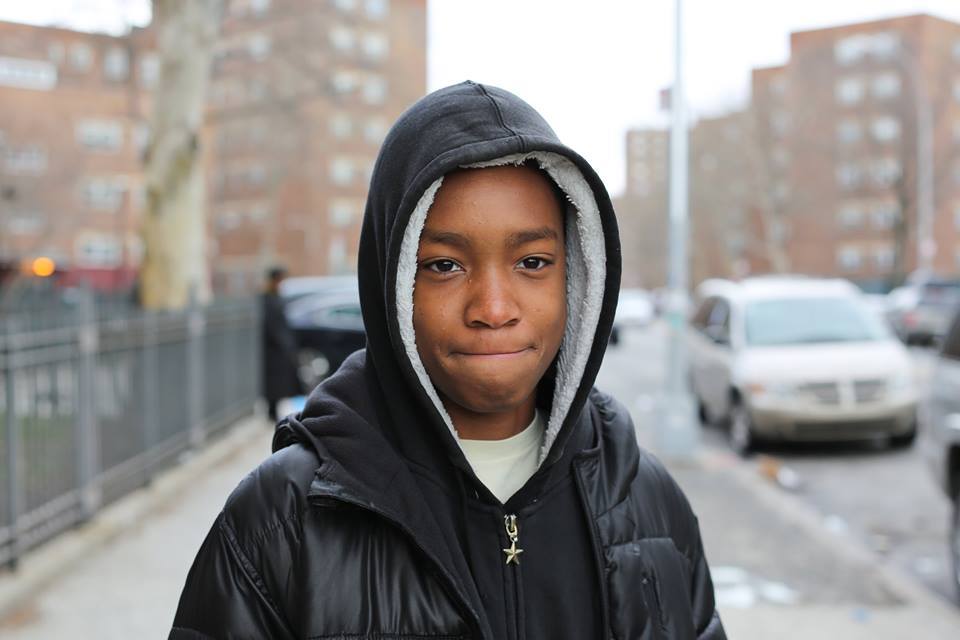
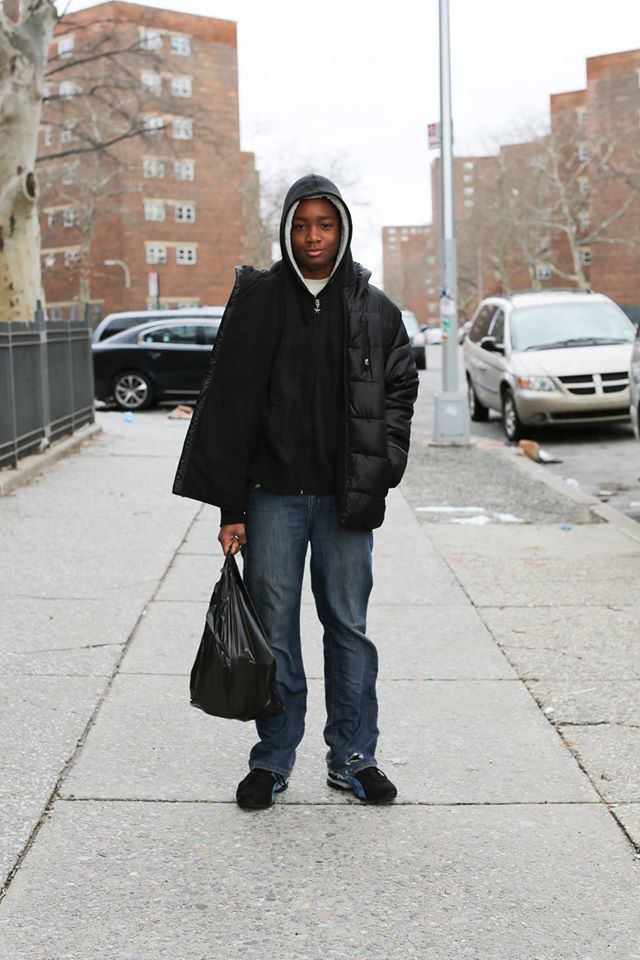
and an image that shows and tells much about our time together, that came to be known in our group as "our picture"


11.27.2009

The dangers of starting with and stopping at critique

I'm reading margery wolf's book, "a thrice told tale: feminism, postmodernism, and ethnographic responsibility." Just 14 pages in, one chapter finished, and I can sense my frustration with some of her discursive maneuvers - e.g. Reifying th existence of the other; adherence to "first-world"/"third-world" dichotomizing; pragmatism of ethnographer's authority; difficulty with assuming too reflexivity... It is the same skepticism, I suspect, that a statistician may feel upon reading narrative accounts of

But having been a reader for most of my life - an equally voracious reader of academic texts and those not intended as academic texts (but of course that is quite a blurry line...) - I know to keep my skepticism and discomfort at bay, so that I don't stop reading or, worse, make judgments and assumptions on text I have not consumed or interpreted. This is a danger that plagues not only some of the youth with whom I spend time - "Ugh. This is stupid! The author doesn't know what he's talking about." - but some of the graduate students who opt to take the classes I teach - "This research is offensive and clearly perpetuating negative stereotypes." When we are stuck in the paralysis of critique, it becomes difficult to find a way out. I have erroneously suggested a close re-reading, but as I am newly aware of my own paralytic tendencies, I realize that such a close (re)reading can only be effective if one's reading posture - metaphorical, but perhaps also literal, e.g. from hunched over a table to relaxing on the couch - retains a sense of possibility.

What is the author trying to say? What other texts and discourses are present in the authors' words and assumptions? How is the author using evidence, narrative structure, and language to convey an argument? What do you have to believe in order to take the author at her word?

We lose, it seems to me, our appreciation for the ontological underpinnings for the texts we engage daily. We are poised to agree and disagree. To critique and put down. To point out flaws and shortcomings. We are woefully underprepared - or perhaps unwilling - to consider the possibility of other realities, and to meaningfully engage with others' texts. Such "paralysis by critique" is evident in the overzealous student eager to participate in what s/he assumes is the only tradition of academic discourse; a subway rider expressing disdain for a young man's practice of quietly singing along with his mp3 player; a poltical pundit unable to cede the floor for anyone else's opinion to be heard; and on and on.

Maybe we all just need to learn how to read and appreciate reading (again). Although for some it may be the first time, especially as new reading curricula are stripped of appreciation - a recent casualty being, of course, the beloved "Reading Rainbow"...

11.26.2009

plurality of pedagogical postures

just as we have come to understand the plurality of literacies, i've begun to appreciate the nuanced and multiple nature of teachings and learnings.  in the beginning pages of teaching as a performing art, seymour sarason likens the practice of teaching to the experiences of dramatic performance.  he cites the incessant, no matter how miniscule, stage fright he feels when he enters 'the classroom' and the consequences of losing one's audience... i wonder if these principles hold true across pedagogical philosophies.  david hansen, in the call to teach, describes the pedagogical identity of one of the teachers he profiles in this way,
"[Mr. James] conducts himself as a moral agent--as a person, that is, who can have a positive influence on students--and as a moral educator--a person whose pedagogical obligation is to steer students toward the Good." (p. 68)
do we assume the same pedagogical posture, i wonder, across the multiple settings in which we teach and are taught?  and how might we retain our moral purpose - not to be confused with the rhetoric of morality and moral education that seeks to privilege certain values over others and is manifested in the guise of 'character education' or some 'civic education' curricula - to be, as hansen describes, a "moral educator" and engage in education with others?  (i, too, wonder about the Good - whose Good? how determined? and does the meaning of Good shift?...) if, like herve varenne and colleagues (see tc record, volume 109, july 2007) we recognize that "Education is fundamental to sociability and is ubiquitous in the everyday life of all human beings" (p. 1561), then how do we attend to the many moments of education in which we engage in daily and deliberately?  and how do teaching and education come together?  and how might we decouple learning from education?  education from schooling?  so that the practice of education is not reduced to discrete and simple transactions of information as freire feared when he argued against a "banking model of education?"

these questions, about our multiple pedagogical postures, swirl in my head as i think about the role of play in my own pedagogy.  there is an implicit disdain with which play is regarded outside of the elementary school classroom... laughter and humor, in measured amounts, are respectable, but the introduction of silliness, the absurd, or something too carnivalesque or "extravagant" (see boon - Verging on extra-Vagance) garners great skepticism.

lately i have felt beleaguered by a sense that my educational practice, in which i assume and inhabit the performances of a teacher as informed by the formal parameters of particular settings, has become hostage to my own hesitations about my moral purpose.  education is a site of possibility as well as conflict, and often both.  yet conflict resonates loudly, leaves residue on our psyches, and, if not effectively engaged, can be a poorly placed anchor in swift tides.  in the past, i've assumed/embraced/embodied a pedagogy of play, and implicit in such a way of being is a stance of with.  that is, a collaborative spirit with which to conceive of, understand, and take on an endeavor.  that stance, and its connected ways of knowing, has been challenged in interesting ways in recent months, leading me to more fully understand the role of community in how we come to know, and how we come to educate and be educated.  community in the form of kindred spirits, hearty debaters, and longtime allies, all of whom share in the spirit of education and inquiry that is both purposeful and also unpredictable; where interactions, however brief, are not merely sound bytes, but meaningful spaces of intellectual work and making known; and where intentionality is implicitly understood, and not critiqued within an inch of its life.  community is both conflict and possibility, inquiry and knowing; a kind of home we create to sustain our sense of self, of belonging, of purpose.

...

Multimodality and Learning Conference - updated info

Multimodality and Learning Conference: Environments, Rhetoric, Recognition, Play, and Methods
July 6th and 7th 2010
Institute of Education, London
Conference information
 
Aim and scope
The overall aim of the conference is to explore multimodal perspectives on learning and to open up theoretical, methodological and pedagogical questions and debate.The conference will be of interest to educational practitioners, research students,researchers and academics from a variety of disciplines including semiotics, linguistics, sociology, anthropology and design.
Call for papers (symposiums)
Individual call for papers

Thematic strands

  • Environments of learning: institutional, work based, and beyond
    School, home, work places, museums, digital environments
    Keynote: Dr Jonathan Hindmarsh, Kings College, London, UK
  • Rhetoric and the politics of representation and communication
    Narrative, persuasion, genre, argument, information design
    Keynote: Professor Lilie Chouliaraki, London School of Economics, UK
  • Recognition, evaluation, assessment
    Discourses of accountability, criteria for evaluation, power, processes of assessment
    Keynote: Professor Gunther Kress, Institute of Education, University of
    London, UK
  • Play: games, experience, and learning
    Oral traditions, ludic modes, cultures of play, play and creativity
    Keynote: Professor Suzanne de Castells, Simon Fraser University, Vancover,
    Canda and Dr Jennifer Jensen, York University, Toronto, Canada
  • Methodologies
    Multimodal data collection, transcription, analysis, multimodal dissemination
    Keynote: Dr Jennifer Rowsell, Rutgers University, New Jersey, USA and Dr
    Kate Pahl, Sheffield University, UK

11.13.2009

pedagogy that is culturally relevant

how do we move towards knowing in our everyday pedagogies?  what spaces to we find where we can play, free from institutional constraints?  in whose eyes do we see possibilities and to whose do we relegate despair?  how do maintain our sense of pedagogical pleasure(s) amidst perceived institutional constraints?  what might it mean to commune as teachers who are students of our students?  to spend time with youth outside the constraints of institutional labels, expectations, assumptions; and to descriptively observe their literacies in action? what are the ways in which we relate to one another?  how do we decide to look up or turn away?  when do we extend a hand or hasten our pace? to whom do we accord great variation in the performance of multiple selves? and from whom do we expect staid and limited representations of self? with whose purposes do embark on the journey of education? how, amidst the unsettling and unsettled, do we create a sense of home, of belonging together? and allow space for multiple, even disparate forms of belonging within a common site/moment/act of education?

11.03.2009

new book about harlem, youth, and multimodal literacy


Harlem on our minds: Place, race, and the literacies of urban youth
by Valerie Kinloch
Teachers College Press, 2009

Discourses of youth, gentrification, place, space, and literacies converge beautifully in this volume, collaboratively constructed by Valerie Kinloch and youth researchers, who explored changes going on in Harlem through a variety of modes, discursive interactions, and ongoing inquiry.

Definitely explore and purchase for your own reading, or to read with youth, undergraduate and graduate students interested the complicated intersections of identity, place, power, and narrative discussed in this book.


From the publisher:
In her new book, Valerie Kinloch investigates how the lives and literacies of youth in New York City’s historic Harlem are affected by public attempts to gentrify the community. Kinloch draws connections between race, place, and students’ literate identity through collaborative interviews between youth, teachers, longtime black residents, and their new white neighbors. Harlem on Our Minds is a participatory action narrative that makes emerging theories of social ecology real for the high-school English classroom. Vividly drawn lessons show how teachers can engage urban youth in school-based literacy, by linking canonical text, particularly of the Harlem renaissance, to current events. Centered on the literacy stories of two African American youth and their peers, this book for our times:
  • Showcases the multimodal literacy practices of urban youth through photos, writing samples, student-designed research projects, and more.
  • Weaves in multiple voices and perspectives through response pieces by project participants, local teachers, graduate students, and a community activist.
  • Features teaching strategies and reflection points in each chapter.

10.30.2009

multimodality and learning conference 2010 - call for papers

Multimodality and Learning Conference: Environments, Rhetoric, Recognition, Play, and Methods

July 6th and 7th 2010
Institute of Education, Bloomsbury, London, UK
Aim and scope
The overall aim of the conference is to explore multimodal perspectives on learning and to open up theoretical, methodological and pedagogical questions and debate. The conference will be of interest to educational practitioners, research students, researchers and academics from a variety of disciplines including semiotics, linguistics, sociology, anthropology and design.

Call for papers
We welcome symposia and individual papers on multimodality and learning that address the conference themes outlined in the attachment:  Thematic strands. Abstracts can be submitted using the forms available at: www.multimodality.org.uk. Further information on submitting an abstract will be posted on the website shortly.
All abstracts will be peer-reviewed. Deadline 5pm on 26th February 2010.

Registration
Conference fee: £200 full fee; Students £100. Lunch and light refreshments included, acommodation not included. Registration deadline 31 May 2010

Key dates
26th February 2010 Deadline for submission of abstracts 31st May 2010 Deadline for registration 6th and 7th July 2010
Conference Organizing committee: Centre for Multimodal Research, Institute of Education, University of London – Richard Andrews, Jeff Bezemer, Andrew Burn, Sophia Diamantopoulou, Carey Jewitt, Gunther Kress, Diane Mavers, Caroline Pelletier

10.25.2009

digital media and learning conference - call for papers, deadline: 10.30.2009

DML: First Annual Digital Media and Learning Conference
Conference Theme: "Diversifying Participation"
Call for papers - Deadline: October 30, 2009


Conference Committee: Henry Jenkins, David Theo Goldberg, Heather Horst, Mimi Ito, Jabari Mahiri and Holly Willis

Keynote speakers: Sonia Livingstone and S. Craig Watkins

(from the call)

DIVERSIFYING PARTICIPATION
A growing body of research has identified how young people's digital media use is tied to basic social and cultural competencies needed for full participation in contemporary society. We continue to develop an understanding of the impact of these experiences on learning, civic engagement, professional development, and ethical comprehension of the digital world.

Yet research has also suggested that young people's forms of participation with new media are incredibly diverse, and that risks, opportunities, and competencies are spread unevenly across the social and cultural landscape. Young people have differential access to online experiences, practices, and tools and this has a consequence in their developing sense of their own identities and their place in the world. In some cases, different forms of participation and access correspond with familiar cultural and social divides. In other cases, however, new media have introduced novel and unexpected kinds of social differences, subcultures, and identities.

It is far too simple to talk about this in terms of binaries such as "information haves and have nots" or "digital divides". There are many different kinds of obstacles to full participation, many different degrees of access to information, technologies, and online communities, and many different ways of processing those experiences. Participatory cultures surrounding digital media are characterized by a diversity that does not track automatically to high and low access or more or less sophisticated use. Rather, multiple forms of expertise, connoisseurship, identity, and practice are proliferating in online worlds, with complicated relationships to pre-existing categories such as socioeconomic status, gender, nationality, race, or ethnicity.

We encourage sessions that describe, document, and critically analyze different forms of participation and how they relate to various forms of social and cultural capital. We are interested in accounts of the challenges and obstacles which block or inhibit engagement to different forms of online participation. We also encourage session proposals that engage with successful intervention strategies and pedagogical processes enabling once marginalized groups to more fully exploit the opportunities for learning with digital media. Conversely, we are interested in hearing more about how marginal and subcultural communities find diverse uses of new and emerging technologies, pushing them in new directions and navigating a complicated relationship with "mainstream" forms of participation. Specifically, we seek to understand the following:
  • What can research on more diverse communities contribute to our understanding of the learning ecologies surrounding new media?
  • What are the technologies, practices, economic, and cultural divides that lead to segregation, "gated" information communities, and differential access?
  • When and how do diversity and differentiation in participation promote social and cultural benefits and opportunities, and when do they create schisms that are less equitable or productive?
  • What strategies have proven successful at broadening opportunities for participation, overcoming the many different kinds of segregation or exclusion which impact the online world, and empowering more diverse presences throughout cyberspace?
  • Are there things occurring on the margins of the existing digital culture that might valuably be incorporated into more mainstream practices?
In addition to these questions directly addressing the conference theme, we welcome submissions that address innovative new directions in research and practice relating to digital media and participatory learning.

Read more on conference website.

.