Showing posts with label reading. Show all posts

8.03.2012

Essayer -- Writing as Offering, Writing as Provocation


"If at first you don't succeed, 
try, try again."


Long before I was taught hand claps and nursery rhymes, years before I had any sense of children's literature or playground games, this refrain was imprinted onto my consciousness -- so palpable was its presence, I sometimes thought it really was tattooed across my forehead, nevermind that at two or three years of age I likely had no idea what a tattoo was.


Perhaps the great irony was that success never really factored into my mental equations about effort. Dwelling in the trying, that is to say in the doing of whatever happened to captivate my attention, was far more interesting to me than the winning or whatever other form success took. I read with great interest the article that Bronwyn Williams (@bronwyntw) shared  today via twitter, in which the author noted how much more content Bronze medalists seemed to be than those who had earned a Silver, the latter being among the many who lament what might have been (read: Gold) and the former characterized by a brow-wiping thankfulness that they earned/performed well enough to stand on the podium at all. 

The French verb essayer translates into english as "to try." An essay, thus, might be a trial of ideas, a beautiful proposition when you think about it, especially in a world where demonstrations of definitiveness and certainty are privileged over any form of unknowing. The essay is a genre of writing that Michel de Montaigne is credited with originating--that is, if genres are ever really originated, rather than merely being affixed in human history in association with a moment, event, or as in this case, a person. It helps, I suppose, that Montaigne's collection of writings that traversed the tricky terrains of a multitude of topics, was aptly named "Essays" (or "Essais") owing to their ponderous nature. Montaigne's essay, whose title is alternatingly translated as either "On Cannibals" or "Of Cannibals" from the French original "Des Cannibales," was written over 400 years ago and it, along with "Of Cruelty" are both included in that volume. I return to them often, and as such they have become, regardless of their relatively brutal monikers, my favorites, each holding amidst the words on the page (or screen, as it were...) an eerily calming prescience.


Montaigne's gifted the world with the essay -- of writing as a trial of ideas, an attempt, a discursive venture -- one that has become bastardized in many school-based curricula. How might he have responded to the ugliness of the phrase "five paragraph essay." How can you know it will take five paragraphs, he might have exclaimed with a start. What if I need three paragraphs to set up the experience? And what of paragraphs? Must a sentence necessary fall within the sweet spot of between 8 and twelve words? Some necessarily linger across more than a few lines. Shouldn't the question be whether you are able to come with me on this rhetorical ride, and not how well I can arrange words into the mold awaiting to be filled? And what's with all the words? Does argument or rhetorical offering lie solely with the word?

This week alone there have been several essays that caught my attention, gave me pause and moved me to wonder, brought me fully in while also pushing me to quickly look up a term or historical event or click on a link. They fulfill Emerson's postulate: "Truly speaking, it is not instruction, but provocation, that I can receive from another soul."

Go ahead. I dare you to try and remain unprovoked.


4.07.2012

Read at exactly the right time -- a collection

In response to the question: What have you read at exactly the right time?


Inside/Outside: Teacher Research and Knowledge by Marilyn Cochran-Smith and Susan Lytle

Hopscotch by Julio Cortazar

The Obscene Bird of Night by José Donoso

A Separate Peace by John Knowles


The Giver by Lois Lowry

Bartleby the Scrivener by Herman Melville

Gilead by Marilynne Robinson

3.18.2012

On reading and the joys of patient storytelling -- An incomplete essay


I’ve got a case of textual compulsion, I’ll tell them when they inevitably come to cart me away. I only wish I had the words when I was younger, when I would get lost in the words of others – not because my intention was to ignore my family or friends, but because the pages bound together inside the various hard and soft covers strewn haphazardly about the floor, on the shelves, and in the closet of my childhood bedroom bore keys to secret places and magical worlds where the improbable was the norm, where the norm seemed unimaginable, and where an author’s quotidian noticings of a piece of paper, pane of glass, or sounds of water splashing from an afternoon swim infused my adolescent melancholy with near-idiotic giddiness. It would be incomplete to say that I defined myself through my reading, although that statement, however trite, was true. No, it was more than that, more than stories and word paintings as a mere escape from reality or as the original Second Life. Rick Moody’s definition of textual compulsion comes close:

“it’s a joyful and exciting thing when you’re in the midst of it, textual compulsion.
true textual compulsion is that there has to be that element of sacrifice. Are you foregoing food and social relations? Are your personal relationships suffering? Are you going to read these books more or less sequentially?”

From my earliest memories, as a child and into adolescence, reading was an act through which I embraced the words and their creator (or perhaps their curator); the author was never far from my thoughts: where did she sit or stand or lounge when this image came into her mind? Was the story waiting for him or did he find his way into it? Who does this character remind her of? Was Kansas or the 7th century or a pair of green shoes or a windy day particularly important to him? Did she experience a moment like the one that Berger describes when a scattering transforms into a meaning-full constellation: “At a certain moment -- if you're lucky -- the accumulation becomes an image -- that's to say it stops being a heap of signs and becomes a presence.”

I was seven or eight years old the first time I selected a book for myself beyond the bins of books in the classroom. We – that is, my fellow classmates and I – had been escorted to the library by our teacher. (And if I am remembering correctly, this is our second grade teacher whose hair was never anything but extravagantly voluminous.) While most had chosen a book and were either sitting and reading or talking quietly with each other, I had wandered over to an unfamiliar section where the bookcases were higher – six shelves instead of three. This memory, true or not, is held in my mind’s eye much like a rubbing made from a stone carving or sculpture – textured, tactile, a once removed representation of the thing, a new thing itself. This differs from another reading memory in which I am performing my first solo read aloud of “Three Billy Goats Gruff” a couple of years earlier for my uncle who was visiting from London; this is my parents’ story, my uncle’s story, my grandmother’s story and has become a part of my mental memory box as part recall and part verbal reconstruction of the retellings of others. Charlotte Linde, during a talk she gave at Teachers College a few years ago, said of this very notion that “Our story exists in the memories and narratives of others.” And they in ours.

But that afternoon or morning in the library, Carolyn Keene felt like my own discovery and the adventures of Nancy, Bess, and George were mine to explore, free from the expectations of others. I have a constructed memory of the forest green, linen book cover with fraying, slightly yellowed corners and pages that were not pristine – evidence that more than a few someones before me had thumbed through them. Holding the book, I remember turning it around in my hands, already convinced that it would be my check out for the day, and opening to the back – not to the end of the story, an action I regard as wholly unholy within the covenant between writers and their readers, but to the inside back cover where a small, manila colored pocket had been affixed, inside of which was a white, lined card onto which names and dates had been written and crossed out with some ceremony. It’s one of the things I miss in this era of digital downloading (a club to which I happily belong). No longer are we privy to the glimpses of the lives a book was enmeshed in for a while before coming into our temporary guardianship. And it is perhaps why visiting used bookstores sparks in me a familiar sense of possibility of what might be found inside, on the shelves and table, inside the pages, tucked into book jackets. (We may never really know the secret lives of books.)

The relationship is an intimate one, between reader and writer. Amelie Rorty assumes as much in her essay “The ethics of reading” when she implores us, as readers, to consider the author’s house – a magnificent image as ever there was one for visualizing the structural integrity of words and their foundations into and out of which stories are written – in how we read a text. We are meant to investigate a text, not merely to “get the information” but also to consider how it is and was located in the life of the author, and to conceive of the author, therefore, as situated in the world. Answers to the many questions that Rorty invites us to consider in her essay are not meant to be definitive; hers is not advocacy for navigating “text complexity” – rather, we are meant, as readers, to render visible  to fall into as it were – the beauteous complexity of texts. Can there be anything more revealing than the words of others? The ones that find their way to the final publication draft no doubt had countless antecedents. And to find wordsmithing that evokes joy, wonderment, and a desire to reread even before the initial read is complete – how can such discoveries lead to anything but textual compulsion?

In his essay, from which I quote above, Moody was referring directly to the work of W.G. Sebald. Since first reading a few pages of The Emigrants online, at the suggestion of a colleague, I have been transfixed by Sebald’s writing. I can’t yet say with any degree of eloquence or articulation exactly why this author’s words stay with me long after I read them, and now I cannot separate the reading of his words from the extensive readings of the man; the story of his stories invite this reader in more fully, with a wide embrace. In the film “Patience (After Sebald)” by filmmaker Grant Gee, more of these authorial layers are lifted ever so slightly to allow glimpses of the author’s multiple and varied situatedness. Gee intentionally stacked his interviews with artists and in so doing created a filmic narrative that foregrounds Sebald’s artistic craft. (A favorite image is one that a colleague of Sebald’s constructs as he recalls the author’s practice of taking photographs with highly precise lenses, taking them to be developed at the local pharmacy, Boots, and then copying them again and again, sometimes literally taking an eraser to the copies in order to create just the right amount of blurring; with both images and words, Sebald artfully obfuscated even as he explicated, offered rich description in order to unsettle a reader’s complacency.)

And it was Sebald who led me to “Open City,” a book by Teju Cole that has come to be so much more than a title on my “already read” list. I have reread this book in its entirety and again in parts several times over since first learning of it through pure serendipity: a search for something Sebaldian, while I was participating in my colleague’s summer seminar in which we pored over and read closely several of Sebald’s works, yielded a list of reviews of the then-recently published Open City. What first caught my eye were the consistent comparisons made about Cole to Sebald. Having had an intense introduction to the latter, I was compelled to read the former. That simple decision, to read a book, brought me into an already-happening dialogue that the book's narrator, Julius, was having with the imagined reader (or perhaps with himself). Reading Cole, like Sebald, was a welcoming experience -- even as they offer new intellectual tributaries to follow, their prose also pulses with tropes that, while seemingly familiar, resonate precisely because they are largely unexplored. Reading their words was very much like discovering a secret that begged, at once, to be closely guarded and also to be shared with the world. As a reader, I had a full sense of belonging. I daresay in their words – words that journeyed far to bring the world nearer  I found a home. learned quickly, however, that it was I who was on a journey that was far from being over; whatever this was, it had barely begun. Textual compulsion was reincarnated in this moment and led to an experience of heightened awareness about myself as a reader; the lives of those who storied with grace, with measure, and with nuance beckoned through their words. And each of these authors is careful with his words. That’s not to say that their writing is guarded or distant – in fact, quite the opposite is true. The narrative in Sebald’s The EmigrantsAusterlitz, and Rings of Saturn and Cole’s Open City is unhurried, attentive, embodying what Cole himself has described as a “breathable” quality. In these texts are orchestrations of words about the lives and worlds of selves and others that reflect a deep listening to the intermingling of souls. 

A kinship relationship emerges in the work of these writers that is bound by patient storytelling and Cole and Sebald are forever linked in my mind as one led me to the other, and then back again. And so it has continued this past year as their literary conversation – as Julius talks with Max Ferber, as Austerlitz makes meaning of Cole’s small fates – plays as a nonstop reel in the backdrop of my mind while I have found my way to Kiran Desai and Muriel Barberry and Iris Murdoch and Elizabeth Bowen. Sebald’s Campo Santo moved me to read Nabakov’s Speak, Memory, and Cole’s essays – among them, his views on Aciman’s Essay on Elsewhere and more recently on Ondaatje – have furthered my journey down, up, through, and around the proverbial, even Rilke-esque, rabbit hole. And in each instance, with every textual encounter, despite what may seem like an underlying narrative of reading voraciousness, these literary perambulations have remained, as the content may suggest, unhurried and unfolding. Patience in storytelling gently demands the same of readers. (Can we allow ourselves to be patient readers?)

How, then, do some words and prose become the ones we carry with us, in ways that they become part of our waking hours and penetrate our dreams? I’m not sure entirely, but the following passage from Jens Brockmeier’s essay on memory and Sebald’s Austerlitz suggests a place to start that inquiry. 

"No doubt, Austerlitz demands a serious reader who follows attentively a meandering syntax without clear paragraph structure, a peculiar mixture of the narrative voices of the protagonist and the narrator, several layers of free indirect thought and discourse, and wide-ranging associative chains that encompass extensive accounts of very specific details that may or may not contribute to a labyrinthine plot, if we can call it a plot at all. But my sense is that this book is puzzling not only because of its demanding narrative composition but also, more importantly, because it offers, in an unusual, perhaps unique way, a new view of memory and the autobiographical process."


9.28.2011

Rethinking schooling -- part 1: Reflections from #UTASNewLits


For someone whose research and teaching life has been spent mostly outside of traditional schooling contexts, I spend a great deal of time thinking about school. And most of the time I worry that what's happening in schools is not education(al); or perhaps, what schools educate about isn't necessarily the content of curricula but rather the disciplined and disciplinary discourses of school(ing). We learn that we must sit quietly to learn effectively, to do our own work without the help of others, and that reading in silence without moving our lips is the superior hallmark of decoding fluency; in fact, making noise of any kind is akin to depending on squeaky, bothersome, always-temporary training wheels that signals one's lack of proficiency in being a student. And this is even before we get to any mandated testing.

I learned all of these things and more during my years in school, a journey which began when I was just two and half years of age. Some part of me must've liked the institution enough to continue on through the completion of a PhD -- in total, 26.5 years of school. We had a good relationship, School and I, but I doubt that I would say the same if I were to have gone through schooling in today's era of test-first-think-later.

Earlier this month, I had the great privilege of spending some time with colleagues at the University of Tasmania, the Launceston campus, where the School of Education hosted a two-day conference on New Literacies, Digital Media, and Classroom Teaching (#UTASNewLits). The conference, organized by Angela Thomas (@anyaixchel), reflected an ethos I have come to love in Angela's research and writing (in brief: focusing on identities and practices in an age of new and digital literacies, but oh, so much more): a persistent sense of being present in the current communicative moment while considering what possible directions new modes, modalities, and digital platforms present for how we imagine, enact, and design education. (Notice, I did not say schooling.) My reflections on the time spent down under has continued to remind me that when educators are brought together, even as testing and schooling may loom large, they are really passionate about education -- the possibilities of creative, imaginative, innovative engagement with the world.

It was perhaps telling that the opening keynote was delivered by the esteemed Len Unsworth, whose respectful discussion of children's books and the new media forms into which they become translated was at once incredibly engaging and illuminating. How does the point of view of the narrative change when a printed book is made into a film, he asked as he proceeded to delight the audience of teachers, researchers, and students with a read aloud of “The Lost Thing” by Shaun Tan. Len invited us to shift our gaze to various parts of the text, that he had scanned and enlarged as slides from which he read. What was the reader able to determine and what information on the page allowed such interpretations? From whose vantage point was the reader being brought into the narrative, and how did the point of view inform our understandings of what was going on? What was said and left unsaid? Then he showed us clips from an animated version of the story, pointing out the affordances of this medium to fill in gaps left by the printed text. Swift camera moves shift perspective in the blink of an eye – first, we see what the boy sees and in another instant we are looking down on the boy as if we are one with The Thing. What impact might this have in the story we make in our heads of the story we are reading or watching. I think of an essay written by Amelie Rorty, described as a philologist in her short bio, in which she talks about some of the many possible questions one might ask of an author when engaging with one’s text. She describes this as a practice of understanding the “author’s house,” and in one sense I understood the careful and thoughtful analytic framework that Len and colleagues, Annemaree O’Brien and Paul Chandler, have developed as another approach to understanding the author’s house, particularly through a focus on the representation of point of view. Lucky for the rest of us, their co-authored book will be available in early 2012!

Point of view was turned on its side in the morning workshop I attended in which Winyu Chinthammit led us through the process of using software to generate 3D holograms in pursuit of a hands-on understanding of augmented reality, a research and development agenda that is alive and kicking at the HITLAB at UTas. As I manipulated a magenta cube on the marked paper in front of me, I wondered about how access to this sort of object play might inform narrative creation. How else might we use the affordances of augmented reality software for a range of educational purposes, not only inside but also outside of school?

One of the really lovely things about intimate conferences in which choice times, like a selection of workshops, are punctuated with talks that all participants attend is that a shared lexicon develops quickly. The afternoon keynote by Martin Waller, the charming and enthusiastic primary teacher and researcher from England deepened shared lexicon by cultivating our appreciation for the affordances of social media as he regaled with tales of his tweeting adventures with Year 2 students (approximately seven year olds). Martin spoke of what he called “contentious literacy” or those practices of literacy embedded social media that do always have a ready place in schools. His goal, however, is broader than test preparation and the adherence of some pre-fabricated curriculum. Martin wants his students to explore, and to feel a sense of pride and connection and joy from and through their literacy engagements.  And these are among the results to come from setting up a (fully protected!) twitter account through which the world can learn of the Year 2 kids’ excellent adventures as they write poetry, go on treasure hunts, plant a garden, and learn more about themselves and the world in which they live. Martin shared one response from a fellow literacy blogger and tweeter, @librarybeth, whose appreciation for the daily musings of his students delighted them equally and served as additional motivation for continued social media composing.  He pointed out, too, the ways in which social media such as twitter can organically nurture the critical literacies of young children, pushing them to wonder aloud and not remain complacent in their inquiries.

Day 1 concluded with another set of workshops and I was excited to facilitate a workshop on multimodal response and share the worlds of Media that Matters Film Festival (and the film Immersion) and the online video making tool Animoto with an amazing group. 

Stay tuned for part 2 --

9.19.2011

exciting new special issues

1. this friday, a special issue of the Journal of Negro Education will be launched with the following theme: Preparing Teachers to Teach Black Students; Preparing Black Students to Become Teachers

the volume is guest co-edited by my friend and colleague yolanda sealey-ruiz (along with chance lewis) and includes a wide array of articles that take up questions related to the teaching and learning lives of black students across contexts, their education narratives, and possible education futures.

2. the recently published special issue of English Teaching: Practice and Critique on: Literacy(ies) and the Body  guest edited by another friend and colleague Stephanie Jones (along with Kerryn Dixon and James Albright)

articles include an exploration of embodied literacies, how bodies are read and what that has to do with education, and a piece on performing critical literacy (written by the very thoughtful and exceptionally observant elisabeth johnson)

3. another special issue bringing an exploration of bodies together with geographies is found in the journal Emotion, Space and Society titled: Emotional Geographies of Education -- edited by jane kenway and deborah youdell (whose work i continue to be enamored of and blown away by)

these articles draw on theories and metaphors of geographies and spaces to bring forth new sites of teaching and learning, under-appreciated or less visible contours of how we live and experience education.

for the love of picture books

it is perhaps fitting that my return to this blog, after a brief hiatus, comes following a memorial service for larry sipe, a former professor and the person who gave me words with which to describe my own love of books and stories and characters and narrative delights: jouissance! plaisir! performative responses! cover pages! aesthetic!

among my favorites that larry introduced me to, that i have been thinking about and revisiting in the several months since his passing are:
The Stinky Cheese Man and Other Fairly Stupid Tales


The Giver

Smoky Night

and if you want to hear more about children's and young adult literature, definitely check out the very excellent blog: The Classroom Bookshelf: Teaching with Children's and Young Adult Literature in the 21st Century.

over the next several months, i'll be sharing reflections on the many ways i continue to witness the joy for stories that larry held and shared as they thrive in the practices of the many young people i've spent time with these last several years. in part, this will be a part of the collection of essays i am preparing along with my research team in a book about bringing an arts-based approach to digital media in literacy explorations with youth, particularly court-involved youth. and other vignettes will be drawn from a book length manuscript i'm working on based on five years of ethnographic research at the program i've called ATIP in various publications.

for now, though, i'll take in the jouissance that comes with recognizing the beauty of a beautifully crafted page, made of pastels and paint and cutouts and hours of labor...

9.18.2011

my "letteracies" -- installment 4

over the past several months, i had forgotten to post this last installment. as i read through it now i am struck only by one lasting thought: how precious words can be as a marker of a moment in time. and perhaps bound up in this observation is also the significance of audience, of someone or a few someones who permeate our minds as we compose a text, who infuse our compositions with a small smile or a belly laugh, whose presence pushes us to write to completion, who give our writing purpose and urgency. this is, then, a blanket thank you for the audiences i have had the pleasure of writing to and with and hope to continue a dialogue with in the months and years to come...

and so, without further mediation, the last installment:


8.21.93

Getting back to the Taj Mahal: it was beautiful. That’s it. As much as I always wanted to see it, I never really wanted to go in – or go very close for that matter. I don’t know why exactly. Perhaps because actually going in would cause the Taj to lose some of its mystique and enigmatic charm… and it did. Thinking back now it seems almost unreal that I was there. In fact this whole month has just been, what seems like, a big blur. But, all that’s not to say that this isn’t a truly magnificent piece of architecture. Actually it’s more than that. it’s a symbol of the magnitude of Shah Jahan’s love for his wife. And, well, that right there is nothing short of absolutely beautiful. It’s even better because such a symbol exists in a country where, traditionally, love isn’t as widely shown or publicized.

People often say patience is a virtue. This couldn’t be truer. But just as there is virtue in being patient, there is virtue in being content, hence contentment, too, is a virtue. The lack of this can be a deadly thing. This of course doesn’t mean that you shouldn’t strive to better yourself knowledge-wise, spiritually, and internally, for there is always room for improvement and learning. I just mean that always wanting what other people have or never being satisfied unless on has as much of more than others is not healthy at all and can be damaging to both the person who thinks this way and the recipient of such behavior.

I hate jealousy. I hate manipulation. I hate arrogance. I hate people taking advantage of others. I hate lying. I hate cheating. I hate meanness. I hate fakes. I hate corruption. I hate prejudice. I hate superficiality. I hate people who aren’t what they portray themselves to be. I hate hypocrites. I hate myself for not seeing people for what/who they really are in the first place. I hate jealousy.

8.24.93
As I’m writing now I’m sitting on my bed at home, in my room, with my back against the “unfinished wall,” listening to the jazz station, hearing a fly have repeated encounters with different objects in the room. It’s good to be home and, as usual, it’s hell to be home.
I saw my friends last night. It felt good to laugh like that again.
Did you ever have so many thoughts to write down that you couldn’t do it because there were just too many and they were all just fragmented thoughts anyway? Well, that’s what’s happening to now, and has been for quite a while. It’s fun just thinking them though.
Well, I’m sure that this proved to be an interesting, and probably tedious, piece of writing to read and if you got this far you definitely deserve a 3 Musketeers bar. I’ll end this “saga” just by wishing you a good year and thanking you for just … being you :)

4.15.2011

my "letteracies" -- installment 3


this penultimate installment of excerpts from the india chronicles has a bit of a smorgasbord feel to it. i wonder what a journey across space and time does to an almost 18-year-old. by "does" i mean both the effect on an older adolescent's sense of self as well as the cultivation of an affect and aesthetic of self. how do encounters with multiple others, and the unfamiliar readings of oneself by others, shape a sense of self? and all the while that these encounters are happening and musings are coming in and out of focus, the chronicles putter along with a dual audience in mind -- the intended reader as well as the writer, herself. the pale green steno paper on which these words were scribbled, sometimes with haste and other times with deliberate script, are suggestive of a narrative not only being told but also one being made in real time.
8.7.199X
I had a fascinating dream last night. I wrote down what I could concretely remember and I’d explain it but it’s confusing, even for me. More than the actual events of my dream, I remember the feelings – both emotions and physical – that occurred. Is there any real value worth giving to dream analysis? I’ve always heard that dreams are symbols of something. Are they?

i've been thinking a lot about aesthetics and literacies -- about how we feel when we engage with or encounter a text, even a text such as a dream. about how texts and related artifacts stay with us. how they linger long after the moment of encounter. how memory shapes them into the recesses of our minds, pushes them deep into our bodies, waiting for the right occasion or trigger to release them back into our consciousness. it is akin to the connection others have with smells or sounds; for me, it has always been words. i remember how i felt when my 2nd grade teacher insisted on mispronouncing my name even after i had meekly corrected her for the umpteenth time; she insisted on rhyming the 2nd syllable of my name with the word "with" when i desperately wished for her to realize its aural kinship to the word "teeth." 

and i sometimes get lost when the words of another hold me in place while the conversation moves along, leaving me holding my thoughts in quiet as the world rushes forward. like when i was told long ago that my face registered on it the hundreds of fleeting flashes of thought as i listened intently to people in dialogue, taking in their words and gestures and formulating a measured response. whenever a passer-by encourages me to "smile!" or reminds me that "it's not so bad!" as my face contorts when lost in thought. and in those moments, those words come rushing back; i had never had anyone read my face before nor has anyone done so since.
8.8.199X
OK, still the eighth of August. We finished packing. Before that, though, j asked who I was writing to. i, looking at the first page, said that it must be a generic letter because it wasn’t addressed to anyone – all it says is “Hi!” so I said I was writing to you. Then she asked if it was a letter or if I was writing a book! I simply told her that writing to you was like writing in a diary, only better. It’s like having a sounding board. Somehow, when I write things down I feel better; when I write them to you, I not only feel better but I can think clearer. And besides, I like writing to you – above all else, it’s wonderfully fun!

this passage reminds me of a quote imprinted on the side of a mug given to me by a high school teacher who i adored, and about whom these particular words by eleanor roosevelt ring quite true, "Many people will walk in and out of your life, but only true friends will leave footprints in your heart." i am reminded, also, of what another friend said about the ideas and words and meanings we carry with us. friendship is that, i suppose. we shift just a little bit with each encounter, but some change us forever. i'm thinking of people, themselves, as well as the words they share with us. and the stories they invite us -- move us -- to share with them.
8.12.199X
I begin this passage not just as a citizen of the world and earnest observer of life, but as one who has visited the site of one of the wonders of the world: The Taj Mahal. It was strange actually going there, though.

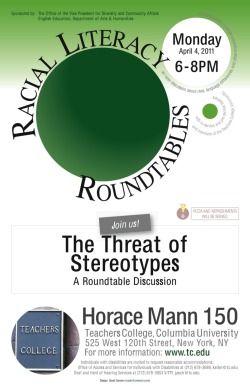
last week i attended one of three racial literacy roundtables being held at tc, coordinated by the lovely yolanda and a group of earnest and thoughtful graduate students. one of the facilitators for the evening ventured forth a story by way of introduction to the evening's theme of stereotypes. (the word immediately takes me back to a moment from my childhood when i first heard the word "gandhi" used as an insult hurled toward me... and i was confused then, as i remain now, as to why the name of this icon of non-violence would be insulting to me. ah, youthful ignorance!) this young women noted that it was only upon entering graduate school that she realized that all of her friends were just like her, they looked just like her, shared her life experiences. so, when it became my turn to introduce myself, i wondered aloud, whether we don't all look for a glimpse of familiarity when we connect -- not only within presumed "sameness" but also across differences.  that is, might we not see something familiar in someone who does not share our phenotypic makeup and yet be "just like us?" and perhaps i am keenly aware of this as most of the people who have and continue to leave footprints in my heart look nothing like me, but they are my twin skin, nevertheless.


7.13.2010

adolescent literacy - moving beyond rhetoric that maligns. a call for new starting points.

before i begin, the punchline: wanting adolescents to be proficient readers and writers of print-based texts is not wrong; the assumptions on which this desire is based, however, are steeped in deficit interpretations of the literacy practices in which adolescents are already engaged.  we need new starting points.

***

recently, a conference about content area literacy focused on adolescents was held at teachers college.  you can read more about the conference on the tc website here.  but the last paragraph is what caught my attention:
While the U.S. led the world for many years in educational attainment and job skills, “so many other countries are doing so much better now,” [Andres] Henriquez [of the Carnegie Corporation] said, including China and countries in Eastern Europe. And while the U.S. was the first to provide universal secondary education and also perennially led the world in educational attainment, it now ranks thirteenth in the latter category. National 8th-grade reading scores haven’t budged in decades. “If you were a doctor, you’d say, ‘this patient’s dead. There’s not a heartbeat.’ ”
so the literacies of adolescents effectively render the educational system a dead patient?  i worry about this rhetoric because in the spirit of seeking ways to support the print proficiency of adolescents, advocates of "adolescent literacy instruction" simultaneously malign the diverse literate landscapes of adolescents and frame adolescents as persistently in need of remediation.  this may not be their intention, but when adolescents are already under scrutiny for so many facets of their being such rhetoric only serves to place and keep adolescent identities and practices at a far remove from those ways of being that are institutionally sanctioned.

in this case, words matter because they help to constitute a reality that will travel across contexts and be parsed for sound bytes.  how does one reconcile this deficit starting point in light of the sheer abundance of research - in the areas of literacies, multimodality, communication, media studies, technology and education - that paints vastly different pictures.  the prevailing discourse of this conference, as reported in the article, was that adolescents need texts that better resonate with their lives and experiences.  but the mere inclusion of interest-related texts - read: print-based artifacts - along a variety of content categories and that reflect multiple realities is not enough.  let me emphasize that such a move is certainly significant as adolescents begin to connect with the texts of schools in new and meaningful ways.  but we cannot stop there because when we dismiss some practices of adolescents as "non-school" we effectively suppress the possibility of some adolescents' very relationship to formalized education.

our definitions and expectations of composing, communication, meaning, and interpretation must change, not merely to respond to calls for action from literacy researchers, but because educational institutions, such as schools, should be responsive to the practices of children and youth.  to simply include a wider array of texts still presupposed a print-centric set of beliefs about how one can acquire and represent information; to do so renders invisible other ways of knowing, even as a recently re-surfaced article from the chronicle of higher education lists "public support for other ways of knowing" as one of the five trends that will radically transform public education by 2015.  will the united states' penchant to wax nostalgic about the "good ol' days" be its undoing?

i recognize that to rethink practices of literacy assessment and pedagogy may challenge long held beliefs about literacy, language, schooling, and even education; perhaps it is time to not only talk about rethinking these practices, but to actually change them.  so, i note once again the punchline that started this post: wanting adolescents to be proficient readers and writers of print-based texts is not wrong; the assumptions on which this desire is based, however, are steeped in deficit interpretations of the literacy practices in which adolescents are already engaged.  we need new starting points.

4.15.2010

new book about adolescents and online literacies

Adolescents Online Literacies: Connecting Classrooms, Digital Media, & Popular Culture

New volume edited by Donna Alvermann

Description:
A compilation of new work that makes concrete connections between what the research literature portrays and what teachers, school librarians, and media specialists know to be the case in their own situations. The authors (educators and researchers who span three continents) focus on ways to incorporate and use the digital literacies that young people bring to school.

2.07.2010

On the meanings of writing and publication

"publication is the auction of the mind of man"

These words, penned by Emily Dickinson, sometimes keep me up at night.  Her words take me back to the reflexive musings of Deborah Appleman found in the chapter, "are you making me famous, or are you making me a fool?" Here, Appleman reflects on the ways in which she has represented the youth whose lives she has studied as part of her language and literacy research. She wonders about the weight of her representational actions; words that freeze in time the dynamic and shifting identities and lives of youth who, in many ways, have been the object of stultifying representations in the past.

What do we do when we "publish our research"? What does the act of publication mean for those of us who call ourselves researchers, whose identities are wrapped up in the business and art of storying the lives of others (and perhaps by proxy, ourselves)?  When we move from initial notations of our observations to narrative accounts of "what happened" or "who someone is"?  How might we compose with intentional fluidity and fluid intentionality?  Whose lives are auctioned when we publish? And with the possibility of collateral damage, what are the possibilities for...what? What do we gain when we publish? Do we distribute knowledge? Further reify or discursively disrupt?

During a recent seminar discussion with colleagues, while discussing texts - whose forms locate them on the margins of my daily readings, yet whose meanings are familiar - we considered the distinction between "writing as reporting" and "writing as enacted inquiry".  What vulnerabilities do we risk when we step aside from a 'disembodied voice of authority' to reveal our own discursive hesitations?  Is there an audience for writing that reveals rather than merely reports?  Writing that seeks to educate through invitation rather than obfuscation? 

Dickinson's words haunt me, but so, too, do they keep me alert - alert to the ways I put pen on paper, fingers on keyboard to produce words that claim to tell a story about the multi-storied lives of the young men and women who share their stories with me.  Where does that leave the ethnographer: as a storyteller?  Storymaker?  Storybreaker?  Are we making meaning?  Constructing knowledge(s)? Representing our ways of knowing?

Within the frame of publication, therefore, can we imagine or move toward publication that does not cause us to sell our souls?  (or to recall, with chagrin, the sins of our (publishing) infancy?)  What is it to publish, to make public, particularly from within the university? At times, it feels like a dance performed ever-so-delicately through norms and assumptions, skeptics and critics, our communities and naysayers, with the goal of remaining standing long enough to learn another step.  Do we risk paralysis in our writing when we focus on publication?

11.27.2009

The dangers of starting with and stopping at critique

I'm reading margery wolf's book, "a thrice told tale: feminism, postmodernism, and ethnographic responsibility." Just 14 pages in, one chapter finished, and I can sense my frustration with some of her discursive maneuvers - e.g. Reifying th existence of the other; adherence to "first-world"/"third-world" dichotomizing; pragmatism of ethnographer's authority; difficulty with assuming too reflexivity... It is the same skepticism, I suspect, that a statistician may feel upon reading narrative accounts of

But having been a reader for most of my life - an equally voracious reader of academic texts and those not intended as academic texts (but of course that is quite a blurry line...) - I know to keep my skepticism and discomfort at bay, so that I don't stop reading or, worse, make judgments and assumptions on text I have not consumed or interpreted. This is a danger that plagues not only some of the youth with whom I spend time - "Ugh. This is stupid! The author doesn't know what he's talking about." - but some of the graduate students who opt to take the classes I teach - "This research is offensive and clearly perpetuating negative stereotypes." When we are stuck in the paralysis of critique, it becomes difficult to find a way out. I have erroneously suggested a close re-reading, but as I am newly aware of my own paralytic tendencies, I realize that such a close (re)reading can only be effective if one's reading posture - metaphorical, but perhaps also literal, e.g. from hunched over a table to relaxing on the couch - retains a sense of possibility.

What is the author trying to say? What other texts and discourses are present in the authors' words and assumptions? How is the author using evidence, narrative structure, and language to convey an argument? What do you have to believe in order to take the author at her word?

We lose, it seems to me, our appreciation for the ontological underpinnings for the texts we engage daily. We are poised to agree and disagree. To critique and put down. To point out flaws and shortcomings. We are woefully underprepared - or perhaps unwilling - to consider the possibility of other realities, and to meaningfully engage with others' texts. Such "paralysis by critique" is evident in the overzealous student eager to participate in what s/he assumes is the only tradition of academic discourse; a subway rider expressing disdain for a young man's practice of quietly singing along with his mp3 player; a poltical pundit unable to cede the floor for anyone else's opinion to be heard; and on and on.

Maybe we all just need to learn how to read and appreciate reading (again). Although for some it may be the first time, especially as new reading curricula are stripped of appreciation - a recent casualty being, of course, the beloved "Reading Rainbow"...

11.13.2009

pedagogy that is culturally relevant

how do we move towards knowing in our everyday pedagogies?  what spaces to we find where we can play, free from institutional constraints?  in whose eyes do we see possibilities and to whose do we relegate despair?  how do maintain our sense of pedagogical pleasure(s) amidst perceived institutional constraints?  what might it mean to commune as teachers who are students of our students?  to spend time with youth outside the constraints of institutional labels, expectations, assumptions; and to descriptively observe their literacies in action? what are the ways in which we relate to one another?  how do we decide to look up or turn away?  when do we extend a hand or hasten our pace? to whom do we accord great variation in the performance of multiple selves? and from whom do we expect staid and limited representations of self? with whose purposes do embark on the journey of education? how, amidst the unsettling and unsettled, do we create a sense of home, of belonging together? and allow space for multiple, even disparate forms of belonging within a common site/moment/act of education?

11.03.2009

new book about harlem, youth, and multimodal literacy


Harlem on our minds: Place, race, and the literacies of urban youth
by Valerie Kinloch
Teachers College Press, 2009

Discourses of youth, gentrification, place, space, and literacies converge beautifully in this volume, collaboratively constructed by Valerie Kinloch and youth researchers, who explored changes going on in Harlem through a variety of modes, discursive interactions, and ongoing inquiry.

Definitely explore and purchase for your own reading, or to read with youth, undergraduate and graduate students interested the complicated intersections of identity, place, power, and narrative discussed in this book.


From the publisher:
In her new book, Valerie Kinloch investigates how the lives and literacies of youth in New York City’s historic Harlem are affected by public attempts to gentrify the community. Kinloch draws connections between race, place, and students’ literate identity through collaborative interviews between youth, teachers, longtime black residents, and their new white neighbors. Harlem on Our Minds is a participatory action narrative that makes emerging theories of social ecology real for the high-school English classroom. Vividly drawn lessons show how teachers can engage urban youth in school-based literacy, by linking canonical text, particularly of the Harlem renaissance, to current events. Centered on the literacy stories of two African American youth and their peers, this book for our times:
  • Showcases the multimodal literacy practices of urban youth through photos, writing samples, student-designed research projects, and more.
  • Weaves in multiple voices and perspectives through response pieces by project participants, local teachers, graduate students, and a community activist.
  • Features teaching strategies and reflection points in each chapter.

10.02.2009

rethinking classrooms by listening - new tc press book


Check out this new book by Katherine Schultz!
(also author of Listening: A Framework for Teaching Across Differences and co-editor of School's Out!: Bridging out-of-school literacy with classroom practices)


Rethinking Classroom Participation: Listening to Silent Voices


about the book:

Many educators understand how to gauge learning by paying close attention to student talk. Few know how to interpret and attend to student silence as a form of participation. In her new book, Katherine Schultz examines the complex role student silence can play in teaching and learning. Urging teachers to listen to student silence in new ways, this book offers real-life examples and proven strategies for “rethinking classroom participation” to include all students—those eager to raise their hands to speak and those who may pause or answer in different ways.

Available October, 2009 from Teachers College Press

9.29.2009

storying and the storied

last week was strange for a number of reasons, not the least of which involved a meeting of faculty that was not a faculty meeting, or a department meeting, or any other configuration of faculty members who convene for largely administrative purposes.  we had convened voluntarily, in response to an invitation to inquire together about the nexus of globalization, education, and citizenship.  my feelings can be summed up in the tweet i twittered as i walked to my office after leaving my colleagues with whom i felt like i had engaged in something unique:

finding my way back to play from TwitterBerry

we were asked by our colleague and facilitator to reflect on a moment of transculturalism or transnationalism that we had experienced, either in our recent or distant or anywhere-in-between past. and here's where the strange quotient increases - the first story that popped into my mind was the great dosa tale of 2nd grade. i will write that story down at some point - i've certainly shared it verbally enough times! - but the story for right now is about why my mind went there, to that particular moment when i was seven. a moment that, by all means, could only be characterized as mortifying and emotionally scarring.  but given the previous events of last week, this tale became reframed in my mind as evocative of something different: a profound moment of self-definition and inquiry into identity that resonates with all subsequent invitations to inquiry and identity work...

i began to think about my grandmother early last week.  at the end of class tuesday night i gave a brief preview of the book we'll discuss during the next class, the magical life of long tack sam. the author of the text, and documentary filmmaker, ann marie fleming, composed the book and a film of the same name following from her inquiry into her family's history and learning of her great-grandfather's magical life as a world renown acrobat and magician.  the texts are worth more than a few pages of reflection themselves, but i'll just say here that in both form and content, fleming's storying of her family history evokes images of transnational migration, strength, personal and collective triumph, war, family, and peace among many others.  as i offered a brief preview in class, inviting us to attend to both form and content and the collective meanings fleming offers the reader, i continued to think about my own acts of personal storying, which flourished when i was in graduate school and which have largely diminished in the five years since...


the following day, i found my way back to a public library.  i was so moved by the realization that i blogged about the at-once new and familiar rush of emotions that swept over me.  i was again transported to a practice so dominant in my youth; to a space and structure that held deep personal meaning for how i made sense of myself in the then-present, and how i imagine my younger self now. i tweeted about the boy who shared a table with me, and allowed me to understand another dimension of public library life:

hair aflame w/a mop of orange. eyes focused on math puzzle hw. in silence, until rendezvous w/mom. she asks abt his day; he beams. #twitpoem


so in our faculty seminar, when presented with the invitation to engage in sustained inquiry - with thought and emotion, with storied reflection - about the intersections across otherwise banal terms such as globalization, education, and citizenship, my mind immediately flooded with images, feelings, details; i understood what fleming meant when she concluded her film by saying "memory is magic" and noting in writing that "history is relatives."


i have a working title for my inquiry: a is for assimilation.  there is a simplicity in that phrase that captures the nuances of learning to speak english from my floppy haired neighbor; constantly negotiating a very full identity dance card; pursuing language and literacy-based study in my studies and professional life; confronting the vestiges of my own identity work, begun nearly thirty years ago with trepidation and which is still very much under construction.


it isn't often when multiple strands of inquiry align, but when they do like they seem to have recently, the effect is awe-some. i concluded my week by attending a screening of fleming's film, originally released in 2003 but being rescreened to celebrate a new exhibit at the moca.  during the q&a, fleming mentioned that she began research for her film 10 years after her grandmother, the daughter of long tack sam, had died.  this year marks the tenth anniversary of my paternal grandmother's death; the person for whom i was named and with whom i shared a bedroom for the first several years of my life.   i've begun tweeting questions that i would have asked her if i had thought to do so at the time (#q4gma).  i think about the way she is storied in family lore, and how storied her siblings, parents, and ancestors.  hers was an unexpected transnational narrative that she negotiated for the last twenty years of her life.  so when i find myself undoubtedly mired in writing, revision, and analysis already on the schedule for the next several months, i will rejoice in the occasional opportunities to let my mind explore, making the familiar strange again, and play within the loosely facilitated structure of a seminar... just like grad school.  (i even became a bit giddy when reading and questions to guide our thinking were assigned...) 

this time, i'll take my namesake along for the ride. 


...

9.26.2009

new ela & math standards released

i've progressed in my thinking about standards. i understand them differently from when i was early in my path of teaching and learning, when i viewed them as oppressive and as symbolic vehicular boots that stifled educators creative inclinations.  (i now realize that the obsession to test children - and by proxy their teachers - to within an inch of their life is the real villain, perpetrated by willing accomplices in grey and navy suits and answering to the various titles to which they have been elected or appointed...)

so when the new standards for english language arts (ela) and mathematics were announced this week, i brought a renewed eye to reading them, thanks to my time spent observing and spending time in classrooms and ongoing conversations with current teachers whose efforts to provide myriad educational opportunities for the eager bodies that file into their classrooms every day are not necessarily diminished, and are sometimes even bolstered, by a fuller understanding of the national standards.  so as i read these standards anew, i began to imagine what "meeting" them might mean from a pedagogical standpoint. for me, the ela standards - divided into 'reading,' 'writing,' and 'speaking & listening' (regardless of ample, ample, oodles of research that understands them to work in concert) - evoked images of what it would look like for a kid to have achieved each bullet-pointed goal.  for example, in reading:
  • Support or challenge assertions about the text by citing evidence in the text explicitly and accurately.
and the questions began: what types of texts? citing in what format? who determines what is explicit and accurate? (that last question pertains to some of obtuse 'texts' i've encountered lately, which are neither explicit nor accurate in their 'reading' of others' texts...)
but these questions are the natural byproduct of a mind set to 'hyper' on the inquiry cycle, which, i agree, can become paralyzing when someone 'just wants to go and teach.' but without these questions, and the next few that i'll raise below, how do we ease ourselves out of the jaws of complacency.  questions need not be paralyzing. in fact, i have found them liberating. questioning what we mean by text can suggest a new range of compositions - film shorts, photo essays, anime, family photo albums - to consider inside the classroom. these new texts, sometimes foreign to the routines of classroom and school life, might open up the boundaries that too often (aim to, but can never really) separate children's in-school and out-of-school lives.  questions about text, indeed a critical stance on texts, can suggest new teaching and learning relationships as the children who suggest new texts can be engaged as the experts on their texts.  i could learn some things about manga, but to hear a true expert eagerly describe narrative nuances that would have certainly escaped me for the first 50 or 60 readings is where educative possibility really lies. 
hence, the new questions - question, really.  just one, as i worked my way down the standards for reading, writing, and speaking & listening.  and then made my way through the mathematical standards.  my hypercurious mind wants to know where the 'we'/'with' standards are.  that is, while all of the existing 'todos' implicate what a student must be able to do, and consequently what the teacher must make sure the student can do, there aren't any standards that talk about what kind of community teachers and students might co-create in which to engage in education together.  so i want to know: "Where are the standards of 'with'?"

yes, this is a false question in way, b/c i would truly cringe if there were classroom community standards.  (shudder, literally, to think about this...)  but when the good people at the "National Governors Association Center for Best Practices (NGA Center) and the Council of Chief State School Officers (CCSSO) in partnership with Achieve, ACT and the College Board" came together establish standards that are "research and evidence-based, internationally benchmarked, aligned with college and work expectations and include rigorous content and skills," i just want to know what kinds of conversations went on about what spaces would be generative of the kinds of teaching and learning that might lead to national proficiency across the "core standards" laid out this week?  and if there was any talk, even whispers, about resources, class size, unholy testing schedules, and time to build community, might i ask - nay, plead - for the revered insiders to leak these conversations to the press? or someone who might listen, especially when the left hand is ready to act based on the findings of the right hand...

feedback on the standards is welcome until october 21st. after reading the standards, click on the link that says "Submit Feedback >>" along the left-hand menu.

...

9.24.2009

public libraries

going to our public library was a ritual for me when i was a kid growing up in a suburban new jersey town.  almost weekly, either parent or the parent of one of my friends would drive a carload of us kids to the (what seemed to me then to be) sprawling free public library campus, which also housed a version of "safety town" - a mock town where busloads of kids could spend an afternoon learning about traffic safety from "officer friendly."  on the green lawn out front sat two bronzed figures back to back, one engrossed in reading and the other saying something over his back to his companion.  sometimes i would sit next to them with a book of my own while i waited for my ride or others to finish up inside.

i never left the building with any less than the maximum number of books you could take out at once.  if it wasn't an armload, then i clearly had wasted a visit.  slowly, i would venture from the children's section into the main section of the library, and this would bring me indescribable joy.  once i got the hang of the dewey decimal system, i would look up topics in the card catalog just to prove i could find it.  astronomy, botany, civil war, women's rights, mythology... the card catalog was like a choose-your-own-adventure story that never led to the same place twice.  up stairs and down the elevator, books in hand.  no matter where the journey led, however, i always landed back in the far corner of the children's section.  there, the tables were round and wide and could accommodate books of all shapes and sizes.  i liked to spread them out - a practice in which i still i engage - like a painter assembling her paints before delving into them to construct that afternoon's perfect story portrait.  i think about the multilayered narrative that capucine weaves in this video and feel a kinship to what might have been going on in her mind to bring those threads together.

i felt some of the same energy and magic when i wandered into a different public library earlier this afternoon.  i hadn't been inside one in a very long time.  i was instantly aware of how unfamiliar this environment was to me, even as the sensibility of the concrete structure was inviting.  i had become so used to working in academic libraries, coffee shops, and my office, that i found myself unaccustomed to the ongoing interactions between librarian and the diverse population of patrons; the dialogues about whether the printers were working and where a mom could find some good graphic novels for her 11-year-old.  the librarian had responses for these and many other queries.

i took a seat at a rectangular table on the second floor, presumably near the young adult literature section.  across me was a bookshelf full of graphic novels.  just typing that sentence makes me realize how things and times have changed since i was last actively present in a library - that is, in a library to "use" the library.  a bookshelf full of graphic novels didn't exist even 6 or 7 years ago when i spent nearly every week in or near a library while collecting data for my dissertation with a group of adolescent boys.   librarians, often women, act as sage guides, patient listeners, and occasionally ornery public servants whose buttons have been pushed one too many times.

for a while, i shared my table with a red-headed boy who looked to be no more than 9.  he worked studiously on what appeared to be a math assignment - i'm assuming math based on the pyramid made up of triangles on the worksheet he was writing on.  a group of slightly older girls walked up the stairs together and, leaning on each other like teenage girls tend to do (literally and metaphorically), made their way to the back where the young adult romance and mystery books were.  their dialogue was about which book to check out next, amidst giggles - i probably wouldn't be entirely off base if i guessed they were going toward the twilight display...

there was one other reason i kept bringing my haul back to the children's section of my hometown public library: the giant lion that was propped up against the corner.  i probably couldn't get away with it now, but even as a teenager, i would sit and lean against that lion and read for hours on end.  i was comfortable, in a familiar surrounding, where i had relatively autonomy and authority to manage my own textual explorations. 

i began to remember some of those lessons this afternoon as i watched library patrons, old and mostly young, make their way through this structure.  card catalogs have been replaced with computer kiosks and the library cards and books are read by barcode, but the stuffed animals and large tables remain... signaling a welcome to a new generation of inquiring minds and adventure-seeking storytellers.

---

and on a happy note, relief for the free library of philadelphia ...  for now...

9.07.2009

pres. obama's speech to kids - full text

the white house released president obama's prepared remarks that he will deliver to schoolchildren on tuesday.

at first blush, this is very much on the order of obama's campaign speeches or more recent statements about education, in which he urges a collective sense of individual responsibility, and strives to ignite fires of innovation in his listeners. but there are some important distinctions that stand out, like the reference to specific pop culture artifacts and texts, perhaps to resonate with his intended audience:
e.g., "I’ve talked about your parents’ responsibility for making sure you stay on track, and get your homework done, and don’t spend every waking hour in front of the TV or with that Xbox."
and
"Maybe you could be an innovator or an inventor – maybe even good enough to come up with the next iPhone or a new medicine or vaccine – but you might not know it until you do a project for your science class."

and he weaves his own narrative through this address, not to deliver an unexamined "bootstraps" message, but rather to illuminate the ways in which his individual determination and educational success was mediated and informed by the communities through which he traversed. the personal narrative is a tale of many cities...

i hope teachers and families not only share this speech with school-age children in their charge, but they engage with it critically. perhaps they'll wordle it, like @librarybeth has done here. or maybe they'll hold a debate to argue against or for some of the subtler points embedded throughout. i hope we engage with that which we find unfamiliar, if for no other reason than to be able to identify what it is that bothers us. but perhaps in that journey, we find things that we can agree on and we move forward. together.

...

8.28.2009

reading rainbow no more


i would sing the title tune long after i stopped watching reading rainbow. i appreciated host, levar burton's ease and enthusiasm for reading, for stories, and imagination. i can't make a direct causal link, but i don't think it's a coincidence that what continues to inspire me to inquire is the study of literacies. so as i read the headline on npr - 'Reading Rainbow' Reaches Its Final Chapter - i was prepared to read about a natural end, like "mr. rogers' neighborhood," which officially buttoned up its cardigan in 2001.

but as i read and learned of the funding trends that contributed to the show's demise. a few excerpts:
The show's run is ending, Grant explains, because no one — not the station, not PBS, not the Corporation for Public Broadcasting — will put up the several hundred thousand dollars needed to renew the show's broadcast rights.
and perhaps even more frustrating was this bit of analysis:
"Grant says the funding crunch is partially to blame, but the decision to end Reading Rainbow can also be traced to a shift in the philosophy of educational television programming. The change started with the Department of Education under the Bush administration, he explains, which wanted to see a much heavier focus on the basic tools of reading — like phonics and spelling.

Grant says that PBS, CPB and the Department of Education put significant funding toward programming that would teach kids how to read — but that's not what Reading Rainbow was trying to do.

"Reading Rainbow taught kids why to read," Grant says. "You know, the love of reading — [the show] encouraged kids to pick up a book and to read."
i'm reminded of recent conversations i've been having with older youth in their late teens and early 20s. among the topics we've been discussing is the paucity of "why" discourse. collectively, they reflected on the relatively few instances when they were encouraged to really question, explore, and understand why they engaged in any particular practice or action. this made me wonder, where are there spaces for the kind of critical questioning that cultivates sustained inquiry? do we care if kids now become thinking adults later? can we afford to distill education down to discrete and scripted moments of skill-based interactions?

it saddens me that, given growing evidence of the many different ways kids not only learn to read but also cultivate myriad literacy practices, that the thrust of public funding and policy is being driven by myopic understandings of literacy.

the article closes with the following musings:
Reading Rainbow's impending absence leaves many open questions about today's literacy challenges, and what television's role should be in addressing them.

"But" — as Burton would have told his young readers — "you don't have to take my word for it."
more thoughts on this shortsighted decision:
Did Education Dept.'s Shift Help Kill PBS's 'Reading Rainbow'?
Reading Rainbow Reads Its Final Chapter on PBS
In Memoriam: “Reading Rainbow”


....