5.06.2012

Being present as youth musicians come "into presence"

"Text of bliss: the text that imposes a state of loss, the text that discomforts (perhaps to the point of a certain boredom), unsettles the reader’s historical, cultural, psychological assumptions, the consistency of his tastes, values, memories, brings to a crisis his relation with language."
—  Roland Barthes, The Pleasure of the Text, trans. Richard Miller


I saw the orange of his plaid shirt and the shine on his trombone before I saw the young man who wore both as extensions of his being, as he made his way to his awaiting family through the narrow passageway between the auditorium seating and the doors leading to the outdoor courtyard. A woman standing beside me against the wall between two open doors exclaimed words of congratulations to the boy, noting that the afternoon’s orchestral performance was “wonderful,” and “great!” The boy’s face showed a serious expression. “I only had to sight read the first piece.” He repeated himself and then explained with conviction, “I knew the rest, I just had to sight read the first piece.” The woman next to me beamed with a measured yet joyous pride as she told me of her grandson’s multiple musical accomplishments, that in addition to playing the trombone and the violin, he was more than adept at the drums, which he started playing at the age of five. The young man was just ten, and the roundness of face matched his age even as his maturing body belied his status as a musician still in elementary school. “They had him tested when he was five,” the grandmother continued, “and they told us he played [the drums] better than most twelve-year-olds. And now he wants to learn the piano.” I had barely finished uttering my “Wow” before she added two thoughts that made me wish I could stay and talk with her more extensively. First, she noted that music was in his blood, an influence of his grandmother. Then she smiled. It was a shy smile that she followed up by proudly stating that she was a graduate of Settlement Music School, a singer, who had been a member of a professional singing group. She paused momentarily – I suspected that it had less to do with allowing me to digest all of these fantastically intricate pieces of information that begged for follow-up, and everything to do with taking a moment to revel in that memory before continuing to regale me with tales of grandmotherly adoration – and when she continued she said, with a sort of excited urgency, that she, who had come from Delaware to see him perform, was encouraging him to “learn all the instruments!” Learn as many as he could, was her advice to her young, talented, earnest grandson. And within seconds they – the young man in his pumpkin orange shirt and his grandmother who was the picture of spring in deep purple – were in the slow but steadily moving line of humanity edging toward the stairs that led to the courtyard reception below.

This was a mere glimpse into the many stories in the lives of one young musician who was among the nearly three hundred who performed as part of the 2012 El Sistema Seminario concert held at West Catholic High School yesterday. Present were members from eight different youth orchestras from as near as Philadelphia’s own Play On, Philly! and as far away as Durham, NC and Newport News, VA, all of whom shared the ethos of the El Sistema global youth music movement. As I walked out, my mind filled with questions I might have asked and wish I could have asked the musicians, the parents, and other family members, the passers-by who happened to attend. I was struck by the way the young musicians worked and played together, the mutual allegiance youth and adults seemed to have for one another, and observations and thoughts about the silly debate that goes on in education policy about “the arts” – clearly anyone who marginalizes art-making and art-being has never attended a youth orchestra! But first, let’s go back to the beginning.

It was 4:54 pm when I arrived at the high school where I’d never been before despite spending many years living and later working with youth in the same neighborhood. Across the street is a mural of Paul Robeson and the side entry where a woman dressed in black from head to toe was handing out programs was lined with murals whose once vibrant colors had faded over time. Art was everywhere, for anyone who cared to notice.


Ascending the outdoor metal stairs to the auditorium level, I heard familiar sounds that increased in volume with each step and were fully amplified as I walked in and found an empty aisle seat a few rows from the front. The stage was overflowing with young people clutching their violins, waving bows in the air, responding with waves and smiles in the direction of family members who were doing the same as they desperately tried to get their child's attention from various vantage points inside the large room. In the audience, families quieted younger children and some searched for, then photographed names they recognized in the program. Near the stage, adults, all of whom were also dressed casually like the youth – most wearing jeans, that universal garment that has come to function as both uniform and talisman of ease in a bevy of uncertain social situations – attended to what looked like last minute requests and preparations. In one corner, a group of young women was singing softly and swaying smilingly; behind them two young men stood at the ready behind basses that towered over them; and from one corner of the large room to another, waves of shushing continued – it wasn’t altogether clear who was doing the shushing and who was being shushed.

And then suddenly a voice cut through the ambient chattering and shushing instructing everyone to be quiet so that the concert could begin. The room fell as silent as a room full of people sitting together in a slightly warm auditorium with overhead fans doing their best to cool the room could. Stanford Thompson (@stanfordleon), the director and founder of Play On, Philly! (@playonphilly) took the microphone and, after offering a note of thanks to a woman named Ms. Naomi who had quieted us down, provided a few words of introduction before turning to the eager faces in front of him. He told the audience, made up people of all ages who seemed to have some tie to what felt every bit like a human movement, that there were nearly three hundred students on stage, that people had traveled near and far to be here, and that what we would hear during the “short concert” were pieces that the large group had been practicing as individual groups and more recently as a massive, whole orchestra. He then thanked the parents and teachers who enabled this concert to happen. Loud applause. To introduce the first piece, Thompson, also wearing jeans and a tan, lightly striped tee shirt, simply described it as a “collection of songs you’ll all know.” He then turned to the expectant orchestra and said “Spiritual Melody” before handing the mic to someone and standing on top of wooden chair so that he could be seen by the whole group.

Thompson energetically signaled for the group to start and the first notes came streaming out – strings, woodwinds, and possibly the tingling cling of the triangle, which had a starring role throughout the concert. Even as I should have known the first piece, recognition eluded me so I just enjoyed watching the performers, only about a third of whom were playing at first. Others looked on, predictably waiting for their turn to join the composition in progress. The orchestra easily transitioned into the second selection, a rendition of “Ava Maria,” and I think the pair of women sitting behind me as well as a few others in seats several rows to my right were singing along. The little boy next to me looked at the women behind us, then looked at me and we both smiled. Now this was a concert.

It was during the third selection when I noticed the violinist who played the music with her whole body. With each measure, she bloomed with musical energy that matched the vibrancy of her fuchsia top and matching flower hairpin.  She bent from side to side, swaying as she applied vibrato to coax a few more decibels from her violin strings. In between numbers, her horn-rimmed glasses remained fixed on the music stand in front of her that she shared with a bespectacled fellow musician whose muted, pastel striped shirt belied the animated personality that was on display after the concert. The selection of spiritual songs ended as more applause erupted from the grinning and altogether charmed audience. It was then that I noticed the cameras blanketing the aisles, held in varying lengths from people’s faces and serving as filters through which many of my fellow music lovers – at least for the afternoon that’s what they were – were receiving the music.

The second piece was conducted by Rey Ramirez from the Soundscapes orchestra program in Newport News, VA, who will be the hosts for next year’s concert extravaganza. He led the group in a performance of Louis Armstrong’s “What a Wonderful World.” It is fair to say that feeding off the energy of engaged young people already puts me in a truly blissful mood, but when a subset of the orchestra broke out into song and married the lyrics with the instrumentals, I fought hard to keep the bliss from pouring out of my eyes. The players-turned-singers were led by a woman wearing a sleeveless, black dress and was the owner of sculpted upper arms who, like Thompson earlier and Ramirez, who also stood on the wooden chair beside her, conducted with exuberance. The boys and the girls sang with earnest, a few closed their eyes when they were trying to hit a high note or hold a long note, and still others smiled with a combination of shyness and pride. And I’d be lying if I didn’t admit that I, too, sang along for a few bars.


Before the third and final piece started, Thompson introduced yet another conductor, Dan Trahey who leads the Tuned In orchestra in Baltimore. Trahey started off with some shoutouts to the various cities represented in the orchestra and in the seats as audience members gleefully obliged by cheering when their city was called including New York, Philadelphia, and Baltimore. He then offered a few more words about the mission of this collaborative effort to increase access to music and to “get music into kids’ lives.” This work, he noted, was motivated by a desire to “change kids’ lives and society through music” noting that present in the multi-orchestra group in front of us were young people from “different races, different genders” – suggestive of a microcosm of the nation and world, more broadly. This last observation elicited not only cheers and applause, but a few Arsenio-type rolling fist pumps in the air.

The last piece, Finlandia, had a thunderous beginning that heavily featured the percussionists, and it was while paying attention closely to the way the beginning unfolded that I noticed the various ways in which adults were peppered throughout the orchestra: as musicians, as page turners and enthusiastic cheering squads. In this piece, too, as the music fell almost completely quiet except for a solo (an oboe, perhaps? My ear is a bit off, so pardon the uncertainty here!), the singing began. While holding their instruments, some looking directly ahead, others looking at each other, and still others making eye contact with loved ones, the musicians became singers once more and delivered lyrics of peace, of hopes and dreams. They were what they sang. And we the audience, appropriately moved, leapt to our feet as the last note evaporated into the air. More fist pumps, more cheers, a parade of cameras (including the man in the front recording the performance with his iPad) and applause.


The adults, the youth, the families and supportive audience members – they were all players in this performance, each one somehow committed to the success of this afternoon, wherein success was neither tested nor measured but plainly observed, felt, and celebrated. The violinist in fuchsia, the trombone player in orange, and the bass player with the black pants and matching vest – each of these young people and their many fellow youth orchestra members are part of a beautiful story that is being written through music. Not all of them will become musicians, but they each, at least for a short time, will have had music in their lives in a most intimate way. And yesterday afternoon, through music, they brought joy into the lives of a few hundred others.

I write these words from a vantage point of an educator and researcher of young people’s lives, their literate practices, and their creative endeavors. And being in the presence of these young musicians this weekend and last weekend has brought the ever-present education angst into sharper focus. The rhetoric surrounding schooling seems to move ever further and further away from education. The discourse has become – or rather continues to be – saturated with band-aid “solutions” about how to “fix” a system that is presupposed to be a complex if/then statement premised up readymade packets of information and methods of digestion and evaluation. But the more I read -- academic and popular publications, alike -- the less I see any sense of purpose in how school is being understood. That is, there seems to be no imagination or consideration about how to escape a pre-ordained sense of what schooling should be and thus an inability to move beyond “doing school” as the “simple insertion of the human individual into a preexisting order.” And I can’t help but think of the theme song from “Kids are people, too.” It’s really as simple as that – kids are not less than people. They are people. Period.

In spaces, like Play on, Philly! and the other El Sistema-inspired youth orchestras, where young people are taken seriously and invited in to explore oeuvres and create their own – artistic and otherwise – there appears to be education occurring wherein education might be seen as a “focus on the ways in which the new beginning of each and every individual can come ‘into presence.’” Gert Biesta, from whose book Beyond learning: Democratic education for a human feature, argues for an education that nurtures every-one's coming into presence and, one might argue, an education that is nourished by pedagogical trust. In doing so, he implicitly honors and extends the words from Hannah Arendt that are included as an epigraph to his book:
“Education is the point at which we decide whether we love the world enough to assume responsibility for it, and by the same token save it from that ruin which except for renewal, except for the coming of the new and the young, would be inevitable. And education, too, is where we decide whether we love our children enough not to expel them from our world and leave them to their own devices, nor to strike from their hands their chance of undertaking something new, something unforeseen by us, but to prepare them in advance for the task of renewing a common world.” 
To notice and to be seen, to listen and to be heard, to be expected to work hard (not simply because others have done so or because that is what one is supposed to do, but because each individual contributes to the larger whole), to come into presence – a system seems too large of a unit of analysis at times, so for the time being I will seek out smaller spaces that allow young people to pursue these goals that may allow each of them and each of their stories to “come into presence” in whatever way seems right, and seek bliss in the process.. To wit, Ammons’ poem seems an apt place to pause for now:


Poetics, by A.R. Ammons


I look for the way
things will turn
out spiraling from a center,
the shape
things will take to come forth in


so that the birch tree white
touched black at branches
will stand out
wind-glittering
totally its apparent self:


I look for the forms
things want to come as


from what black wells of possibility,
how a thing will
unfold:


not the shape on paper -- though
that, too -- but the
uninterfering means on paper:


not so much looking for the shape
as being available
to any shape that may be
summoning itself
through me
from the self not mine but ours.


4.29.2012

Moved to the Point of Trust: On Simon Rattle, Musical Magic, and Play on, Philly!


Simon Rattle astounds me. Pure serendipity first put me in his presence nearly fifteen years ago, brought me to a seat in the fourth row of the Academy of Music in Philadelphia where Rattle was conducting Mahler's Symphony No. 2. It is a moment for which I am eternally grateful to one of my college friends who had suggested a group of us attend and to the Philadelphia Orchestra for their student voucher program. (They came in a book of five or ten vouchers back then that could be exchanged for tickets on the night of a concert.) I didn't hear the music that night so much as it consumed me. Orchestral maneuvers had never moved me as much, despite an entire childhood spent playing in school orchestras complete with weekly rehearsals, bi-annual concerts, and yearly competitions. Rattle became fused that night not only with Mahler, a composer whose works until then I had enjoyed but had not yet been so utterly transfixed by, but also with an unchecked exuberance and bliss-filled joy -- so much so that after I glided back to my apartment that night, I unearthed the violin bought for me when I was nine years old from its tattered, black case and played a few measures each of the South Pacific Overture and the first movement of Bach's Brandenburg Concerto No. 3, the only two pieces I could still play after having not touched the instrument in nearly five years.


This man with a nest of white-grey curls surrounding his head, and whose body, even from the back, wove symphonic stories in rhythm with the members of the orchestra; only the robotic among us could not be moved. From that evening, there settled within me a deep trust for this bloke called Simon Rattle and since that first time I have seen him in action on several other occasions in a few other cities and at each performance I have learned something new about music, about sound, about the art of listening simply by sitting in his audience.

Rattle conducts with anticipation and with responsiveness. He leads the musicians even as he receives the melodic sounds they produce with their instruments. He registers them -- not merely their music, but the musicians themselves -- on his face, making contact with their eyes, matching their gestures and inspiring theirs.


This week, again by the grace of serendipity, I found myself in Rattle's audience twice. Thursday evening I stood with others in the community rush ticket line in hopes of acquiring a ticket to see Rattle conduct once more. An ocean of time had passed since the last concert, and I continued to miss his guest conducting performances in both New York and Philadelphia in recent years. But on Thursday evening the line moved swiftly and it became clear that I would indeed get a last minute ticket; and the truth of it was that I didn't care at all about the program. Bach or Brahms, Rachmaninov or Mahler, and any number of lesser known composers he has brought to life with a flick of the baton and with the cooperation of the musicians in his charge -- the music impressed, leaving traces I would revisit long after the last note had been played and also evoking deep admiration at what a stage full of people could convey musically through their manipulation of carefully crafted pieces of wood, string, and metal. Watching Rattle is not an exercise of assessing the music, it is an experience of becoming an instrument yourself. Thursday night was no exception, however a profound yet simple truth struck me several minutes after we had returned from intermission. 


After completing the crowd-pleasing Brahms Symphony No. 3, Rattle dared the audience, as he so often seems to do, to go on a different sort of musical ride. This time some of us were introduced to six short movements by Anton Webern, which I will not attempt to describe here not only because I am no music critic but also because to do so will seem both self-indulgent and unstudied. I'll merely say that near the end of the fourth movement, several seconds before the dramatically thunderous concluding note -- if indeed the magnificently near-cacophonous convergence of sound that elides into nothing in response to Rattle's sudden closing of his left hand into a fist can be called a note -- a realization occurred to me in a wholly embodied way. I trusted Simon Rattle. And for the rest of the Webern composition and the equally complex, yet more traditionally symphonic selection by Schumann, my mind wandered through the tricky terrain of trust. 


The phrase that reverberated in my mind with an echoing refrain was "pedagogical trust." How utterly important and yet under-discussed in the preparation of teachers is the notion of trust. How hard won and easily lost is this all-too-important lifeline of human relationships -- the ones that move us to take risks, to veer down unlikely paths, to read and watch and listen to texts that may change our lives. And when that trust is violated, how devastating the impact can be.


But when that trust is reaffirmed, the effect is multiplicative. Such as was the case on Saturday night when I was, once again, in the audience ready to learn at the baton of Sir Rattle. But this was no ordinary performance. And while I had jokingly considered the prospect of attending all three of his Philly performances this week, I only seriously pursued the notion of a second performance when I read more about the special guests with whom he would open Saturday's performance. Play On, Philly! is a musical program for young people in Philadelphia ages six to thirteen intent on providing musical experiences and overall enrichment for its participants. But more than words, it was this clip that captured my heart.


So overjoyed was I that I arrived over two hours early for the community rush ticket "Power Hour" as it is properly called, making me first in a line that soon extended far back enough to warrant a multi-fold, snakelike arrangement. Another difference: my seat for Saturday's performance was in the Conductor's Circle, the section behind the orchestra that faces the rest of the audience inside the massive Verizon Hall. This time, I would be able to watch the visage that matches Rattle's lively conducting physicality from my vantage point of dead center in front of the conductor's podium. But something unexpected happened instead. When the bodies of the young musicians occupied the seats on the stage, where the green POP folders with musical scores had been placed on music stands for them, my eyes were transfixed on the way their presence filled the hall in a way that no group of adult musicians ever could. The poise of terror-filled nervousness, the grace of performing for so many strangers (and more than a few ready-made fans) whose applause greeted their entry onto the stage, the beauty of a bond with a fluffy-haired leader who seemed as excited as his musicians -- it was a privilege to be in their audience. Rattle took the microphone and offered a few words by way of introduction, linking Play On, Philly!, which was founded just last year, to its Venezuelan inspiration El Sistema, noting that in thirty years of the latter's existence, nearly half a million young people had become involved in youth orchestras. His projected words offered a glimpse into a deep-seated passion that lies beneath about the potential power of musical participation. (He has spoken about this and much more to reporters who have been fascinated with him, his conducting style, and his life for most of his conducting career. I especially like the interview with Ed Vulliamy and a short commentary by Phillipa Ibbotson, both in the Guardian.)


Rattle turned the microphone off, picked up his baton, and gave the first downbeat to signal the start of selections by Brahms. With these young musicians, Rattle was no less his animated, conducting self. His face registered each note, contorting at times and echoing bliss at others; his body took in each pause and staccato and rousing crescendo, and his hands moved independently of one another to speak to the strings while also bringing forth the rich sounds of the brass players. The initial tentativeness gave way to an increasingly confident performance, soothing to the ears and heart, not only to the audience but to the man in black at the center of the stage who seemed to grow a few feet during the five minute performance; or perhaps he, too, was floating. With the final note came more thunderous applause, the entire Hall on its feet, shouts of Bravo! and more than few hoots and woo-hoos. And Rattle bowing, bringing the orchestra to its feet to receive the crowd's adoration, walking out once, then twice and thrilling the audience by high-fiving one of the viola players, a young man with his braids held back in a ponytail. He thanked them, winked at the players who stood with what seemed to the outsider like a bit of shock mixed with an uncertainty about what to do next. Following Rattle's third exit the orchestra began to exit the stage, evoking yet another applause apex. 


There may be many interpretations of the events of Saturday night, but I take them to mean the following. If the people in line at the community rush ticket line were any indication, most were there for Rattle. As the man who was second in line behind me said, "If Rattle's conducting, I knew I had to get here early." Being a bit of a rebellious rock star -- or as much of one as a conductor of classical music orchestras can be -- comes with it expectations and responsibilities and what I suspect is a panoply of opportunities and choices. So what does it say about someone who chooses to spend time with young people, to not pay lip service but to work with them and conduct them, to allow himself to be impressed by them and to learn with them, to use one's fame for good -- public good and private good; Rattle, incidentally, has had a long-standing commitment with El Sistema as well, and having been a member of and then conductor of a youth orchestra himself in Liverpool and feels a strong conviction that young people everywhere, and not just a few, should be invited into intimate, instrumental dialogue with texts of the musically minded from generations ago. We can entertain the high/low culture debates later -- although, I find myself increasingly tiring of them -- and perhaps we might focus instead on the possibilities that come with nurturing encounters (with people, with texts, with moments in time, with artifacts and instruments) through music -- and arts more broadly, not just for the "sake of art" but for the sake of humanity and the humanizing spaces that materialize when one gives oneself over to a piece of music that illuminates even as it confounds, to words carefully crafted on a page by authors who invite you to read further and to make connections not otherwise evident, paint applied onto surfaces in a manner akin to catharsis that evokes multiple interpretations and a desire in the viewer to not only know more but to be transported. These are powerful seeds.


I continued to think about trust for the rest of the concert, and heard the Webern pieces differently than I had just two nights earlier. Perhaps Webern was scripting sounds that would make us appreciate the silences, or perhaps Rattle had brought in these six pieces as a way of sharpening our listening, inviting us to attend to what we hear and what we might hear if we listened. Because of an as-yet untarnished trust, I never for one minute doubted the value of this selection, and was focused instead on what I might do to enter this text that was being presented to me. What seeds were taking root with the engagement with the works of Webern? And how would the musings on sounds and silence and attentiveness bloom in my conscious mind in the days, weeks, and years to come? 

A part two to this already too-long essay will soon follow, with some musings on pedagogical trust, the occasionally mis-guided obsession with popular culture, and the unexamined meanings of culture in the practice of culturally relevant pedagogies. For now, however, I'm going to see what else I can find out about upcoming performances of my new favorite musical group, Play On, Philly!

4.07.2012

Read at exactly the right time -- a collection

In response to the question: What have you read at exactly the right time?


Inside/Outside: Teacher Research and Knowledge by Marilyn Cochran-Smith and Susan Lytle

Hopscotch by Julio Cortazar

The Obscene Bird of Night by José Donoso

A Separate Peace by John Knowles


The Giver by Lois Lowry

Bartleby the Scrivener by Herman Melville

Gilead by Marilynne Robinson

3.18.2012

On reading and the joys of patient storytelling -- An incomplete essay


I’ve got a case of textual compulsion, I’ll tell them when they inevitably come to cart me away. I only wish I had the words when I was younger, when I would get lost in the words of others – not because my intention was to ignore my family or friends, but because the pages bound together inside the various hard and soft covers strewn haphazardly about the floor, on the shelves, and in the closet of my childhood bedroom bore keys to secret places and magical worlds where the improbable was the norm, where the norm seemed unimaginable, and where an author’s quotidian noticings of a piece of paper, pane of glass, or sounds of water splashing from an afternoon swim infused my adolescent melancholy with near-idiotic giddiness. It would be incomplete to say that I defined myself through my reading, although that statement, however trite, was true. No, it was more than that, more than stories and word paintings as a mere escape from reality or as the original Second Life. Rick Moody’s definition of textual compulsion comes close:

“it’s a joyful and exciting thing when you’re in the midst of it, textual compulsion.
true textual compulsion is that there has to be that element of sacrifice. Are you foregoing food and social relations? Are your personal relationships suffering? Are you going to read these books more or less sequentially?”

From my earliest memories, as a child and into adolescence, reading was an act through which I embraced the words and their creator (or perhaps their curator); the author was never far from my thoughts: where did she sit or stand or lounge when this image came into her mind? Was the story waiting for him or did he find his way into it? Who does this character remind her of? Was Kansas or the 7th century or a pair of green shoes or a windy day particularly important to him? Did she experience a moment like the one that Berger describes when a scattering transforms into a meaning-full constellation: “At a certain moment -- if you're lucky -- the accumulation becomes an image -- that's to say it stops being a heap of signs and becomes a presence.”

I was seven or eight years old the first time I selected a book for myself beyond the bins of books in the classroom. We – that is, my fellow classmates and I – had been escorted to the library by our teacher. (And if I am remembering correctly, this is our second grade teacher whose hair was never anything but extravagantly voluminous.) While most had chosen a book and were either sitting and reading or talking quietly with each other, I had wandered over to an unfamiliar section where the bookcases were higher – six shelves instead of three. This memory, true or not, is held in my mind’s eye much like a rubbing made from a stone carving or sculpture – textured, tactile, a once removed representation of the thing, a new thing itself. This differs from another reading memory in which I am performing my first solo read aloud of “Three Billy Goats Gruff” a couple of years earlier for my uncle who was visiting from London; this is my parents’ story, my uncle’s story, my grandmother’s story and has become a part of my mental memory box as part recall and part verbal reconstruction of the retellings of others. Charlotte Linde, during a talk she gave at Teachers College a few years ago, said of this very notion that “Our story exists in the memories and narratives of others.” And they in ours.

But that afternoon or morning in the library, Carolyn Keene felt like my own discovery and the adventures of Nancy, Bess, and George were mine to explore, free from the expectations of others. I have a constructed memory of the forest green, linen book cover with fraying, slightly yellowed corners and pages that were not pristine – evidence that more than a few someones before me had thumbed through them. Holding the book, I remember turning it around in my hands, already convinced that it would be my check out for the day, and opening to the back – not to the end of the story, an action I regard as wholly unholy within the covenant between writers and their readers, but to the inside back cover where a small, manila colored pocket had been affixed, inside of which was a white, lined card onto which names and dates had been written and crossed out with some ceremony. It’s one of the things I miss in this era of digital downloading (a club to which I happily belong). No longer are we privy to the glimpses of the lives a book was enmeshed in for a while before coming into our temporary guardianship. And it is perhaps why visiting used bookstores sparks in me a familiar sense of possibility of what might be found inside, on the shelves and table, inside the pages, tucked into book jackets. (We may never really know the secret lives of books.)

The relationship is an intimate one, between reader and writer. Amelie Rorty assumes as much in her essay “The ethics of reading” when she implores us, as readers, to consider the author’s house – a magnificent image as ever there was one for visualizing the structural integrity of words and their foundations into and out of which stories are written – in how we read a text. We are meant to investigate a text, not merely to “get the information” but also to consider how it is and was located in the life of the author, and to conceive of the author, therefore, as situated in the world. Answers to the many questions that Rorty invites us to consider in her essay are not meant to be definitive; hers is not advocacy for navigating “text complexity” – rather, we are meant, as readers, to render visible  to fall into as it were – the beauteous complexity of texts. Can there be anything more revealing than the words of others? The ones that find their way to the final publication draft no doubt had countless antecedents. And to find wordsmithing that evokes joy, wonderment, and a desire to reread even before the initial read is complete – how can such discoveries lead to anything but textual compulsion?

In his essay, from which I quote above, Moody was referring directly to the work of W.G. Sebald. Since first reading a few pages of The Emigrants online, at the suggestion of a colleague, I have been transfixed by Sebald’s writing. I can’t yet say with any degree of eloquence or articulation exactly why this author’s words stay with me long after I read them, and now I cannot separate the reading of his words from the extensive readings of the man; the story of his stories invite this reader in more fully, with a wide embrace. In the film “Patience (After Sebald)” by filmmaker Grant Gee, more of these authorial layers are lifted ever so slightly to allow glimpses of the author’s multiple and varied situatedness. Gee intentionally stacked his interviews with artists and in so doing created a filmic narrative that foregrounds Sebald’s artistic craft. (A favorite image is one that a colleague of Sebald’s constructs as he recalls the author’s practice of taking photographs with highly precise lenses, taking them to be developed at the local pharmacy, Boots, and then copying them again and again, sometimes literally taking an eraser to the copies in order to create just the right amount of blurring; with both images and words, Sebald artfully obfuscated even as he explicated, offered rich description in order to unsettle a reader’s complacency.)

And it was Sebald who led me to “Open City,” a book by Teju Cole that has come to be so much more than a title on my “already read” list. I have reread this book in its entirety and again in parts several times over since first learning of it through pure serendipity: a search for something Sebaldian, while I was participating in my colleague’s summer seminar in which we pored over and read closely several of Sebald’s works, yielded a list of reviews of the then-recently published Open City. What first caught my eye were the consistent comparisons made about Cole to Sebald. Having had an intense introduction to the latter, I was compelled to read the former. That simple decision, to read a book, brought me into an already-happening dialogue that the book's narrator, Julius, was having with the imagined reader (or perhaps with himself). Reading Cole, like Sebald, was a welcoming experience -- even as they offer new intellectual tributaries to follow, their prose also pulses with tropes that, while seemingly familiar, resonate precisely because they are largely unexplored. Reading their words was very much like discovering a secret that begged, at once, to be closely guarded and also to be shared with the world. As a reader, I had a full sense of belonging. I daresay in their words – words that journeyed far to bring the world nearer  I found a home. learned quickly, however, that it was I who was on a journey that was far from being over; whatever this was, it had barely begun. Textual compulsion was reincarnated in this moment and led to an experience of heightened awareness about myself as a reader; the lives of those who storied with grace, with measure, and with nuance beckoned through their words. And each of these authors is careful with his words. That’s not to say that their writing is guarded or distant – in fact, quite the opposite is true. The narrative in Sebald’s The EmigrantsAusterlitz, and Rings of Saturn and Cole’s Open City is unhurried, attentive, embodying what Cole himself has described as a “breathable” quality. In these texts are orchestrations of words about the lives and worlds of selves and others that reflect a deep listening to the intermingling of souls. 

A kinship relationship emerges in the work of these writers that is bound by patient storytelling and Cole and Sebald are forever linked in my mind as one led me to the other, and then back again. And so it has continued this past year as their literary conversation – as Julius talks with Max Ferber, as Austerlitz makes meaning of Cole’s small fates – plays as a nonstop reel in the backdrop of my mind while I have found my way to Kiran Desai and Muriel Barberry and Iris Murdoch and Elizabeth Bowen. Sebald’s Campo Santo moved me to read Nabakov’s Speak, Memory, and Cole’s essays – among them, his views on Aciman’s Essay on Elsewhere and more recently on Ondaatje – have furthered my journey down, up, through, and around the proverbial, even Rilke-esque, rabbit hole. And in each instance, with every textual encounter, despite what may seem like an underlying narrative of reading voraciousness, these literary perambulations have remained, as the content may suggest, unhurried and unfolding. Patience in storytelling gently demands the same of readers. (Can we allow ourselves to be patient readers?)

How, then, do some words and prose become the ones we carry with us, in ways that they become part of our waking hours and penetrate our dreams? I’m not sure entirely, but the following passage from Jens Brockmeier’s essay on memory and Sebald’s Austerlitz suggests a place to start that inquiry. 

"No doubt, Austerlitz demands a serious reader who follows attentively a meandering syntax without clear paragraph structure, a peculiar mixture of the narrative voices of the protagonist and the narrator, several layers of free indirect thought and discourse, and wide-ranging associative chains that encompass extensive accounts of very specific details that may or may not contribute to a labyrinthine plot, if we can call it a plot at all. But my sense is that this book is puzzling not only because of its demanding narrative composition but also, more importantly, because it offers, in an unusual, perhaps unique way, a new view of memory and the autobiographical process."


10.24.2011

small fate of "illiteracy" looms large


The word “illiteracy” gives me pause.
No, that’s not quite right.

When I hear or read the word “illiteracy” I stop cold.
Closer.

The word “illiteracy” inflicts in me a sensation of violent nausea wherein my brow remains furrowed for several minutes and I incur the wrath of the involuntary teeth-mashing that starts in the face of acts of egregious inhumanity. It is a wonder that reading words about others’ horrid behaviors can induce this reaction, even more so, in my experience, than other modes of expression. See for instance these recent tweets by Teju Cole, author of Open City and a book review recently published in the New York Times about Andre Aciman’s new book, Alibis: Essays on Elsewhere.  [An aside before you delve into the small fates that Cole composes on Twitter: it is difficult to accept the recent claims by Noam Chomsky about the “shallow” nature of this medium after reading tweets written by a writer whose words, about the worlds he sees and discovers as well as those he brings together to let readers into the worlds of many others – including that of Aciman’s and the citizens of Lagos – with respect, irony, and a haunting beauty that moves his readers to write back, to interact, to engage, and to wonder aloud.]

Nsofor, 57, head of the vigilantes in Nwangele, entered a girl of four.

In Justice Yahaya's courtroom in Kano, Hamza got 24 months for child rape, and Sani got 30 for marijuana possession.

Déjà vu. At Mediterranean Park in Abuja, words failed Sunday Nzeh, so he stuck a pen in Sarah Odere’s eye.

If it’s not one thing, it’s your mother. With petrol and matches, Akinkuotu, of Ondo, orphaned himself.

In 140 characters or less, Cole’s distillations of news from Lagos newspapers deliver a punch (to the gut, to the psyche, to the soul), even more potent, perhaps, than the fuller length accounts of the always human and often inhumane acts he chooses to remix. His are words about actions that may go unheard or overlooked, in part simply by virtue of their geographical distance from our daily lives and partially because of the metaphorical and metaphysical walls we build in our attempts to hyper-focus on our immediate and proximal realities. In giving those realities of distanced others a wider and varied audience, Cole brings their happenings, both familiar and strange, through our phones and laptops into our conscious minds; often these remixes, that serve as poignant social commentary on that which might otherwise be accepted as “normal” behaviors and acceptable social practices, demand our attention precisely because of their abhorrence.

But while such visceral reactions, such as the one described above, may be understandable in light of the small fates about which Cole writes, one might wonder why and how the concept of “illiteracy” evokes the same. For context, I turn to a recently published column in the local news website, Philly.com, written by Inquirer columnist Karen Heller titled, “Illiteracy,the scourge of Philadelphia.” In it she correlates “illiteracy” with poverty – and in so doing, borders on accusations of causation – and proceeds to accomplish what she likely set out to do: disrupt social malaise long enough to evoke discomfiture in readers who may otherwise place themselves at a far remove from the realities she asserts.  Presumably, the logic might go, if we taught more kids to decode print in a timely fashion, socioeconomic disparity would be grossly alleviated, if not eliminated altogether. This is not an indictment of Heller; she is writing in the socially acceptable language of literacy that, despite more than ample evidence to the contrary, remains squarely framed as “reading at an eighth-grade level and possessing basic math and computer skills, abilities that more than half a million residents are missing.”  We – that is, researchers, educators, writers in and of multiple media – still have far to go, it seems, before we are able to effectively disrupt the social imaginary on matters related to literacy and language practices.

The distaste, the sheer disdain I have for the word “illiteracy” lies in assumptions that the word carries about all who are unfortunate enough to be viewed through its veil. Although Heller relies on quotes from Judith Rényi and Lisa Schorr, both of whom have been appointed to educational roles within the administration of the city of Philadelphia, her column underscores the wide reach of the topic of literacy as it becomes ensnared with other social ills such as unemployment and incarceration. Heller writes:
"Uncorrected, a lack of literacy remains a lifelong disability. "A person walking around illiterate at 35 is going to be illiterate 50 years from now," Rényi says. That 50 years translates into low-level or no employment, an ongoing dependence on social services, or worse. Most of Philadelphia's prison population reads below the fourth-grade level, demonstrating few resources for legal employment."
Her column, like the writing of other columnists and journalists who will continue to, as they have in the past, inform the collective mind of the populous, carries weight. Perhaps one column of 500 words may not change anything, but a few hundred words here, an evening news story there, a blog post that captures the attention of a political machine eager for an educational soundbyte – an especially dangerous possibility as we enter the next presidential election cycle – and suddenly we may find ourselves on the precipice of another No Child Left Behind. Teachers' hands and tongues become tied when, as a nation, we are prone to follow and vote for a catchy slogan over what may be jarring prose. Words matter.

Children and adults walk into classrooms prepared to learn and too often they are castigated for what they lack; so all-consuming must be this practice of judgment and evaluation that it is a wonder any learning happens at all in schools and other institutions of purported learning. In seeking to teach, educators are steered away from the education already thriving in the lives of their students. If we change nothing else – that is, if we continue to strive for print proficiency in children and all adults, adhere to common content and communicative standards, while navigating the tricky waters of an increasingly inexplicable testing culture (clearly hell-bent on ensuring its own existence above all else) – but remove “illiteracy” from our vocabularies of categorization, then we will have made a significant change. To view someone as “illiterate” is not merely a neutral or socio-demographic designation. It is an act of dehumanization. 

Words matter. The word “illiteracy” matters. And insofar as “illiteracy” will continue to inflict educational and psychic damage – and keep the proverbial wheels squarely situated in slippery mud – a simple shift toward literacies can provide openings for understanding the literate lives and the meaning-full existences of students, older and newer, toward new starting points that are more likely to yield "outcomes" that the warriors against "illiteracy" claim to desire.

Perhaps this is better expressed as a small fate:

Angel told stories to anyone who listened. His teachers insisted they couldn’t teach him or hear his words unless they were written down.

9.28.2011

Rethinking schooling -- part 1: Reflections from #UTASNewLits


For someone whose research and teaching life has been spent mostly outside of traditional schooling contexts, I spend a great deal of time thinking about school. And most of the time I worry that what's happening in schools is not education(al); or perhaps, what schools educate about isn't necessarily the content of curricula but rather the disciplined and disciplinary discourses of school(ing). We learn that we must sit quietly to learn effectively, to do our own work without the help of others, and that reading in silence without moving our lips is the superior hallmark of decoding fluency; in fact, making noise of any kind is akin to depending on squeaky, bothersome, always-temporary training wheels that signals one's lack of proficiency in being a student. And this is even before we get to any mandated testing.

I learned all of these things and more during my years in school, a journey which began when I was just two and half years of age. Some part of me must've liked the institution enough to continue on through the completion of a PhD -- in total, 26.5 years of school. We had a good relationship, School and I, but I doubt that I would say the same if I were to have gone through schooling in today's era of test-first-think-later.

Earlier this month, I had the great privilege of spending some time with colleagues at the University of Tasmania, the Launceston campus, where the School of Education hosted a two-day conference on New Literacies, Digital Media, and Classroom Teaching (#UTASNewLits). The conference, organized by Angela Thomas (@anyaixchel), reflected an ethos I have come to love in Angela's research and writing (in brief: focusing on identities and practices in an age of new and digital literacies, but oh, so much more): a persistent sense of being present in the current communicative moment while considering what possible directions new modes, modalities, and digital platforms present for how we imagine, enact, and design education. (Notice, I did not say schooling.) My reflections on the time spent down under has continued to remind me that when educators are brought together, even as testing and schooling may loom large, they are really passionate about education -- the possibilities of creative, imaginative, innovative engagement with the world.

It was perhaps telling that the opening keynote was delivered by the esteemed Len Unsworth, whose respectful discussion of children's books and the new media forms into which they become translated was at once incredibly engaging and illuminating. How does the point of view of the narrative change when a printed book is made into a film, he asked as he proceeded to delight the audience of teachers, researchers, and students with a read aloud of “The Lost Thing” by Shaun Tan. Len invited us to shift our gaze to various parts of the text, that he had scanned and enlarged as slides from which he read. What was the reader able to determine and what information on the page allowed such interpretations? From whose vantage point was the reader being brought into the narrative, and how did the point of view inform our understandings of what was going on? What was said and left unsaid? Then he showed us clips from an animated version of the story, pointing out the affordances of this medium to fill in gaps left by the printed text. Swift camera moves shift perspective in the blink of an eye – first, we see what the boy sees and in another instant we are looking down on the boy as if we are one with The Thing. What impact might this have in the story we make in our heads of the story we are reading or watching. I think of an essay written by Amelie Rorty, described as a philologist in her short bio, in which she talks about some of the many possible questions one might ask of an author when engaging with one’s text. She describes this as a practice of understanding the “author’s house,” and in one sense I understood the careful and thoughtful analytic framework that Len and colleagues, Annemaree O’Brien and Paul Chandler, have developed as another approach to understanding the author’s house, particularly through a focus on the representation of point of view. Lucky for the rest of us, their co-authored book will be available in early 2012!

Point of view was turned on its side in the morning workshop I attended in which Winyu Chinthammit led us through the process of using software to generate 3D holograms in pursuit of a hands-on understanding of augmented reality, a research and development agenda that is alive and kicking at the HITLAB at UTas. As I manipulated a magenta cube on the marked paper in front of me, I wondered about how access to this sort of object play might inform narrative creation. How else might we use the affordances of augmented reality software for a range of educational purposes, not only inside but also outside of school?

One of the really lovely things about intimate conferences in which choice times, like a selection of workshops, are punctuated with talks that all participants attend is that a shared lexicon develops quickly. The afternoon keynote by Martin Waller, the charming and enthusiastic primary teacher and researcher from England deepened shared lexicon by cultivating our appreciation for the affordances of social media as he regaled with tales of his tweeting adventures with Year 2 students (approximately seven year olds). Martin spoke of what he called “contentious literacy” or those practices of literacy embedded social media that do always have a ready place in schools. His goal, however, is broader than test preparation and the adherence of some pre-fabricated curriculum. Martin wants his students to explore, and to feel a sense of pride and connection and joy from and through their literacy engagements.  And these are among the results to come from setting up a (fully protected!) twitter account through which the world can learn of the Year 2 kids’ excellent adventures as they write poetry, go on treasure hunts, plant a garden, and learn more about themselves and the world in which they live. Martin shared one response from a fellow literacy blogger and tweeter, @librarybeth, whose appreciation for the daily musings of his students delighted them equally and served as additional motivation for continued social media composing.  He pointed out, too, the ways in which social media such as twitter can organically nurture the critical literacies of young children, pushing them to wonder aloud and not remain complacent in their inquiries.

Day 1 concluded with another set of workshops and I was excited to facilitate a workshop on multimodal response and share the worlds of Media that Matters Film Festival (and the film Immersion) and the online video making tool Animoto with an amazing group. 

Stay tuned for part 2 --

9.24.2011

ethnography forum 2012: focus on digital discourses

i have fond memories associated with the ethnography forum. it was the venue where, as a relatively new master's student, i first presented an academic paper based on my involvement in an adult literacy practitioner inquiry group. and it is the venue where i have brought my own graduate students so that they, too, could experience a gentle yet generative entry into the discourses of academic presentation. held on the last weekend in february each year, the forum has a rich tradition of bringing history together with innovation in the domain of ethnographic research. and the 2nd day of the annual two-day conference is dedicated to a focus on teacher research and the often illuminating work of educators and those who assume a practitioner role in the space of research and inquiry. and almost without exception, the plenary speakers have consistently pushed to the fore those threads that start to bud as q&a sessions spill over into the hallways of all four years of the school where i spent many hours, days, and years. this year looks to be following in the same direction with a conference theme that promises to be stimulating and groundbreaking, and invited speakers each of whom embodies a unique mix of passion for the work, innovative scholarship, pedagogical creativity, and eloquence. be sure to check it out!

exciting new direction for the penn annual ethnography in education forum. the theme: Digital Discourses: Education and Ethnography in the 21st Century

proposals due: october 1st

a bit about the theme:

Technology and electronic media today are developing faster than ever, and change the ways we communicate, teach, learn and research. We now live in a digital world where new forms of interactions, social relationships, and identities are generated, thus transforming the very meaning of education. Learning and educating now occur in contexts shaped by Facebook, Smart Phones, Texting, Twitter, online learning, and Skyping—creating new resources and new challenges to our educative worlds. One now needs to draw on ever more diverse semiotic resources when traversing across different virtual and real spaces. As ethnographic researchers, our toolkit has greatly expanded: our briefcase-sized tape recorders of the past have been replaced by pocket-sized digital recorders, smart technology, hand-held video recorders, and online chatting from opposite corners of the globe. These tools have opened up greater possibilities for ethnographically capturing and exploring digital discourses and also for collaboration among ethnographers from a distance. Reciprocally, ethnographic and qualitative research provides keen analytical tools to capture and understand the complex and vibrant realities in which fast-changing technology affects the lives of students and teachers.

fantastic plenary speakers:
Angela Reyes, Hunter College
John Jackson, University of Pennsylvania
Linda Christensen, Lewis & Clark College
Glynda Hull, University of California, Berkeley

Complete details here

9.19.2011

exciting new special issues

1. this friday, a special issue of the Journal of Negro Education will be launched with the following theme: Preparing Teachers to Teach Black Students; Preparing Black Students to Become Teachers

the volume is guest co-edited by my friend and colleague yolanda sealey-ruiz (along with chance lewis) and includes a wide array of articles that take up questions related to the teaching and learning lives of black students across contexts, their education narratives, and possible education futures.

2. the recently published special issue of English Teaching: Practice and Critique on: Literacy(ies) and the Body  guest edited by another friend and colleague Stephanie Jones (along with Kerryn Dixon and James Albright)

articles include an exploration of embodied literacies, how bodies are read and what that has to do with education, and a piece on performing critical literacy (written by the very thoughtful and exceptionally observant elisabeth johnson)

3. another special issue bringing an exploration of bodies together with geographies is found in the journal Emotion, Space and Society titled: Emotional Geographies of Education -- edited by jane kenway and deborah youdell (whose work i continue to be enamored of and blown away by)

these articles draw on theories and metaphors of geographies and spaces to bring forth new sites of teaching and learning, under-appreciated or less visible contours of how we live and experience education.

for the love of picture books

it is perhaps fitting that my return to this blog, after a brief hiatus, comes following a memorial service for larry sipe, a former professor and the person who gave me words with which to describe my own love of books and stories and characters and narrative delights: jouissance! plaisir! performative responses! cover pages! aesthetic!

among my favorites that larry introduced me to, that i have been thinking about and revisiting in the several months since his passing are:
The Stinky Cheese Man and Other Fairly Stupid Tales


The Giver

Smoky Night

and if you want to hear more about children's and young adult literature, definitely check out the very excellent blog: The Classroom Bookshelf: Teaching with Children's and Young Adult Literature in the 21st Century.

over the next several months, i'll be sharing reflections on the many ways i continue to witness the joy for stories that larry held and shared as they thrive in the practices of the many young people i've spent time with these last several years. in part, this will be a part of the collection of essays i am preparing along with my research team in a book about bringing an arts-based approach to digital media in literacy explorations with youth, particularly court-involved youth. and other vignettes will be drawn from a book length manuscript i'm working on based on five years of ethnographic research at the program i've called ATIP in various publications.

for now, though, i'll take in the jouissance that comes with recognizing the beauty of a beautifully crafted page, made of pastels and paint and cutouts and hours of labor...

9.18.2011

my "letteracies" -- installment 4

over the past several months, i had forgotten to post this last installment. as i read through it now i am struck only by one lasting thought: how precious words can be as a marker of a moment in time. and perhaps bound up in this observation is also the significance of audience, of someone or a few someones who permeate our minds as we compose a text, who infuse our compositions with a small smile or a belly laugh, whose presence pushes us to write to completion, who give our writing purpose and urgency. this is, then, a blanket thank you for the audiences i have had the pleasure of writing to and with and hope to continue a dialogue with in the months and years to come...

and so, without further mediation, the last installment:


8.21.93

Getting back to the Taj Mahal: it was beautiful. That’s it. As much as I always wanted to see it, I never really wanted to go in – or go very close for that matter. I don’t know why exactly. Perhaps because actually going in would cause the Taj to lose some of its mystique and enigmatic charm… and it did. Thinking back now it seems almost unreal that I was there. In fact this whole month has just been, what seems like, a big blur. But, all that’s not to say that this isn’t a truly magnificent piece of architecture. Actually it’s more than that. it’s a symbol of the magnitude of Shah Jahan’s love for his wife. And, well, that right there is nothing short of absolutely beautiful. It’s even better because such a symbol exists in a country where, traditionally, love isn’t as widely shown or publicized.

People often say patience is a virtue. This couldn’t be truer. But just as there is virtue in being patient, there is virtue in being content, hence contentment, too, is a virtue. The lack of this can be a deadly thing. This of course doesn’t mean that you shouldn’t strive to better yourself knowledge-wise, spiritually, and internally, for there is always room for improvement and learning. I just mean that always wanting what other people have or never being satisfied unless on has as much of more than others is not healthy at all and can be damaging to both the person who thinks this way and the recipient of such behavior.

I hate jealousy. I hate manipulation. I hate arrogance. I hate people taking advantage of others. I hate lying. I hate cheating. I hate meanness. I hate fakes. I hate corruption. I hate prejudice. I hate superficiality. I hate people who aren’t what they portray themselves to be. I hate hypocrites. I hate myself for not seeing people for what/who they really are in the first place. I hate jealousy.

8.24.93
As I’m writing now I’m sitting on my bed at home, in my room, with my back against the “unfinished wall,” listening to the jazz station, hearing a fly have repeated encounters with different objects in the room. It’s good to be home and, as usual, it’s hell to be home.
I saw my friends last night. It felt good to laugh like that again.
Did you ever have so many thoughts to write down that you couldn’t do it because there were just too many and they were all just fragmented thoughts anyway? Well, that’s what’s happening to now, and has been for quite a while. It’s fun just thinking them though.
Well, I’m sure that this proved to be an interesting, and probably tedious, piece of writing to read and if you got this far you definitely deserve a 3 Musketeers bar. I’ll end this “saga” just by wishing you a good year and thanking you for just … being you :)

4.15.2011

my "letteracies" -- installment 3


this penultimate installment of excerpts from the india chronicles has a bit of a smorgasbord feel to it. i wonder what a journey across space and time does to an almost 18-year-old. by "does" i mean both the effect on an older adolescent's sense of self as well as the cultivation of an affect and aesthetic of self. how do encounters with multiple others, and the unfamiliar readings of oneself by others, shape a sense of self? and all the while that these encounters are happening and musings are coming in and out of focus, the chronicles putter along with a dual audience in mind -- the intended reader as well as the writer, herself. the pale green steno paper on which these words were scribbled, sometimes with haste and other times with deliberate script, are suggestive of a narrative not only being told but also one being made in real time.
8.7.199X
I had a fascinating dream last night. I wrote down what I could concretely remember and I’d explain it but it’s confusing, even for me. More than the actual events of my dream, I remember the feelings – both emotions and physical – that occurred. Is there any real value worth giving to dream analysis? I’ve always heard that dreams are symbols of something. Are they?

i've been thinking a lot about aesthetics and literacies -- about how we feel when we engage with or encounter a text, even a text such as a dream. about how texts and related artifacts stay with us. how they linger long after the moment of encounter. how memory shapes them into the recesses of our minds, pushes them deep into our bodies, waiting for the right occasion or trigger to release them back into our consciousness. it is akin to the connection others have with smells or sounds; for me, it has always been words. i remember how i felt when my 2nd grade teacher insisted on mispronouncing my name even after i had meekly corrected her for the umpteenth time; she insisted on rhyming the 2nd syllable of my name with the word "with" when i desperately wished for her to realize its aural kinship to the word "teeth." 

and i sometimes get lost when the words of another hold me in place while the conversation moves along, leaving me holding my thoughts in quiet as the world rushes forward. like when i was told long ago that my face registered on it the hundreds of fleeting flashes of thought as i listened intently to people in dialogue, taking in their words and gestures and formulating a measured response. whenever a passer-by encourages me to "smile!" or reminds me that "it's not so bad!" as my face contorts when lost in thought. and in those moments, those words come rushing back; i had never had anyone read my face before nor has anyone done so since.
8.8.199X
OK, still the eighth of August. We finished packing. Before that, though, j asked who I was writing to. i, looking at the first page, said that it must be a generic letter because it wasn’t addressed to anyone – all it says is “Hi!” so I said I was writing to you. Then she asked if it was a letter or if I was writing a book! I simply told her that writing to you was like writing in a diary, only better. It’s like having a sounding board. Somehow, when I write things down I feel better; when I write them to you, I not only feel better but I can think clearer. And besides, I like writing to you – above all else, it’s wonderfully fun!

this passage reminds me of a quote imprinted on the side of a mug given to me by a high school teacher who i adored, and about whom these particular words by eleanor roosevelt ring quite true, "Many people will walk in and out of your life, but only true friends will leave footprints in your heart." i am reminded, also, of what another friend said about the ideas and words and meanings we carry with us. friendship is that, i suppose. we shift just a little bit with each encounter, but some change us forever. i'm thinking of people, themselves, as well as the words they share with us. and the stories they invite us -- move us -- to share with them.
8.12.199X
I begin this passage not just as a citizen of the world and earnest observer of life, but as one who has visited the site of one of the wonders of the world: The Taj Mahal. It was strange actually going there, though.

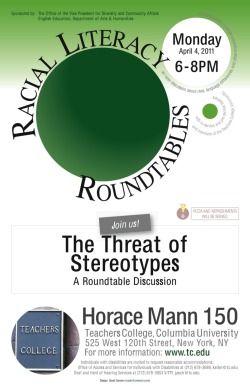
last week i attended one of three racial literacy roundtables being held at tc, coordinated by the lovely yolanda and a group of earnest and thoughtful graduate students. one of the facilitators for the evening ventured forth a story by way of introduction to the evening's theme of stereotypes. (the word immediately takes me back to a moment from my childhood when i first heard the word "gandhi" used as an insult hurled toward me... and i was confused then, as i remain now, as to why the name of this icon of non-violence would be insulting to me. ah, youthful ignorance!) this young women noted that it was only upon entering graduate school that she realized that all of her friends were just like her, they looked just like her, shared her life experiences. so, when it became my turn to introduce myself, i wondered aloud, whether we don't all look for a glimpse of familiarity when we connect -- not only within presumed "sameness" but also across differences.  that is, might we not see something familiar in someone who does not share our phenotypic makeup and yet be "just like us?" and perhaps i am keenly aware of this as most of the people who have and continue to leave footprints in my heart look nothing like me, but they are my twin skin, nevertheless.


4.02.2011

my "letteracies" -- installment 2

what is the impetus to put pen to paper, or these days to type in the key of a letter? do we resist because we don't have time? or do we assume that our recipient, whomever he or she may be, can't or won't make time for such trivialities? have we lost our ability to render ourselves vulnerable, not only to people in our lives, but to our very selves? are we afraid that if every minute isn't spent with just the slightest hint of suffering and laboriousness, that we ought to feel guilt; rather than creating the spaces for unpredictability, exploration, aimlessness that we (as adults) and certainly that children and youth so desperately need? i think we're just all a bit terrified of looking foolish...
8.1.199X
Happy August! I’m back at my grandmother’s house in Madras. We finished the southern leg of our India trip without too much of a problem. All in all I’d say it went well. … in about 1 month and 3 days I will be all moved in at Penn; for that reason alone I can’t wait to get home. That and the fact that I can mail you this thing, which I predict will be a pretty hefty package by the time I finish!
given my constant attention to time, temporality, and location in these excerpts, perhaps it is not a surprise that theories of space/time captured my imagination from the first read.  references to college are peppered throughout the pages of the chronicle, suggesting a restlessness that is to be expected of an adolescent during the summer before leaving home for college.
8.5.199X
Ahoy, again! Or actually I should say “All aboard!” or something like that, because at this very moment I’m aboard the Corumendal Express en route to Calcutta. It is about 9:15pm and we’ve been on the train for over twelve hours. But we have air conditioned sleeping compartments, so it’s a whole “lotta” fun! It wasn’t more than an hour ago that tears were streaming down my face in reaction to the conclusion of one o the best books I have ever read, “The Prince of Tides.” The last thirty of so pages were absolute torture, but I loved every minute of it I haven’t had a book move me like this one did in a long time. it felt good to know and experience the beauty of a language that could evoke such true feeling and emotion. Perhaps I’m wrong in saying language. A more accurate statement would be that knowing that a contemporary author like Pat Conroy could have such a mastery of language that really and truly clutches your gut – well, it both strengthens and illuminates the aura of literature in the world today.

I just finished listening to some guy literally yelp the words “Love and happiness” over and over as accompaniment to a beautiful Sandborne sax. But that’s not the point’ it’s what he was saying, rather than how, that inspired this next passage.

Ok, let’s take these words into perspective: LOVE and HAPPINESS.
What the hell does that mean?!?!?!?
Love. I wrote an essay on this same topic. Now perhaps you’re wondering what credentials I had that gave me license to write about this great wonder of wonder. Well I had, still have, and always will have the one trait that I share with about four and half billing other creatures that inhabit the earth: the trait of being human and having the capacity to love. The trait that not only allows me to feel, but to express to the world these feelings – if I so choose.
So I embarked on a voyage that required self-examination to great degrees on my part. As the essay took shape, bit by bit, I realized that love really is more than one thing, that it is many things, and that I was one hell of a lucky person to have even experienced the different kinds of love I had [experienced] in these seventeen years, ten months, and 25 days (and counting) of my life. Granted that one of those [kinds] did not include the one thing always linked to love: romantic love. But I’m beginning to see that everything comes in its own time; besides I had so much else to write about.
i marvel that i thought someone would want to read these words, these crazy and meandering musings. this tablet was nestled in a box alongside dozens of other letters that dated back to my middle school days. i had french pen pals -- bruno and madeleine -- and exchanged letters of varying length with friends i would meet for a day, some with whom i attended school, and others i met in a month-long residential program during the summer after my junior in high school -- where i met my friend L as well as my now-husband. some envelopes are decorated with artwork, others -- especially the ones sent to me by my younger sister -- were adorned with stickers and doodles and last minute messages hastily scribbled onto available blank space of envelopes.

8.6.199X
11:45pm is the time as I say hello again from Calcutta. It’s hard to believe that I lived here for three years of my life. My dad used to describe the city to me at the time when he was growing up. I knew it wasn’t the poshest of locations, but I didn’t expect such an onslaught of smog, pollution, and more people!! I always pictured Calcutta as very black and white – that’s probably because of all the black and white photographs I’ve seen of my dad’s childhood.

We visited some friends of my parents, who still live in the same apartment building. (The guy was dad’s childhood friend and had lived in the same apt. for 54 years!) Then we saw a lady who supposedly was my friend. Mom said that I’d spent more time at her house that at home; their flat is right next to ours. Both she and the previous couple I mentioned had last seen me when I was 3 ½ -4 years old. Boy were they shocked when they found out who I was!
as i read my old letters from my friends, and as i sit with the chronicle that was never sent, i am reminded of how much meaning comes through in the space of correspondence. such was one of the great joys in the story of the "goat on a cow" (which was recently re-interpreted as an amazing feat of dance choreography), in which the discovery of a stack of letters along the side of a road led to the unveiling of a relationship and identities once thought long forgotten. the finding of letters, whether they be familiar or new discoveries, is reminiscent of a near-sacred moment -- the opening up and peering into of the middle of a conversation, of a self being crafted and gently unfolding as the words create lines that take up pages. once i got past the initial cringing that is bound to occur as the inner critic rears her ugly head, i was able to see connections to some of the uncertainties, frustrations, earnestness, confusions, and emotional dilemmas that i see echoed in my conversations with many young people today. and perhaps more than anything, i was struck by the acts of making public aspects of a very inner and private dialogue. they made me wonder if and how youth are carving out those spaces in their quotidian discursive activities today -- where? how? with and for whom?

installment 3 to come shortly...
installment 1 here

4.01.2011

my "letteracies" -- installment 1

i've always found letters to be magical in nature. not only receiving them -- although i will admit that receiving a letter in my mailbox or a meandering email in these days of communiqué barely the length of tweets thrills me to no end -- but also writing them. unlike other forms of writing in which i routinely engage, so often driven by someone else's needs or demands, letters beckon to a different voice, an all-too-often quieted voice -- a voice of go-nowhere-quick ideas, confusing-at-best and nonsensical-at-worst punctuation, ambitious descriptions that sometimes fall quite short (but the joy is in attempting play with language); in letters, i get lost, happily lost.

i was positively jubilant, therefore, when i recently came across a 6"x9" ruled writing tablet that contained nearly 20 pages (double-sided) filled with musings, commentary, and often just idle chatter that i had composed while traveling across india during the summer after my high school graduation. for four weeks, i rode trains, boarded planes, squeezed into cars, jeeps, and all other manner of conveyance -- even a "boat" that looked like an upside-down mushroom, made of tightly stretched buffalo hide -- with my parents, my two siblings and my two friends as we journeyed north and south and east and west through the country where i was born. what makes this chronicle particularly intriguing to me is that it was written as a very long letter to my friend L with whom i had exchanged periodic correspondence for nearly a year before. letters, written long hand, before email was de rigueur.

as it is probably obvious by now, i never sent this travel chronicle and when i read it again in its entirety just a few weeks ago, i am even more thankful that it stayed with me. the letter writing space that my friend had opened up for me nurtured my curiosities, heightened my engagement with the world, and invited me to consider new audiences for my words and work.  for a then-17-year-old, such a space was simply wondrous. a true gift. and one that i have been able to reconstitute to some degree in newly found and "founded" spaces of correspondence. in this vein, i echo the joy of letters found in one of my favorite blogs, the letter writing revolution.

so, in the spirit of engaging with that young, 17-year-old girl -- and because i promised my friend i would share bits of these missives, no matter how silly and embarrassing they may be after so much time has passed! -- i'm going to spend the next few blog posts reprinting excerpts from the chronicle, not to navel gaze, but rather to become reacquainted with my former self and to rejuvenate my empathy for young people who are constantly negotiating multiple terrains in which they are striving to make themselves known. in that spirit, i offer these nascent scribblings as a springboard to my own memory work around the many meanings of writing -- and of letter writing in particular -- in my life. (and in so doing hope for generous readers who recognize and are willing to overlook the clumsiness of an adolescent seeking and crafting a voice out of words...)

***

7.28.199X
… So, where am I now? At this point in time I am sitting in an uncomfortable, hexagon-shaped stool in a hexagon-filled hotel room in Mysore, India. … It’s been about a week now and I feel like I’m just going through the motions. … Today’s the 5th straight day we’ve been travelin and sightseeing and the strain is slowly beginning to have a negative effect on everyone’s demeanor. We’re all getting kinda testy!

7.29.199X
Well today was more than fabulous and I am sitting here in the Kabini River Lodge in the middle of a national forest.  [Earlier today] we boarded a most wonderfully bumpy jeep and were given a 2½ hour tour of Nagarhole National Forest. But wait, it gets better: aside from the countless groups of deer jumping, leaping and standing still, we saw, up close and personal, bison, peacocks, and my personal favorite, a beautiful group of elephants. One even started to charge at us! As you can most likely tell this was absolutely, unquestionably, fantabulously, indescribably GREAT! The fact that we had to get out and push the jeep out of the mud a couple of times only added to this adventure.

Right now it’s about 10:25pm and the only sound besides the ceiling fan and this pen writing on this paper is the soft murmur of crickets whispering outside. No horns, cars, people; nothing but simplicity. I wish we could stay here for a few more days.

7.30.199X
OK, that was a question break. So, tell me, how are you doing? I know you can’t tell me right now… but oh well. Are you all set for another year out in the wilderness in WV? Is it really that “isolationary?” you go out and have a good time, I’m pretty sure… right?
Do you ever just close your eyes and for just an instant feel your body being lifted – feel weightless? A sensation similar to a vacuum flows through your entire being like a flash of lightning. Every in of skin feels the instantaneous tingling, like a feather barely touching the hairs on your arm, legs, and neck. Your eyes seem to be traveling through the brain. This is an instant of complete and absolute peace and inner harmony.
And then, it’s over.
***

...more musings and chronicle excerpts to come in installment 2...

3.23.2011

being in tune with oneself

as i began this post several days ago, i only had a sense of where the story would go. i have an image in my mind of a young man looking at me with incredulity as i was hanging out in the afterschool program where my research team and i spend a few afternoons a week facilitating an arts and digital literacies project.  on a recent tuesday, we were continuing some work with collages that we had begun the week before. collaging is one in a long line of expressive practices that we have been incorporating into this series of workshops, that has included designing movie posters, camera work, reading and scripting lines of a play, among other practices. i first met the boy who i'm thinking of -- i'll call him derek -- a few weeks back. when i was introduced to him as a professor by a graduate students, who is also part of the team, derek immediately referred to me as "the OG." i liked him instantly :)  he wondered aloud what my relationship was, in terms of power and authority, to eric, who he referred to the man in charge. admittedly, eric does appear wise beyond his years and is a founding member of this project, but we both laughed at derek's characterization of his presumed age as he is almost the youngest member of our team.

but i digress... last week, as i walked into the program, derek announced my entrance by noting that "triple OG is here." (when eric entered a short while later, derek noted, "here comes double OG.") in addition to reminding me so much of one of the boys who was a part of my dissertation project group -- cyrus -- derek's countenance, wickedly shy smile that breaks into a grin, surprise when i call him by his name (and that i know his name at all) -- all of these little glimpses suggest some of the many layers that comprise the life of this one young man.

last tuesday, we were discussing events around the world -- and reminding ourselves to remember that the world is both local and global (and all the lovely bits in between) -- with the help of photographs depicting images of the devastation following the earthquake in japan, somali refugees in tunisia, citizen soldiers taking arms in libya... derek, who was sitting next to me, launched his body nearly out of his chair on more than 4 or 5 separate occasions. he was still very much engaged and participating, as his writing and conversational contributions from that day reflect, but he needed or took moments to swing himself away. i described this interaction in an email to a friend this way:
"I think... of this week's discussion with some young people whose great desire to be heard was palpable; a hand laid gently on a shoulder was all it took to invite a young man to join our discussion. This in contrast to a similar moment in classroom where delayed participation may be read, in a moment, as disengagement, and the weight of many previous moments of impatient judgments flash like a halo of garish neon signs."
in sharing this moment, i was recalling the suggestion made by jay lemke who notes that "moments add up to lives," and wondering about the many moments that adolescents experience in schools that rush by without attention, and yet build up with the residue of false or lowered expectations, disappointments, sacrificing relationships for content coverage, reinforced messages that kids must fit schools and decidedly not the other way around.

while i was thinking about all of this, and wondering how derek's sense of self - his very personhood - might be supported, i received an email from my friend e, whose beloved piano had just been seen by a tuner after a very long time. because of age (close to a 100 yo) among other reasons, the piano, e wrote, might only ever "be in tune with itself" and not, as it were, perfectly tuned. her email and the turn of phrase made me think instantly of derek. and cyrus. and ed. and travis. and brite. and christian. and eric. and myself. all were adolescents at some point, either now or in the past, who may not have been seen for who they are, only for what and who they are not.

to be in tune with oneself -- a formidable task in it own right! how often do we hear adults striving for a sense of balance and harmony, and yet why do we eschew these same qualities in young people who have not conformed to norms of behavior, practice, action, performance, engagement? the pursuit of being in tune with oneself may be where human flourishing comes alive and perhaps lies in direct contrast to an insistence on developmental markers of identity, progress -- redolent of what varenne and mcdermott artfully illustrate in successful failure about the social construction of labels that emerge out of judgment of a child's lack of being in tune with others, even while she may be perfectly in tune with herself... capable of playing, in key, with those around her.

2.10.2011

3MinuteMedia -- Social Issue Media Festival 2011 -- Get Inspired!!


The 2nd Annual Teachers College Social Issue Media Festival has extended its call for entries! Submit a video, podcast, photo essay or other piece of media that explores a social issue in under 3 minutes. Find out more at http://www.socialissuemediafest.org and by following @3MinuteMedia on Twitter.

New Deadline: Friday, February 25, 2011

2.09.2011

call for entries - extended

what are you passionate about?
are you the person to tell that story?
what does the world need to hear?
how can 3 minutes change something?


get inspired. and pass it on...