9.28.2011

Rethinking schooling -- part 1: Reflections from #UTASNewLits


For someone whose research and teaching life has been spent mostly outside of traditional schooling contexts, I spend a great deal of time thinking about school. And most of the time I worry that what's happening in schools is not education(al); or perhaps, what schools educate about isn't necessarily the content of curricula but rather the disciplined and disciplinary discourses of school(ing). We learn that we must sit quietly to learn effectively, to do our own work without the help of others, and that reading in silence without moving our lips is the superior hallmark of decoding fluency; in fact, making noise of any kind is akin to depending on squeaky, bothersome, always-temporary training wheels that signals one's lack of proficiency in being a student. And this is even before we get to any mandated testing.

I learned all of these things and more during my years in school, a journey which began when I was just two and half years of age. Some part of me must've liked the institution enough to continue on through the completion of a PhD -- in total, 26.5 years of school. We had a good relationship, School and I, but I doubt that I would say the same if I were to have gone through schooling in today's era of test-first-think-later.

Earlier this month, I had the great privilege of spending some time with colleagues at the University of Tasmania, the Launceston campus, where the School of Education hosted a two-day conference on New Literacies, Digital Media, and Classroom Teaching (#UTASNewLits). The conference, organized by Angela Thomas (@anyaixchel), reflected an ethos I have come to love in Angela's research and writing (in brief: focusing on identities and practices in an age of new and digital literacies, but oh, so much more): a persistent sense of being present in the current communicative moment while considering what possible directions new modes, modalities, and digital platforms present for how we imagine, enact, and design education. (Notice, I did not say schooling.) My reflections on the time spent down under has continued to remind me that when educators are brought together, even as testing and schooling may loom large, they are really passionate about education -- the possibilities of creative, imaginative, innovative engagement with the world.

It was perhaps telling that the opening keynote was delivered by the esteemed Len Unsworth, whose respectful discussion of children's books and the new media forms into which they become translated was at once incredibly engaging and illuminating. How does the point of view of the narrative change when a printed book is made into a film, he asked as he proceeded to delight the audience of teachers, researchers, and students with a read aloud of “The Lost Thing” by Shaun Tan. Len invited us to shift our gaze to various parts of the text, that he had scanned and enlarged as slides from which he read. What was the reader able to determine and what information on the page allowed such interpretations? From whose vantage point was the reader being brought into the narrative, and how did the point of view inform our understandings of what was going on? What was said and left unsaid? Then he showed us clips from an animated version of the story, pointing out the affordances of this medium to fill in gaps left by the printed text. Swift camera moves shift perspective in the blink of an eye – first, we see what the boy sees and in another instant we are looking down on the boy as if we are one with The Thing. What impact might this have in the story we make in our heads of the story we are reading or watching. I think of an essay written by Amelie Rorty, described as a philologist in her short bio, in which she talks about some of the many possible questions one might ask of an author when engaging with one’s text. She describes this as a practice of understanding the “author’s house,” and in one sense I understood the careful and thoughtful analytic framework that Len and colleagues, Annemaree O’Brien and Paul Chandler, have developed as another approach to understanding the author’s house, particularly through a focus on the representation of point of view. Lucky for the rest of us, their co-authored book will be available in early 2012!

Point of view was turned on its side in the morning workshop I attended in which Winyu Chinthammit led us through the process of using software to generate 3D holograms in pursuit of a hands-on understanding of augmented reality, a research and development agenda that is alive and kicking at the HITLAB at UTas. As I manipulated a magenta cube on the marked paper in front of me, I wondered about how access to this sort of object play might inform narrative creation. How else might we use the affordances of augmented reality software for a range of educational purposes, not only inside but also outside of school?

One of the really lovely things about intimate conferences in which choice times, like a selection of workshops, are punctuated with talks that all participants attend is that a shared lexicon develops quickly. The afternoon keynote by Martin Waller, the charming and enthusiastic primary teacher and researcher from England deepened shared lexicon by cultivating our appreciation for the affordances of social media as he regaled with tales of his tweeting adventures with Year 2 students (approximately seven year olds). Martin spoke of what he called “contentious literacy” or those practices of literacy embedded social media that do always have a ready place in schools. His goal, however, is broader than test preparation and the adherence of some pre-fabricated curriculum. Martin wants his students to explore, and to feel a sense of pride and connection and joy from and through their literacy engagements.  And these are among the results to come from setting up a (fully protected!) twitter account through which the world can learn of the Year 2 kids’ excellent adventures as they write poetry, go on treasure hunts, plant a garden, and learn more about themselves and the world in which they live. Martin shared one response from a fellow literacy blogger and tweeter, @librarybeth, whose appreciation for the daily musings of his students delighted them equally and served as additional motivation for continued social media composing.  He pointed out, too, the ways in which social media such as twitter can organically nurture the critical literacies of young children, pushing them to wonder aloud and not remain complacent in their inquiries.

Day 1 concluded with another set of workshops and I was excited to facilitate a workshop on multimodal response and share the worlds of Media that Matters Film Festival (and the film Immersion) and the online video making tool Animoto with an amazing group. 

Stay tuned for part 2 --

9.24.2011

ethnography forum 2012: focus on digital discourses

i have fond memories associated with the ethnography forum. it was the venue where, as a relatively new master's student, i first presented an academic paper based on my involvement in an adult literacy practitioner inquiry group. and it is the venue where i have brought my own graduate students so that they, too, could experience a gentle yet generative entry into the discourses of academic presentation. held on the last weekend in february each year, the forum has a rich tradition of bringing history together with innovation in the domain of ethnographic research. and the 2nd day of the annual two-day conference is dedicated to a focus on teacher research and the often illuminating work of educators and those who assume a practitioner role in the space of research and inquiry. and almost without exception, the plenary speakers have consistently pushed to the fore those threads that start to bud as q&a sessions spill over into the hallways of all four years of the school where i spent many hours, days, and years. this year looks to be following in the same direction with a conference theme that promises to be stimulating and groundbreaking, and invited speakers each of whom embodies a unique mix of passion for the work, innovative scholarship, pedagogical creativity, and eloquence. be sure to check it out!

exciting new direction for the penn annual ethnography in education forum. the theme: Digital Discourses: Education and Ethnography in the 21st Century

proposals due: october 1st

a bit about the theme:

Technology and electronic media today are developing faster than ever, and change the ways we communicate, teach, learn and research. We now live in a digital world where new forms of interactions, social relationships, and identities are generated, thus transforming the very meaning of education. Learning and educating now occur in contexts shaped by Facebook, Smart Phones, Texting, Twitter, online learning, and Skyping—creating new resources and new challenges to our educative worlds. One now needs to draw on ever more diverse semiotic resources when traversing across different virtual and real spaces. As ethnographic researchers, our toolkit has greatly expanded: our briefcase-sized tape recorders of the past have been replaced by pocket-sized digital recorders, smart technology, hand-held video recorders, and online chatting from opposite corners of the globe. These tools have opened up greater possibilities for ethnographically capturing and exploring digital discourses and also for collaboration among ethnographers from a distance. Reciprocally, ethnographic and qualitative research provides keen analytical tools to capture and understand the complex and vibrant realities in which fast-changing technology affects the lives of students and teachers.

fantastic plenary speakers:
Angela Reyes, Hunter College
John Jackson, University of Pennsylvania
Linda Christensen, Lewis & Clark College
Glynda Hull, University of California, Berkeley

Complete details here

9.19.2011

exciting new special issues

1. this friday, a special issue of the Journal of Negro Education will be launched with the following theme: Preparing Teachers to Teach Black Students; Preparing Black Students to Become Teachers

the volume is guest co-edited by my friend and colleague yolanda sealey-ruiz (along with chance lewis) and includes a wide array of articles that take up questions related to the teaching and learning lives of black students across contexts, their education narratives, and possible education futures.

2. the recently published special issue of English Teaching: Practice and Critique on: Literacy(ies) and the Body  guest edited by another friend and colleague Stephanie Jones (along with Kerryn Dixon and James Albright)

articles include an exploration of embodied literacies, how bodies are read and what that has to do with education, and a piece on performing critical literacy (written by the very thoughtful and exceptionally observant elisabeth johnson)

3. another special issue bringing an exploration of bodies together with geographies is found in the journal Emotion, Space and Society titled: Emotional Geographies of Education -- edited by jane kenway and deborah youdell (whose work i continue to be enamored of and blown away by)

these articles draw on theories and metaphors of geographies and spaces to bring forth new sites of teaching and learning, under-appreciated or less visible contours of how we live and experience education.

for the love of picture books

it is perhaps fitting that my return to this blog, after a brief hiatus, comes following a memorial service for larry sipe, a former professor and the person who gave me words with which to describe my own love of books and stories and characters and narrative delights: jouissance! plaisir! performative responses! cover pages! aesthetic!

among my favorites that larry introduced me to, that i have been thinking about and revisiting in the several months since his passing are:
The Stinky Cheese Man and Other Fairly Stupid Tales


The Giver

Smoky Night

and if you want to hear more about children's and young adult literature, definitely check out the very excellent blog: The Classroom Bookshelf: Teaching with Children's and Young Adult Literature in the 21st Century.

over the next several months, i'll be sharing reflections on the many ways i continue to witness the joy for stories that larry held and shared as they thrive in the practices of the many young people i've spent time with these last several years. in part, this will be a part of the collection of essays i am preparing along with my research team in a book about bringing an arts-based approach to digital media in literacy explorations with youth, particularly court-involved youth. and other vignettes will be drawn from a book length manuscript i'm working on based on five years of ethnographic research at the program i've called ATIP in various publications.

for now, though, i'll take in the jouissance that comes with recognizing the beauty of a beautifully crafted page, made of pastels and paint and cutouts and hours of labor...

9.18.2011

my "letteracies" -- installment 4

over the past several months, i had forgotten to post this last installment. as i read through it now i am struck only by one lasting thought: how precious words can be as a marker of a moment in time. and perhaps bound up in this observation is also the significance of audience, of someone or a few someones who permeate our minds as we compose a text, who infuse our compositions with a small smile or a belly laugh, whose presence pushes us to write to completion, who give our writing purpose and urgency. this is, then, a blanket thank you for the audiences i have had the pleasure of writing to and with and hope to continue a dialogue with in the months and years to come...

and so, without further mediation, the last installment:


8.21.93
…
Getting back to the Taj Mahal: it was beautiful. That’s it. As much as I always wanted to see it, I never really wanted to go in – or go very close for that matter. I don’t know why exactly. Perhaps because actually going in would cause the Taj to lose some of its mystique and enigmatic charm… and it did. Thinking back now it seems almost unreal that I was there. In fact this whole month has just been, what seems like, a big blur. But, all that’s not to say that this isn’t a truly magnificent piece of architecture. Actually it’s more than that. it’s a symbol of the magnitude of Shah Jahan’s love for his wife. And, well, that right there is nothing short of absolutely beautiful. It’s even better because such a symbol exists in a country where, traditionally, love isn’t as widely shown or publicized.

People often say patience is a virtue. This couldn’t be truer. But just as there is virtue in being patient, there is virtue in being content, hence contentment, too, is a virtue. The lack of this can be a deadly thing. This of course doesn’t mean that you shouldn’t strive to better yourself knowledge-wise, spiritually, and internally, for there is always room for improvement and learning. I just mean that always wanting what other people have or never being satisfied unless on has as much of more than others is not healthy at all and can be damaging to both the person who thinks this way and the recipient of such behavior.

…
I hate jealousy. I hate manipulation. I hate arrogance. I hate people taking advantage of others. I hate lying. I hate cheating. I hate meanness. I hate fakes. I hate corruption. I hate prejudice. I hate superficiality. I hate people who aren’t what they portray themselves to be. I hate hypocrites. I hate myself for not seeing people for what/who they really are in the first place. I hate jealousy.

8.24.93
As I’m writing now I’m sitting on my bed at home, in my room, with my back against the “unfinished wall,” listening to the jazz station, hearing a fly have repeated encounters with different objects in the room. It’s good to be home and, as usual, it’s hell to be home.
…
I saw my friends last night. It felt good to laugh like that again.
…
Did you ever have so many thoughts to write down that you couldn’t do it because there were just too many and they were all just fragmented thoughts anyway? Well, that’s what’s happening to now, and has been for quite a while. It’s fun just thinking them though.
Well, I’m sure that this proved to be an interesting, and probably tedious, piece of writing to read and if you got this far you definitely deserve a 3 Musketeers bar. I’ll end this “saga” just by wishing you a good year and thanking you for just … being you :)
…

4.15.2011

my "letteracies" -- installment 3


this penultimate installment of excerpts from the india chronicles has a bit of a smorgasbord feel to it. i wonder what a journey across space and time does to an almost 18-year-old. by "does" i mean both the effect on an older adolescent's sense of self as well as the cultivation of an affect and aesthetic of self. how do encounters with multiple others, and the unfamiliar readings of oneself by others, shape a sense of self? and all the while that these encounters are happening and musings are coming in and out of focus, the chronicles putter along with a dual audience in mind -- the intended reader as well as the writer, herself. the pale green steno paper on which these words were scribbled, sometimes with haste and other times with deliberate script, are suggestive of a narrative not only being told but also one being made in real time.
8.7.199X
…
I had a fascinating dream last night. I wrote down what I could concretely remember and I’d explain it but it’s confusing, even for me. More than the actual events of my dream, I remember the feelings – both emotions and physical – that occurred. Is there any real value worth giving to dream analysis? I’ve always heard that dreams are symbols of something. Are they?

i've been thinking a lot about aesthetics and literacies -- about how we feel when we engage with or encounter a text, even a text such as a dream. about how texts and related artifacts stay with us. how they linger long after the moment of encounter. how memory shapes them into the recesses of our minds, pushes them deep into our bodies, waiting for the right occasion or trigger to release them back into our consciousness. it is akin to the connection others have with smells or sounds; for me, it has always been words. i remember how i felt when my 2nd grade teacher insisted on mispronouncing my name even after i had meekly corrected her for the umpteenth time; she insisted on rhyming the 2nd syllable of my name with the word "with" when i desperately wished for her to realize its aural kinship to the word "teeth." 

and i sometimes get lost when the words of another hold me in place while the conversation moves along, leaving me holding my thoughts in quiet as the world rushes forward. like when i was told long ago that my face registered on it the hundreds of fleeting flashes of thought as i listened intently to people in dialogue, taking in their words and gestures and formulating a measured response. whenever a passer-by encourages me to "smile!" or reminds me that "it's not so bad!" as my face contorts when lost in thought. and in those moments, those words come rushing back; i had never had anyone read my face before nor has anyone done so since.
8.8.199X
…
OK, still the eighth of August. We finished packing. Before that, though, j asked who I was writing to. i, looking at the first page, said that it must be a generic letter because it wasn’t addressed to anyone – all it says is “Hi!” so I said I was writing to you. Then she asked if it was a letter or if I was writing a book! I simply told her that writing to you was like writing in a diary, only better. It’s like having a sounding board. Somehow, when I write things down I feel better; when I write them to you, I not only feel better but I can think clearer. And besides, I like writing to you – above all else, it’s wonderfully fun!

this passage reminds me of a quote imprinted on the side of a mug given to me by a high school teacher who i adored, and about whom these particular words by eleanor roosevelt ring quite true, "Many people will walk in and out of your life, but only true friends will leave footprints in your heart." i am reminded, also, of what another friend said about the ideas and words and meanings we carry with us. friendship is that, i suppose. we shift just a little bit with each encounter, but some change us forever. i'm thinking of people, themselves, as well as the words they share with us. and the stories they invite us -- move us -- to share with them.
8.12.199X
I begin this passage not just as a citizen of the world and earnest observer of life, but as one who has visited the site of one of the wonders of the world: The Taj Mahal. It was strange actually going there, though.

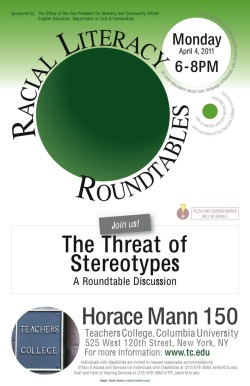
last week i attended one of three racial literacy roundtables being held at tc, coordinated by the lovely yolanda and a group of earnest and thoughtful graduate students. one of the facilitators for the evening ventured forth a story by way of introduction to the evening's theme of stereotypes. (the word immediately takes me back to a moment from my childhood when i first heard the word "gandhi" used as an insult hurled toward me... and i was confused then, as i remain now, as to why the name of this icon of non-violence would be insulting to me. ah, youthful ignorance!) this young women noted that it was only upon entering graduate school that she realized that all of her friends were just like her, they looked just like her, shared her life experiences. so, when it became my turn to introduce myself, i wondered aloud, whether we don't all look for a glimpse of familiarity when we connect -- not only within presumed "sameness" but also across differences.  that is, might we not see something familiar in someone who does not share our phenotypic makeup and yet be "just like us?" and perhaps i am keenly aware of this as most of the people who have and continue to leave footprints in my heart look nothing like me, but they are my twin skin, nevertheless.


4.02.2011

my "letteracies" -- installment 2

what is the impetus to put pen to paper, or these days to type in the key of a letter? do we resist because we don't have time? or do we assume that our recipient, whomever he or she may be, can't or won't make time for such trivialities? have we lost our ability to render ourselves vulnerable, not only to people in our lives, but to our very selves? are we afraid that if every minute isn't spent with just the slightest hint of suffering and laboriousness, that we ought to feel guilt; rather than creating the spaces for unpredictability, exploration, aimlessness that we (as adults) and certainly that children and youth so desperately need? i think we're just all a bit terrified of looking foolish...
8.1.199X
Happy August! I’m back at my grandmother’s house in Madras. We finished the southern leg of our India trip without too much of a problem. All in all I’d say it went well. … in about 1 month and 3 days I will be all moved in at Penn; for that reason alone I can’t wait to get home. That and the fact that I can mail you this thing, which I predict will be a pretty hefty package by the time I finish!
given my constant attention to time, temporality, and location in these excerpts, perhaps it is not a surprise that theories of space/time captured my imagination from the first read.  references to college are peppered throughout the pages of the chronicle, suggesting a restlessness that is to be expected of an adolescent during the summer before leaving home for college.
8.5.199X
Ahoy, again! Or actually I should say “All aboard!” or something like that, because at this very moment I’m aboard the Corumendal Express en route to Calcutta. It is about 9:15pm and we’ve been on the train for over twelve hours. But we have air conditioned sleeping compartments, so it’s a whole “lotta” fun! It wasn’t more than an hour ago that tears were streaming down my face in reaction to the conclusion of one o the best books I have ever read, “The Prince of Tides.” The last thirty of so pages were absolute torture, but I loved every minute of it I haven’t had a book move me like this one did in a long time. it felt good to know and experience the beauty of a language that could evoke such true feeling and emotion. Perhaps I’m wrong in saying language. A more accurate statement would be that knowing that a contemporary author like Pat Conroy could have such a mastery of language that really and truly clutches your gut – well, it both strengthens and illuminates the aura of literature in the world today.

I just finished listening to some guy literally yelp the words “Love and happiness” over and over as accompaniment to a beautiful Sandborne sax. But that’s not the point’ it’s what he was saying, rather than how, that inspired this next passage.

Ok, let’s take these words into perspective: LOVE and HAPPINESS.
What the hell does that mean?!?!?!?
Love. I wrote an essay on this same topic. Now perhaps you’re wondering what credentials I had that gave me license to write about this great wonder of wonder. Well I had, still have, and always will have the one trait that I share with about four and half billing other creatures that inhabit the earth: the trait of being human and having the capacity to love. The trait that not only allows me to feel, but to express to the world these feelings – if I so choose.
So I embarked on a voyage that required self-examination to great degrees on my part. As the essay took shape, bit by bit, I realized that love really is more than one thing, that it is many things, and that I was one hell of a lucky person to have even experienced the different kinds of love I had [experienced] in these seventeen years, ten months, and 25 days (and counting) of my life. Granted that one of those [kinds] did not include the one thing always linked to love: romantic love. But I’m beginning to see that everything comes in its own time; besides I had so much else to write about.
i marvel that i thought someone would want to read these words, these crazy and meandering musings. this tablet was nestled in a box alongside dozens of other letters that dated back to my middle school days. i had french pen pals -- bruno and madeleine -- and exchanged letters of varying length with friends i would meet for a day, some with whom i attended school, and others i met in a month-long residential program during the summer after my junior in high school -- where i met my friend L as well as my now-husband. some envelopes are decorated with artwork, others -- especially the ones sent to me by my younger sister -- were adorned with stickers and doodles and last minute messages hastily scribbled onto available blank space of envelopes.

8.6.199X
11:45pm is the time as I say hello again from Calcutta. It’s hard to believe that I lived here for three years of my life. My dad used to describe the city to me at the time when he was growing up. I knew it wasn’t the poshest of locations, but I didn’t expect such an onslaught of smog, pollution, and more people!! I always pictured Calcutta as very black and white – that’s probably because of all the black and white photographs I’ve seen of my dad’s childhood.

We visited some friends of my parents, who still live in the same apartment building. (The guy was dad’s childhood friend and had lived in the same apt. for 54 years!) Then we saw a lady who supposedly was my friend. Mom said that I’d spent more time at her house that at home; their flat is right next to ours. Both she and the previous couple I mentioned had last seen me when I was 3 ½ -4 years old. Boy were they shocked when they found out who I was!
as i read my old letters from my friends, and as i sit with the chronicle that was never sent, i am reminded of how much meaning comes through in the space of correspondence. such was one of the great joys in the story of the "goat on a cow" (which was recently re-interpreted as an amazing feat of dance choreography), in which the discovery of a stack of letters along the side of a road led to the unveiling of a relationship and identities once thought long forgotten. the finding of letters, whether they be familiar or new discoveries, is reminiscent of a near-sacred moment -- the opening up and peering into of the middle of a conversation, of a self being crafted and gently unfolding as the words create lines that take up pages. once i got past the initial cringing that is bound to occur as the inner critic rears her ugly head, i was able to see connections to some of the uncertainties, frustrations, earnestness, confusions, and emotional dilemmas that i see echoed in my conversations with many young people today. and perhaps more than anything, i was struck by the acts of making public aspects of a very inner and private dialogue. they made me wonder if and how youth are carving out those spaces in their quotidian discursive activities today -- where? how? with and for whom?

installment 3 to come shortly...
installment 1 here

4.01.2011

my "letteracies" -- installment 1

i've always found letters to be magical in nature. not only receiving them -- although i will admit that receiving a letter in my mailbox or a meandering email in these days of communiqué barely the length of tweets thrills me to no end -- but also writing them. unlike other forms of writing in which i routinely engage, so often driven by someone else's needs or demands, letters beckon to a different voice, an all-too-often quieted voice -- a voice of go-nowhere-quick ideas, confusing-at-best and nonsensical-at-worst punctuation, ambitious descriptions that sometimes fall quite short (but the joy is in attempting play with language); in letters, i get lost, happily lost.

i was positively jubilant, therefore, when i recently came across a 6"x9" ruled writing tablet that contained nearly 20 pages (double-sided) filled with musings, commentary, and often just idle chatter that i had composed while traveling across india during the summer after my high school graduation. for four weeks, i rode trains, boarded planes, squeezed into cars, jeeps, and all other manner of conveyance -- even a "boat" that looked like an upside-down mushroom, made of tightly stretched buffalo hide -- with my parents, my two siblings and my two friends as we journeyed north and south and east and west through the country where i was born. what makes this chronicle particularly intriguing to me is that it was written as a very long letter to my friend L with whom i had exchanged periodic correspondence for nearly a year before. letters, written long hand, before email was de rigueur.

as it is probably obvious by now, i never sent this travel chronicle and when i read it again in its entirety just a few weeks ago, i am even more thankful that it stayed with me. the letter writing space that my friend had opened up for me nurtured my curiosities, heightened my engagement with the world, and invited me to consider new audiences for my words and work.  for a then-17-year-old, such a space was simply wondrous. a true gift. and one that i have been able to reconstitute to some degree in newly found and "founded" spaces of correspondence. in this vein, i echo the joy of letters found in one of my favorite blogs, the letter writing revolution.

so, in the spirit of engaging with that young, 17-year-old girl -- and because i promised my friend i would share bits of these missives, no matter how silly and embarrassing they may be after so much time has passed! -- i'm going to spend the next few blog posts reprinting excerpts from the chronicle, not to navel gaze, but rather to become reacquainted with my former self and to rejuvenate my empathy for young people who are constantly negotiating multiple terrains in which they are striving to make themselves known. in that spirit, i offer these nascent scribblings as a springboard to my own memory work around the many meanings of writing -- and of letter writing in particular -- in my life. (and in so doing hope for generous readers who recognize and are willing to overlook the clumsiness of an adolescent seeking and crafting a voice out of words...)

***

7.28.199X
… So, where am I now? At this point in time I am sitting in an uncomfortable, hexagon-shaped stool in a hexagon-filled hotel room in Mysore, India. … It’s been about a week now and I feel like I’m just going through the motions. … Today’s the 5th straight day we’ve been travelin and sightseeing and the strain is slowly beginning to have a negative effect on everyone’s demeanor. We’re all getting kinda testy!

7.29.199X
Well today was more than fabulous and I am sitting here in the Kabini River Lodge in the middle of a national forest.  [Earlier today] we boarded a most wonderfully bumpy jeep and were given a 2½ hour tour of Nagarhole National Forest. But wait, it gets better: aside from the countless groups of deer jumping, leaping and standing still, we saw, up close and personal, bison, peacocks, and my personal favorite, a beautiful group of elephants. One even started to charge at us! As you can most likely tell this was absolutely, unquestionably, fantabulously, indescribably GREAT! The fact that we had to get out and push the jeep out of the mud a couple of times only added to this adventure.

Right now it’s about 10:25pm and the only sound besides the ceiling fan and this pen writing on this paper is the soft murmur of crickets whispering outside. No horns, cars, people; nothing but simplicity. I wish we could stay here for a few more days.

7.30.199X
…
OK, that was a question break. So, tell me, how are you doing? I know you can’t tell me right now… but oh well. Are you all set for another year out in the wilderness in WV? Is it really that “isolationary?” you go out and have a good time, I’m pretty sure… right?
…
Do you ever just close your eyes and for just an instant feel your body being lifted – feel weightless? A sensation similar to a vacuum flows through your entire being like a flash of lightning. Every in of skin feels the instantaneous tingling, like a feather barely touching the hairs on your arm, legs, and neck. Your eyes seem to be traveling through the brain. This is an instant of complete and absolute peace and inner harmony.
And then, it’s over.
***

...more musings and chronicle excerpts to come in installment 2...

3.23.2011

being in tune with oneself

as i began this post several days ago, i only had a sense of where the story would go. i have an image in my mind of a young man looking at me with incredulity as i was hanging out in the afterschool program where my research team and i spend a few afternoons a week facilitating an arts and digital literacies project.  on a recent tuesday, we were continuing some work with collages that we had begun the week before. collaging is one in a long line of expressive practices that we have been incorporating into this series of workshops, that has included designing movie posters, camera work, reading and scripting lines of a play, among other practices. i first met the boy who i'm thinking of -- i'll call him derek -- a few weeks back. when i was introduced to him as a professor by a graduate students, who is also part of the team, derek immediately referred to me as "the OG." i liked him instantly :)  he wondered aloud what my relationship was, in terms of power and authority, to eric, who he referred to the man in charge. admittedly, eric does appear wise beyond his years and is a founding member of this project, but we both laughed at derek's characterization of his presumed age as he is almost the youngest member of our team.

but i digress... last week, as i walked into the program, derek announced my entrance by noting that "triple OG is here." (when eric entered a short while later, derek noted, "here comes double OG.") in addition to reminding me so much of one of the boys who was a part of my dissertation project group -- cyrus -- derek's countenance, wickedly shy smile that breaks into a grin, surprise when i call him by his name (and that i know his name at all) -- all of these little glimpses suggest some of the many layers that comprise the life of this one young man.

last tuesday, we were discussing events around the world -- and reminding ourselves to remember that the world is both local and global (and all the lovely bits in between) -- with the help of photographs depicting images of the devastation following the earthquake in japan, somali refugees in tunisia, citizen soldiers taking arms in libya... derek, who was sitting next to me, launched his body nearly out of his chair on more than 4 or 5 separate occasions. he was still very much engaged and participating, as his writing and conversational contributions from that day reflect, but he needed or took moments to swing himself away. i described this interaction in an email to a friend this way:
"I think... of this week's discussion with some young people whose great desire to be heard was palpable; a hand laid gently on a shoulder was all it took to invite a young man to join our discussion. This in contrast to a similar moment in classroom where delayed participation may be read, in a moment, as disengagement, and the weight of many previous moments of impatient judgments flash like a halo of garish neon signs."
in sharing this moment, i was recalling the suggestion made by jay lemke who notes that "moments add up to lives," and wondering about the many moments that adolescents experience in schools that rush by without attention, and yet build up with the residue of false or lowered expectations, disappointments, sacrificing relationships for content coverage, reinforced messages that kids must fit schools and decidedly not the other way around.

while i was thinking about all of this, and wondering how derek's sense of self - his very personhood - might be supported, i received an email from my friend e, whose beloved piano had just been seen by a tuner after a very long time. because of age (close to a 100 yo) among other reasons, the piano, e wrote, might only ever "be in tune with itself" and not, as it were, perfectly tuned. her email and the turn of phrase made me think instantly of derek. and cyrus. and ed. and travis. and brite. and christian. and eric. and myself. all were adolescents at some point, either now or in the past, who may not have been seen for who they are, only for what and who they are not.

to be in tune with oneself -- a formidable task in it own right! how often do we hear adults striving for a sense of balance and harmony, and yet why do we eschew these same qualities in young people who have not conformed to norms of behavior, practice, action, performance, engagement? the pursuit of being in tune with oneself may be where human flourishing comes alive and perhaps lies in direct contrast to an insistence on developmental markers of identity, progress -- redolent of what varenne and mcdermott artfully illustrate in successful failure about the social construction of labels that emerge out of judgment of a child's lack of being in tune with others, even while she may be perfectly in tune with herself... capable of playing, in key, with those around her.

2.10.2011

3MinuteMedia -- Social Issue Media Festival 2011 -- Get Inspired!!


The 2nd Annual Teachers College Social Issue Media Festival has extended its call for entries! Submit a video, podcast, photo essay or other piece of media that explores a social issue in under 3 minutes. Find out more at http://www.socialissuemediafest.org and by following @3MinuteMedia on Twitter.

New Deadline: Friday, February 25, 2011

2.09.2011

call for entries - extended

what are you passionate about?
are you the person to tell that story?
what does the world need to hear?
how can 3 minutes change something?


get inspired. and pass it on...

10.12.2010

research video

edlab, at teachers college, produced a short video about some research i have been pursuing at an alternative to incarceration program (atip) for the past several years. they did a fabulous job of capturing the essence of this wonderful program!

9.27.2010

essays on globalization, education, and citizenship

Teachers College Record, Volume 113, Number 10, 2011

Featured Articles
by David Hansen
This essay is an introduction to a special issue that emerges from a year-long faculty seminar at Teachers College, Columbia University, the purpose of which has been to examine in fresh terms the nexus of globalization, education, and citizenship.

by Lalitha Vasudevan
At a time when there is increased hybridity in local and global citizenship, language and literacy practices, and performances of cultural identity and affiliation, narrowing of our ways of knowing can detrimentally impact how educators and scholars engage in intellectual inquiry and educational practice. This essay uses the mode of questioning to create a dialogue about the discursive, rhetorical, and even physical postures that educators and scholars might embrace when re-imagining everyday practices of teaching, learning, and research to be open to unexpected trajectories.

by Graeme Sullivan
Although the profile of what it is to be an educated citizen needs to be cast across international divides the learning impulse originates with an individual and is further seen and felt throughout the community. If there is a failure to appreciate how all types of learners in all kinds of settings make sense of their education we are all impoverished. Consequently, if communities are unable to understand what it is that those individuals within it “make” as they contribute the collective good then the community itself has ceased to be a learning culture.

by Regina Cortina
With globalization—a term that signifies the ever-increasing interconnectedness of markets, communications and human migration—social and economic divides in countries around the world are hindering the access of many people to the major institutions of society, including and especially education. My goal in this essay is to reflect on the dilemma that John Dewey identified in Democracy and Education regarding the "full social ends of education" and the agency of the nation-sate.

by Molly Quinn
While eschewing definitive findings, conclusions, or recommendations—rather hoping to cultivate new questions, experiences, and stories of our times, and summon us to renewed responsibility, the author undertakes an experiment in reconceiving the ‘3 R’s at the rendezvous of education, citizenship, and globalization: on, and as, natality in our roots, routes and relations.

by William Gaudelli
The aim of the essay centers on a question: What can we see beyond seeing? This essay considers the typical ways in which we see the world in the a-typical settings of travel. I consider how this type of seeing, when the very purpose of the excursion is to see, often positions the seer to do so as a spectator, consumer or flattener of others.

by Olga Hubard
The author's inquiry is driven by the following questions: How is our sense of self influenced by the place where we live? And what happens when our lives take place in two different homes, two cultures? She explores the guiding questions through the unique perspectives of three individuals whose lives straddle Mexico City and New York City. She shares these perspectives as much for the ideas they embody as for the ponderings they provoke. Thus, her reflections, often in the form of questions, are interwoven into the three accounts.

by Michelle Knight
The goal of this paper is to open up a dialogic space where educators can learn from and with transnational immigrant youth who are already participating in civic learning opportunities as local and global citizens in and beyond the sphere of schools.

by Maria Torres-Guzmán
This essay proposes that a fresh look at hybridity can render a rich concept for constructing resistance to conformity and uniformity, and for renewing a commitment to a multicultural, multilingual, egalitarian, ecologically-sound, and democratic world.
 

9.04.2010

Seeking provocations and reclaiming the numbers game

"And the time came when the risk to remain tight in a bud became more painful than the risk it took to blossom." -- Anaïs Nin

In she walked. Already I was braced. And was not disappointed. She unleashed her net of despair, insistent on the savior story; the bootstraps-blindside-redemption narrative.

I sat, with jaw clenched and teeth gnashed, interjecting occasionally when her questions led her to draw absurd conclusions from the responses. She already knew the story she wanted to tell: her questions felt like artifice.

But my anger and hurt/surprise at what seemed like a missed opportunity to tell a compelling story presented an opportunity for tremendous pride. I watched with a full heart as a young man of 20 years held his ground and conveyed his convictions with a resounding calm. I was reminded, by him and familiar and new graduate students, that I am truly part of a team of like-minded, earnest, creative others. The "risk to blossom" must be taken.

This woman, this reporter, presented a provocation -- a reminder that our work is about creating the spaces to cultivate and nurture forth the creative capacities of the youth with whom we work. I am naïve if I forget that the histories and institutional affiliations of "our" youth -- who are involved with the justice system - will be of great interest to distant others. But how might we communicate, effectively and passionately, that these are normal, everyday, engaged, playful, thoughtful young people who are not only so much more than their institutional labels, they often defy those labels entirely.

I was describing this year's project to a former student on the steps in between buildings this week. She noted that in her recent experience working for an academic research center, research like ours was not what was being funded or sought out by the funding agencies. They want numbers. So let's give them numbers:
- the frequency of smiles between youth and adults, participants and facilitators
- how long it takes someone to feel comfortable enough to offer a peer encouragement
- the average number of affirmations and to whom they are directed
- how often and how many genre risks a young person takes - in their composing, consuming, and distribution of texts
- how many, within a given educational space, feel a sense of belonging

And let us reclaim outcomes in the realm of participation - real participation and not merely the behaviors that have been sanctioned by "experts" -- and look for value added in how youth contribute to shaping the curriculum of the educational spaces in which they participate; of course, this assumes educators will allow them this invitation. Could we imagine outcomes that sought greater humaneness among members of a classroom community? Or the mere recognition that one is a member of a community...

Reclamation of the stuff that seems to attract and affirm the monetary risks funders are willing to take; actions that leverage the ideas that capture the broader social imagination by transforming it with tales of fantastical imaginaries -- this is the new frontier of socially conscious, morally committed, pedogically inspired research about the literate lives of adolescents.

8.07.2010

literacy practices a generation apart

things i spend way too much time thinking about (that many of my youth participants and younger friends - or those who appear to be aging backwards - seem to be able to handle without much drama or trauma):

- subject line of an email
- title of playlists
- caption when posting a link to facebook
- the title of anything public, really - e.g., flickr album, picasa album, photo caption,

ok, i'll admit it - grooveshark playlists and plain ol' email subject lines give me agita with a chaser of huge insecurity complex.  how do others do it, i wonder?  this isn't just a split of 'natives' and 'immigrants' of the wonderful wide web; there's something uninhibited about young people's acts of making themselves public that astounds me... still.  a carefree-ness, a willingness to recognize and embrace the fleeting temporality of such literacy acts; acts and practices that, perhaps unintentionally, create a different sort of generational shift.  not necessarily chronologically generational, but perhaps demarcations according to when one joined the smartphone revolution?  the points along a timeline when one jumps on the social media bandwagon - a conscious decision for some; as natural as cool august weather in maine for others.