 our book is in print! almost three years to the day since marc and i solicited submissions for our edited volume, which we hoped would transgress the dichotomous tone of media in/and education conversations that we kept bumping up against in our readings on the subject. even in that brief period of time much has changed in how we conceive of and engage media technologies and media texts. in this collection, we feature the work of six colleagues whose work holds resonance for current conversations about the relationships between youth and media, and who push open our conceptions of media and media engagement. we're also excited to see another vision realized - that of having respondents for each chapter who initiate what we hope will be an ongoing conversation for some time to come. among them, one of our wonderful series editors, michele knobel who, along with colin lankshear, our other series editor, were the best cheerleaders we could ask for!
11.27.2007
Media, Learning, and Sites of Possibility - in print!
our book is in print! almost three years to the day since marc and i solicited submissions for our edited volume, which we hoped would transgress the dichotomous tone of media in/and education conversations that we kept bumping up against in our readings on the subject. even in that brief period of time much has changed in how we conceive of and engage media technologies and media texts. in this collection, we feature the work of six colleagues whose work holds resonance for current conversations about the relationships between youth and media, and who push open our conceptions of media and media engagement. we're also excited to see another vision realized - that of having respondents for each chapter who initiate what we hope will be an ongoing conversation for some time to come. among them, one of our wonderful series editors, michele knobel who, along with colin lankshear, our other series editor, were the best cheerleaders we could ask for!


11.26.2007
cycles
we could argue that everything in life, in large part, has a cycle, a rhythm, a predictable heartbeat... and when that momentum is disrupted or derailed, the chain reaction can have unimaginable consequences for which we are left unprepared. in ethnographic work, relationships and local knowledge are the lifeblood of the experience. this is even more true when the work is participatory in nature, and involves multiple people with multiple perspectives, interests, intentions, and histories. so when this rhythm, this lifeblood is thinned, or halted, or cut off for even an instant, the impact is significant...
recently, i was sharing some of my experiences doing participatory research with youth with a class of graduate students in a qualitative methods class. i talked about the various projects i've been involved with over the last decade and what "participatory" has meant across those contexts. and more specifically, how i establish rapport with the youth who are involved with my research. i hadn't really articulated these aspects of my work before, and was excited to have the chance to reflect on these
here's some of what i came up with:
- a pedagogy of play
- multiple modes of participation
- researcher vulnerability
- willingness to let the focus of inquiry evolve and change
i wrote a bit about this in the handbook chapter that's coming out soon, and i'm working on expanding these aspects in a methods piece i'm writing about participatory research in a digital age. i'll also be using this space to tease out these ideas in the near future. for now, i must return to the final stages of a paper that is long overdue to our discussant in prep for the anthro meetings this week...!
recently, i was sharing some of my experiences doing participatory research with youth with a class of graduate students in a qualitative methods class. i talked about the various projects i've been involved with over the last decade and what "participatory" has meant across those contexts. and more specifically, how i establish rapport with the youth who are involved with my research. i hadn't really articulated these aspects of my work before, and was excited to have the chance to reflect on these
here's some of what i came up with:
- a pedagogy of play
- multiple modes of participation
- researcher vulnerability
- willingness to let the focus of inquiry evolve and change
i wrote a bit about this in the handbook chapter that's coming out soon, and i'm working on expanding these aspects in a methods piece i'm writing about participatory research in a digital age. i'll also be using this space to tease out these ideas in the near future. for now, i must return to the final stages of a paper that is long overdue to our discussant in prep for the anthro meetings this week...!
11.13.2007
NCTEAR 2008 - Deadline extended!!
the proposal deadline for nctear 2008 has been extended until nov. 30, 2007. see my earlier posting for more on the nctear cfp.
submit, submit, submit!!
submit, submit, submit!!
11.05.2007
video cultural commentaries; & journal of culture & tec
a couple of youtube videos that have been circulating:
women in art - female portraits in art over 500 years. i loved the background music.
a vision of students today - another one by michael wesch
and a journal that my friend heather recently told me about:
vectors: journal of culture and technology in a dynamic vernacular - gives 'dynamic journal' a whole new meaning!
women in art - female portraits in art over 500 years. i loved the background music.
a vision of students today - another one by michael wesch
and a journal that my friend heather recently told me about:
vectors: journal of culture and technology in a dynamic vernacular - gives 'dynamic journal' a whole new meaning!
10.15.2007
don't be a multislacking bluetool
i'm not usually a fan of "adults" trying to decode "kidspeak," but this clip held some fun gems. and if you disagree, then you're just agnorant.
teen talk
teen talk
10.09.2007
past is present again
80s male rock stars 20 years later
except for the fact that kenny rogers isn't my idea of an '80s rock star' and that billy idol now looks like a gargoyle, this made for some fun reminiscing.
except for the fact that kenny rogers isn't my idea of an '80s rock star' and that billy idol now looks like a gargoyle, this made for some fun reminiscing.
10.08.2007
WoW! (more) youtube academic literacy
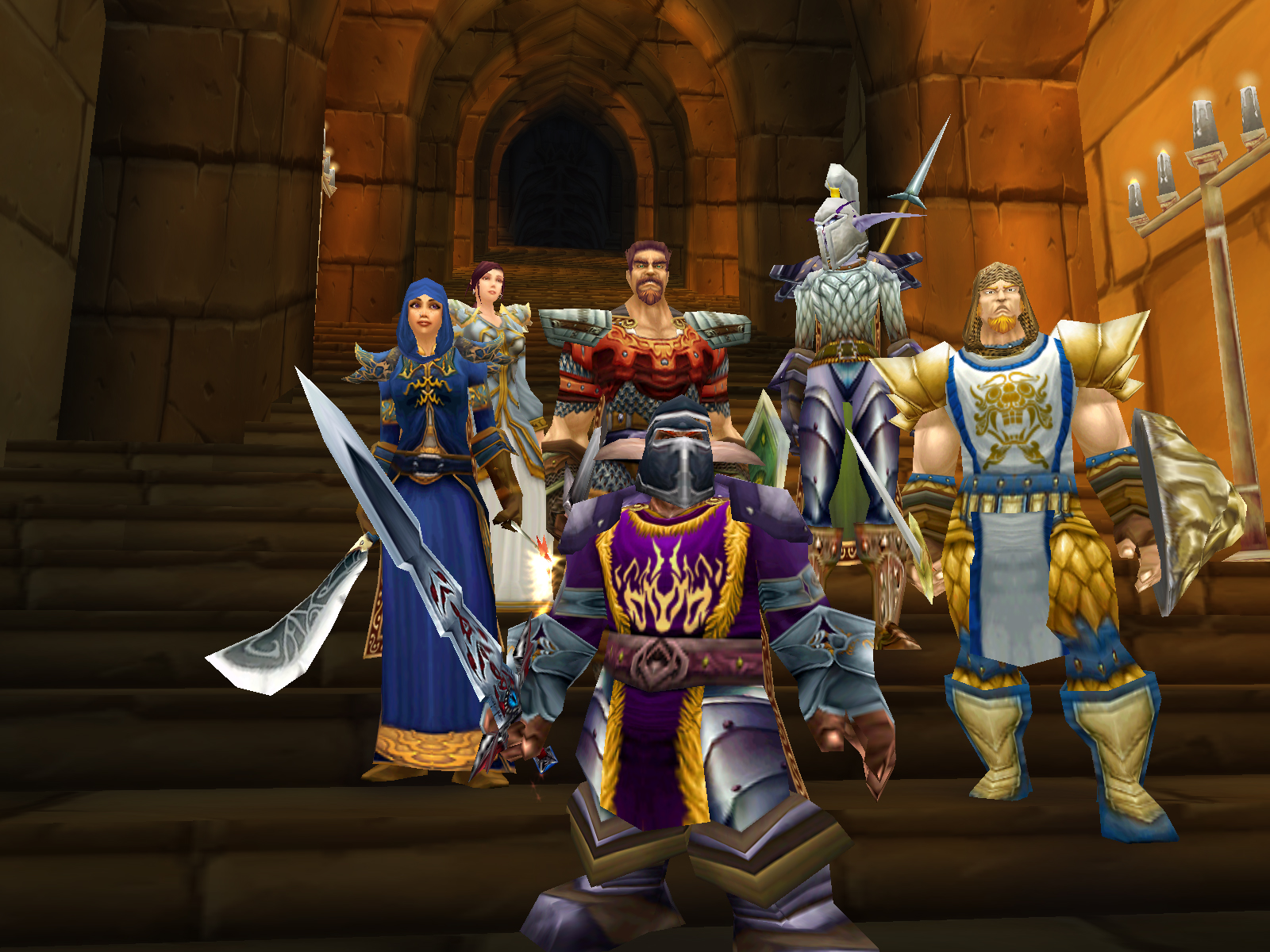 you might notice that i added a sidebar feature that includes a rotating pool of literacy-related videos posted on youtube and videogoogle. i was doing some additional searching for such clips and found the following video.
literacy & world of warcraft (13:10)
(a project assigned by mark warschauer, whose work is well worth checking out, if you haven't done so already)
i suppose we can expect more of this - literacies "homework" online - to come as profs and students explore and blur the lines of what counts as knowledge, work, research, effort... this is of particular interest to me as i venture into these acts of blurring, myself, both in the requirements i design for my classes, as well as in the kinds of academic publishing i'm engaging in (dangling preposition, notwithstanding!).
so i return to this video about world of warcraft (WoW): i learned a lot about the game, rules, and sensibilities of one particular player. much of the 'learning' came from direct dialogue from either the interviewer/video-maker, or the young man being interviewed for a large part of the video. the author also uses captions to add important background information to what is being said, to support the WoW neophyte's comprehension. all of this in service of a question posed at the beginning of the video:
what kinds of social interactions are present in-game? (referring to the inside playing environment of WoW)
but i'm left wondering about the author's stance on, as he claims at the beginning of the video, what "literacies [are necessary] for social interaction to be truly effective?" how is he defining or understanding literacies as existing beyond print - at one point in the video he comments on the literacy opportunities available when typing in-world. the data is there, in his video, but i'm less sure about the analysis. which brings me to a larger question about the representation of analysis in video, audio, and other multimodal and non-print formats...
i find the possibilities are exciting, but they can also be frustrating when the inevitable questions of evaluation and assessment are brought to the surface. we know how to scaffold someone's inclusion of primary and secondary sources when writing literature reviews and other academic papers. but how prepared are we to support our students' as well as our own forays into new academic playgrounds of the fourth kind...?
10.05.2007
on youth, education, race
a recent piece from "talk of the town" in the new yorker that discusses the issues of race and education surrounding what has come to be known as the case of the "jena 6":
disparities
and a couple of editorials by bob herbert of the new york times that resonate with above piece:
the school to prison pipeline
our schools must do better
disparities
and a couple of editorials by bob herbert of the new york times that resonate with above piece:
the school to prison pipeline
our schools must do better
10.03.2007
blog updates and other thoughts
due to all the other writing that's consumed my time, my blog writing has suffered. however, i've been playing around with some of the new add-on features that blogger provides and am especially jazzed about the video searches. i also added a section for announcements related to upcoming conferences and calls for papers that i find out about that look interesting. if you know of others, please pass along.
a note about the previous post - it's a call for proposals for the 2008 nctear conference that will be held in bloomington, indiana. it's one of my favorite conferences - small, generative of good talk and new ideas, and manageable in size and scope. this year's theme is particularly exciting because the combination of strands within the context of the theme - literacy research in communities - offers a chance to bring together the past three years' themes which were, respectively:
2005 - literacies across time, space and place: new directions in literacy research for political action
2006 - literacy as a civil right: reclaiming social justice in literacy research and teaching
2007 - what counts as literacy: living literacies of the body and image
im hoping for papers and presentations that consider literacies representation across new media as/for social justice; and the pedagogical implications of literacies research with adolescents across home/school/community boundaries; and an exploration of how new forms of communication across virtual and physical geographies shapes and informs individuals' sense of community/ies...
that is, for so long, the conversations about new literacies and social justice and critical pedagogy have remained tri-chotomized (if you will allow me the imagery), despite the overlap of these areas of focus in many scholars' work. why can't innovation also address equity and social inclusion? how might a critical perspective on literacy engage social networking spaces and digital communicative modalities? the reality is that these intersections are also readily present in the work and intentions of many young people. they understand that the theory/practice split is a farce. so should we all...
a note about the previous post - it's a call for proposals for the 2008 nctear conference that will be held in bloomington, indiana. it's one of my favorite conferences - small, generative of good talk and new ideas, and manageable in size and scope. this year's theme is particularly exciting because the combination of strands within the context of the theme - literacy research in communities - offers a chance to bring together the past three years' themes which were, respectively:
2005 - literacies across time, space and place: new directions in literacy research for political action
2006 - literacy as a civil right: reclaiming social justice in literacy research and teaching
2007 - what counts as literacy: living literacies of the body and image
im hoping for papers and presentations that consider literacies representation across new media as/for social justice; and the pedagogical implications of literacies research with adolescents across home/school/community boundaries; and an exploration of how new forms of communication across virtual and physical geographies shapes and informs individuals' sense of community/ies...
that is, for so long, the conversations about new literacies and social justice and critical pedagogy have remained tri-chotomized (if you will allow me the imagery), despite the overlap of these areas of focus in many scholars' work. why can't innovation also address equity and social inclusion? how might a critical perspective on literacy engage social networking spaces and digital communicative modalities? the reality is that these intersections are also readily present in the work and intentions of many young people. they understand that the theory/practice split is a farce. so should we all...
10.01.2007
CFP: NCTEAR 2008
Literacy Research in Communities
The Assembly for Research of the National Council of Teachers of English announces a conference on Literacy Research in Communities, to be held February 15-17, 2008 at Indiana University in Bloomington, IN. In this call, we would like researchers and educators to consider what it means to do literacy research in and with communities, both communities that are familiar to the researcher and those that are not. We define communities broadly (i.e., classrooms, virtual communities, schools, neighborhoods, community centers etc.). One goal is to begin a conversation about the various ways that researchers represent and capture the voices of those we study and the challenges and tensions associated with doing so. Questions that guide the conference can be broken down into three related strands: 1) Representation and Relationships; 2) Methodological, Theoretical, and Epistemological Issues; 3) Ethical Dilemmas and Issues.
We invite proposals that address the following issues, topics and questions that will frame our Midwinter Conference for 2008.
Representation and Relationships
Proposals (no more than 2 single-spaced pages) should address the following:
The research question(s), methodology, findings/issues/questions for discussion, and how the research will contribute to the conference conversation. If your paper is a conceptual/theoretical one, please describe your theoretical framework and argument and tell how it will contribute to the conference conversation. Please indicate in the opening lines of the proposal whether you intend to focus on empirical or conceptual/theoretical questions.
Cover Page - Include the following information for all presenters:
- Name(s)
- Affiliation(s)
- Mailing address(es)
- Telephone number(s)
- E-mail address(es)
- Title of presentation
- Indicate whether this is a round table or poster session.
- Audio-visual requests (overheads, TV/VCRs supplied without charge and upon request)
Review Process: Review criteria will include the quality of the proposal and the degree to which it addresses the conference theme.
Submit proposals via email to: LELLC@indiana.edu
Please include “NCTEAR Proposal” as the subject line. Proposals must be received by November 2, 2007.
Address any questions to Conference Co-chairs Stephanie Carter or Gerald Campano to: LELLC@indiana.edu
The Assembly for Research of the National Council of Teachers of English announces a conference on Literacy Research in Communities, to be held February 15-17, 2008 at Indiana University in Bloomington, IN. In this call, we would like researchers and educators to consider what it means to do literacy research in and with communities, both communities that are familiar to the researcher and those that are not. We define communities broadly (i.e., classrooms, virtual communities, schools, neighborhoods, community centers etc.). One goal is to begin a conversation about the various ways that researchers represent and capture the voices of those we study and the challenges and tensions associated with doing so. Questions that guide the conference can be broken down into three related strands: 1) Representation and Relationships; 2) Methodological, Theoretical, and Epistemological Issues; 3) Ethical Dilemmas and Issues.
We invite proposals that address the following issues, topics and questions that will frame our Midwinter Conference for 2008.
Representation and Relationships
- How do researchers and educators engage in doing literacy research in communities, especially those which consist of marginalized or historically underrepresented groups?
- What are the various relationships between researchers /educators and the community members with whom they study and work? What role do these relationships play in the research process?
- How do community members participate in creating scholarship with researchers?
- What role do community members play in the dissemination of this research and scholarship as it is made public to various audiences?
- What methodological and theoretical tools do researchers use to problematize their own assumptions and to ensure that they justly represent the communities in which they study?
- What have researchers/educators learned about the knowledge and experiences of various communities as a result of their literacy research and how has that knowledge impacted their scholarship, the communities in which they study, policy, and the field.
- How do educational researchers/educators define and understand their work with diaspora communities, communities in transition, transnational communities, virtual communities, and undocumented communities?
- How do educational researchers/educators conceptualize “the literacies of communities”?
- How do researchers/ educators value and incorporate the voices and represent the knowledge and experiences of the people in the communities that we work and study?
- To what extent does the scholarship that researchers/educators create help the communities in which we study? Who is the work done for? And for what purposes?
- What are some of the challenges of doing research in communities? What ethical dilemmas do researchers and educators face as they engage in studying the literacy of communities, particularly communities of historically underrepresented groups?
- What ethical responsibilities do researchers and educators have in representing communities and the literacies within them in their scholarship and programming?
Proposals (no more than 2 single-spaced pages) should address the following:
The research question(s), methodology, findings/issues/questions for discussion, and how the research will contribute to the conference conversation. If your paper is a conceptual/theoretical one, please describe your theoretical framework and argument and tell how it will contribute to the conference conversation. Please indicate in the opening lines of the proposal whether you intend to focus on empirical or conceptual/theoretical questions.
Cover Page - Include the following information for all presenters:
- Name(s)
- Affiliation(s)
- Mailing address(es)
- Telephone number(s)
- E-mail address(es)
- Title of presentation
- Indicate whether this is a round table or poster session.
- Audio-visual requests (overheads, TV/VCRs supplied without charge and upon request)
Review Process: Review criteria will include the quality of the proposal and the degree to which it addresses the conference theme.
Submit proposals via email to: LELLC@indiana.edu
Please include “NCTEAR Proposal” as the subject line. Proposals must be received by November 2, 2007.
Address any questions to Conference Co-chairs Stephanie Carter or Gerald Campano to: LELLC@indiana.edu
9.10.2007
on writing...
two more reasons why i enjoy elizabeth gilbert:
(from her website, the section titled "thoughts on writing"):
"The other thing to realize is that all writers think they suck."
"I never promised the universe that I would write brilliantly; I only promised the universe that I would write. So I put my head down and sweated through it, as per my vows."
(from her website, the section titled "thoughts on writing"):
"The other thing to realize is that all writers think they suck."
"I never promised the universe that I would write brilliantly; I only promised the universe that I would write. So I put my head down and sweated through it, as per my vows."
8.22.2007
hope, with strings attached, might not really be hope at all
earlier this summer, i was invited back to the program where i have been a participant observer and teacher for the last two+ years to serve in a different capacity: as a guest speaker in a class about college. it was one of the rare times when i've readily discussed my role as a faculty member while at this organization, but was happy to share what insights i could about my own college experiences and as someone who contributes to admissions decisions at the graduate level. all of the participants in the class had been at the program for at least three months and had either already obtained their high school diplomas or had taken the GED test. most of the young men in the class were awaiting scores.
i went in prepared to engage the group in a discussion about what college meant to them, what role they saw it playing in their lives, and how they envisioned the path to achieving their higher education goals. i should note here, if i haven't done so already, that i am excited about the existence of this class within the context of a program for court-involved youth, for whom educational opportunities are significantly less accessible than they ought to be. (more on that another time)
our conversation humbled me in a way that i didn't expect to be humbled. i used a "college by the numbers" approach to initiating conversation and allowing time for their questions. on a large chart paper i wrote down prompts like, "age you entered school," "# of years you've spent attending formal education," "# of mentors you've had," etc. my goal was to point out the vast range of experiences each participant undoubtedly has already had that he might build upon when moving forward; i wanted them to see that they weren't starting at zero; they had/have a wealth of experiences to draw on when writing entrance essays, going on interviews, making plans for the future. as the program notes, they (and i) strove to create experiences of success while participants were enrolled in classes here. we moved through these exercises together and then the conversation took a turn. i asked them to consider the questions: "what kind of life do i want to lead? what will get me there?"
what resulted was a conversation laden with angst:
-how can i pursue my education when i keep getting stopped for just walking in my neighborhood?
- i can't just leave my family; my friends; my life
- i want freedom. how will going to college help me with that? how can i have freedom when everyone and everything around me won't let me have it?
- in here isn't the same as out there
- the people around me, the neverending police searches - they'll lead me straight to prison
- i want to lead a life that's free; a life of freedom.
i went in prepared to engage the group in a discussion about what college meant to them, what role they saw it playing in their lives, and how they envisioned the path to achieving their higher education goals. i should note here, if i haven't done so already, that i am excited about the existence of this class within the context of a program for court-involved youth, for whom educational opportunities are significantly less accessible than they ought to be. (more on that another time)
our conversation humbled me in a way that i didn't expect to be humbled. i used a "college by the numbers" approach to initiating conversation and allowing time for their questions. on a large chart paper i wrote down prompts like, "age you entered school," "# of years you've spent attending formal education," "# of mentors you've had," etc. my goal was to point out the vast range of experiences each participant undoubtedly has already had that he might build upon when moving forward; i wanted them to see that they weren't starting at zero; they had/have a wealth of experiences to draw on when writing entrance essays, going on interviews, making plans for the future. as the program notes, they (and i) strove to create experiences of success while participants were enrolled in classes here. we moved through these exercises together and then the conversation took a turn. i asked them to consider the questions: "what kind of life do i want to lead? what will get me there?"
what resulted was a conversation laden with angst:
-how can i pursue my education when i keep getting stopped for just walking in my neighborhood?
- i can't just leave my family; my friends; my life
- i want freedom. how will going to college help me with that? how can i have freedom when everyone and everything around me won't let me have it?
- in here isn't the same as out there
- the people around me, the neverending police searches - they'll lead me straight to prison
- i want to lead a life that's free; a life of freedom.
7.16.2007
can literacies be digital?
"digital literacy" is a phrase that has been cropping up everywhere i read and look recently. the use of literacy, to indicate the ability to navigate a particular discursive realm - in this case, the "digital" realm(s) - has always left me feeling a bit uncomfortable. particularly for those of us who conceptualize and actively engage a concept of literacy as social practice. i "get" literacy in a digital age. i can wrap my head around our evolving digital communicative landscape. but what are we really saying when we talk about literacy that is inherently digital - as implied by the phrase "digital literacy"? when we talk about the digital literacies of adolescents, are we really referring to the literacies that we observe in the daily lives of young people who are living and interacting with an increasingly digitized world? and if so, is that the same thing as "digital literacies"?
perhaps i'm getting bogged down with semantics and possibly missing the entire point...
perhaps...
or perhaps we dilute or oversimplify the phenomenon when we gloss over a complicated and diverse emerging landscape of literacy and communicative practices when we simply say digital.
and perhaps it's just a code for like minded "digital literacy" folks to give a silent nod to one another. if the literacy research world were configured like a series of gangs - instead of camps, as we politely note in mixed company - might "DL" be our insignia, our secret handshake, a way of weeding out and letting in...
couldn't the same be said for other adjectives we use to mark and demarcate areas of literacy studies? absolutely. for some reason, this has stuck with me recently b/c i, myself, use the phrase and went off on quite a tangent while writing an explanatory section on this notion for a paper i'm writing. naturally, i wanted to share my confused musings and solicit any and all guidance. we seem to be on a precipice... but, of what??
perhaps i'm getting bogged down with semantics and possibly missing the entire point...
perhaps...
or perhaps we dilute or oversimplify the phenomenon when we gloss over a complicated and diverse emerging landscape of literacy and communicative practices when we simply say digital.
and perhaps it's just a code for like minded "digital literacy" folks to give a silent nod to one another. if the literacy research world were configured like a series of gangs - instead of camps, as we politely note in mixed company - might "DL" be our insignia, our secret handshake, a way of weeding out and letting in...
couldn't the same be said for other adjectives we use to mark and demarcate areas of literacy studies? absolutely. for some reason, this has stuck with me recently b/c i, myself, use the phrase and went off on quite a tangent while writing an explanatory section on this notion for a paper i'm writing. naturally, i wanted to share my confused musings and solicit any and all guidance. we seem to be on a precipice... but, of what??
7.15.2007
hope for the middle?
headlines from july 5th:
Baby survives being buried alive
Shunned from society, widows flock to city to die
despite having a history of strong female leaders, indian institutions and customs continue to devalue the lives of female children and women. given these historical and institutional frames, and regardless of a burgeoning middle class and new opportunities for young women, what hope is there for adolescent girls and young women in the middle of the life cycle? having read my sister's recent posts from her time in india - she's interviewing women in rural india about their lives and about their views and interest in education, job training, etc. - it's difficult to the gap between (historical/cultural) conventions and (contemporary/human) agency narrowing.
Baby survives being buried alive
Shunned from society, widows flock to city to die
despite having a history of strong female leaders, indian institutions and customs continue to devalue the lives of female children and women. given these historical and institutional frames, and regardless of a burgeoning middle class and new opportunities for young women, what hope is there for adolescent girls and young women in the middle of the life cycle? having read my sister's recent posts from her time in india - she's interviewing women in rural india about their lives and about their views and interest in education, job training, etc. - it's difficult to the gap between (historical/cultural) conventions and (contemporary/human) agency narrowing.
7.04.2007
summer sights and sounds
a couple of weeks ago, we officially entered the summer season. if the heat doesn't give it away, the throngs of kids out and about in the middle of the day surely should. i have to curb my impulse to ask them why they aren't in school - not that i do that during the traditional school year, but the impulse is there. so what are kids in my neighborhood up to whilst i sit and type, type, type away?
- they walk in groups and eat pizza
- share music by splitting headphone feeds from one ipod
- flirt
- ride bikes
- shop, purchase, preen
- laugh, giggle, and more laughing
kids laugh. teens laugh. scream with laughter. giggle, chuckle, hoot, holler, chortle...
several years ago, while on a train from paris to visit the chartres cathedral, i had a thought that was brought on by the sounds being made by teenagers at the other end of the train car: what do youth sound like?
more recently, as i've been working hard to conceptualize, operationalize, and put down on paper and image the notion of engaging youths' voices, i find myself thinking a lot about that train ride and asking myself the following related questions:
- they walk in groups and eat pizza
- share music by splitting headphone feeds from one ipod
- flirt
- ride bikes
- shop, purchase, preen
- laugh, giggle, and more laughing
kids laugh. teens laugh. scream with laughter. giggle, chuckle, hoot, holler, chortle...
several years ago, while on a train from paris to visit the chartres cathedral, i had a thought that was brought on by the sounds being made by teenagers at the other end of the train car: what do youth sound like?
more recently, as i've been working hard to conceptualize, operationalize, and put down on paper and image the notion of engaging youths' voices, i find myself thinking a lot about that train ride and asking myself the following related questions:
- what does youth voice look like?
- what does it mean to listen to young people? to see them, and not just look at them?
- what does youth engagement in research look like? feel like? what does it compromise? what does it engender?
- how do researchers and educators create spaces for youth to voice themselves? pay attention to the spaces they are already voicing? engage in collective voicing with youth?
- which voices - words, pitches, timbres, accents - are sought? heard? included?
6.30.2007
lines

this week, there's been a lot of hype about people, lines, and the iphone and all manner of news has been peppered with images that look like this one - an AP wire photo had the following caption on cnn.com:
Martin Perez, left, and Erika Puquirre, right, are at the head of a line in front of an Apple Store in Santa Monica, Calif.
here are some other human lines...

to the right is a photograph of people waiting to vote in Sierra Leone

to the left is one that depicts people waiting in line for coal in Amsterdam in 1956

the soup kitchen line during the great depression

waiting for a wiggles concert at disney land, in california
malawians waiting in line for food rations

6.17.2007
hot dog fingers and learning to question
when adults today are skeptical of adolescents' ability to "learn from tv," i can't help but think back to my own experiences as a gawky adolescent who learned with and from the characters, plots, dilemmas, and dialogue on tv. perhaps that's exactly what the fear is about. of course i relished the evenings spent watching hunter and murder she wrote with my grandmother, and was confounded by my immigrant parents' disdain for the precociousness of the cosby kids and the offspring of elyse and steve keaton on family ties. but i most remember the lessons i learned while watching afternoon tv programming, lying on the carpet in the front of the glowing box. i was reminded of one particular lesson this past week when i read the numerous eulogizing accounts of don herbert, the mr. wizard of mr. wizard's world.
picture this: mr. wizard wearing goggles the overtook the top half of his nearly-completely-bald head, dressed in trademark collared shirt under a v-neck sweater, and wearing thick rubber gloves. in front of him a large bucket with smoke emerging from the top.
the lesson: direct contact with liquid nitrogen can cause frostbite and potential amputation of affected body part.
the demonstration: mr. wizard holds up a hot dog and asks us, his viewers, to imagine that the hot dog is a human finger. (we do) mr. wizard gingerly picks up the naked frank with long metal tongs and drops it into the bucket of liquid nitrogen. after several seconds (maybe 10? 15? 30? the details are a bit fuzzy - it was over twenty years ago...) mr. wizard retrieves the hot dog with the tongs. he reminds us that the hot dog is meant to simulate a human finger. (we remember) with his goggles still on he taps the dog on the edge of the counter top (or with a hammer or some other tool - again, time has passed...) and the hot dog shatters in two. (not sure if something can shatter in two, but that's what i see in my mind's eye).
the impact: i have never gone near liquid nitrogen without taking the proper precautionary measures.
but beyond that, thanks to the optimistic hokeyness of this show (and other shows that i watched in secret), i can't go very long without asking why or how. that's tv worth watching.
picture this: mr. wizard wearing goggles the overtook the top half of his nearly-completely-bald head, dressed in trademark collared shirt under a v-neck sweater, and wearing thick rubber gloves. in front of him a large bucket with smoke emerging from the top.
the lesson: direct contact with liquid nitrogen can cause frostbite and potential amputation of affected body part.
the demonstration: mr. wizard holds up a hot dog and asks us, his viewers, to imagine that the hot dog is a human finger. (we do) mr. wizard gingerly picks up the naked frank with long metal tongs and drops it into the bucket of liquid nitrogen. after several seconds (maybe 10? 15? 30? the details are a bit fuzzy - it was over twenty years ago...) mr. wizard retrieves the hot dog with the tongs. he reminds us that the hot dog is meant to simulate a human finger. (we remember) with his goggles still on he taps the dog on the edge of the counter top (or with a hammer or some other tool - again, time has passed...) and the hot dog shatters in two. (not sure if something can shatter in two, but that's what i see in my mind's eye).
the impact: i have never gone near liquid nitrogen without taking the proper precautionary measures.
but beyond that, thanks to the optimistic hokeyness of this show (and other shows that i watched in secret), i can't go very long without asking why or how. that's tv worth watching.
Subscribe to:
Comments (Atom)