i made a pact with a young man today to engage in a form of daily public writing. for me, this means posting to my blog on a more regular basis than i have been doing. we agreed to start with writing for 10 minutes a day. he and i embarked on a creative writing journey last week - i'd like to think that we are co-learners and co-teachers in this experience as we revisit his previous writings together. with each piece of writing he shares with me, i not only learn more about him - as an author, son, brother, student - but also reflect on my own writing self at his age, 17-going-on-18. i, too, had reams and piles and folders filled with papers and notebooks, all covered in my discursive meanderings, scribbles, drawings, reminders, and the like. like him, i, too, often carried all of it with me at all times - in my case, my words felt too fragile to be left lying around for the untrained eye to devour and misunderstand. my personal journal, which i brazenly did keep out in the open, was written in a cryptic french - that is, i wrote in the passive tense and as abstractly as possible, so even if someone was fluent in the language, they would still struggle to make meaning of my entries - as if to dare the trespasser to penetrate my teenage sensibilities.
another young man at the same program has developed a practice of collecting his thoughts in scraps of paper and, more recently, as immediate recordings and messages that he records for himself using his cell phone. when he wants to compose something - lyrics for a song, for example - he knows just which scrap of paper to look for that contains the magical phrase that will unlock the subsequent text.
as i am surrounded almost every day by poets, beat makers, screen writers, essayists, and lyricists, i find myself once again curious about the chaos and crisis that we - educators, researchers, policy makers - impose onto discussions about the practice and craft of writing in the lives of young people today. youth are not writing less - they are writing more and in many more ways and for many more purposes. the questions we should be asking are:
- what do new composing spaces look like?
- how might be we rethink composing pedagogies?
- what kinds of spaces do we provide for multiple forms of writing and composing, more broadly?
- who is shaping/creating/informing the composing space?
5.14.2008


5.02.2008
it's finally (almost) here! the 8th annual media that matters film festival!
each year, for the past few years - which is as long as i've been aware of it - and always at the same time - early april - i start asking everyone i know if the media that matters film festival date has been announced. when is the screening? when will the films be posted? did i miss it? and to those i've asked - sometimes, often, more than once - i apologize . but invite you, now, to rejoice with me the arrival of the announcement of the 8th annual media that matters film festival. after the screening at the ifc center, the films will be available on the mtm festival website, and join the illustrious collection of the previous years' compilations.
can't wait :)
can't wait :)
4.20.2008
HER special issue: Adolescent Literacy
check out the latest issue of harvard ed review that focuses on adolescent literacy. table of contents below.
Spring 2008
Spring 2008
Introduction :
Why Adolescent Literacy Matters Now
Jacy Ippolito, Jennifer L. Steele, and Jennifer F. Samson
Adolescent Literacy :
Putting the Crisis in Context
Vicki A. Jacobs
Teaching Disciplinary Literacy to Adolescents :
Rethinking Content-Area Literacy
Timothy Shanahan and Cynthia Shanahan
Redefining Content-Area Literacy Teacher Education :
Finding My Voice through Collaboration
Roni Jo Draper
Cognitive Strategy Instruction for Adolescents :
What We Know about the Promise, What We Don’t Know about the Potential
Mark W. Conley
The Complex World of Adolescent Literacy :
Myths, Motivations, and Mysteries
Elizabeth Birr Moje, Melanie Overby, Nicole Tysvaer, and Karen Morris
Toward a More Anatomically Complete Model of Literacy Instruction :
A Focus on African American Male Adolescents and Texts
Alfred W. Tatum
Implementing a Structured Reading Program in an Afterschool Setting :
Problems and Potential Solutions
Ardice Hartry, Robert Fitzgerald, and Kristie Porter
State Literacy Plans :
Incorporating Adolescent Literacy
Catherine Snow, Twakia Martin, and Ilene Berman
Beyond Writing Next :
A Discussion of Writing Research and Instructional Uncertainty
David Coker and William E. Lewis
4.16.2008
Conference on the Visual Study of Education (VISE) @ SUNY Albany
accepting photo submissions now - encourage your students/youth/children with whom you work to submit their work for presentation/publication at the fall conference.
more info here: VISE 2008
more info here: VISE 2008
4.05.2008
4.04.2008
media by/about youth @ philly film festival
 The Bloodlines Video Diary Project
For the 2005-06 school year, Temple University professor Eugene Martin -- in conjunction with Temple’s Media Education Lab -- gave two Philadelphia 8th graders cameras to create video diaries about their school, family and neighborhood life. Ebony is a 14-year-old from North Philadelphia who goes to St. Malachy School, and Dennis is a 13-year-old from Kensington who attends Community Education Partners School. The footage they created is interspersed with interviews with their families and teachers and other footage taken by Martin and his crew. The result is an intimate and fascinating glimpse into the lives of two pretty average kids, including their families, schools and day-to-day emotions and desires." --excerpted from program description
click here for more on philadelphia film festival 2008
new adventures in digital storytelling
 story box
from the website description of their story maker:
"StoryMaker is a simple tool for creating digital stories. Using audio, pictures and text you can create storyboards, slideshows and much much more."
just saw it - excited to check it out...!
in the meantime, also checking out the growing list of digital stories that folks are posting on the main page, such as 'grab a granny'
4.03.2008
21st century literacies
ncte recently adopted a new definition of what it means to be literate *today* - that is, in a world where "literacies—from reading online newspapers to participating in virtual classrooms—are multiple, dynamic, and malleable." so someone please explain to me why, when this large professional organization - one that embraces the always stimulating ncteAR meetings, whose themes continue to push our thinking about literacies, etc... - is still without the oomph needed to really challenge what gets assessed in the name of literacy across many of our classrooms...*today*?
i thought about this as some teachers i was talking with struggled to make sense of their students performance on assessments that they were mandated to deliver; what didn't make sense was the incongruence between in-class performance and "the score," a trope with which educators are all too familiar.
from the ncte website (with occasional commentary from yours truly):
(click on link for the complete definition)
Twenty-first century readers and writers need to
i thought about this as some teachers i was talking with struggled to make sense of their students performance on assessments that they were mandated to deliver; what didn't make sense was the incongruence between in-class performance and "the score," a trope with which educators are all too familiar.
from the ncte website (with occasional commentary from yours truly):
(click on link for the complete definition)
Twenty-first century readers and writers need to
- Develop proficiency with the tools of technology (someone tell me how a timed test or fill in bubbles will provide any kind of assessment of technology proficiency? i won't even mention the need to reconceptualize technology/ies as more than mere tools...!)
- Build relationships with others to pose and solve problems collaboratively and cross-culturally (so when robert leans over to elia to talk through a question he has about the passage he is reading, he shouldn't be reprimanded, correct? or do you only get points for the testable kind of collaboration?)
- Design and share information for global communities to meet a variety of purposes (no, i don't advocate unexamined replacement of "all things school" with social networking profiles, but what might it mean to assume that youth are already engaging in transnational and global practices, communication, and information sharing, packaged in myriad ways?)
- Manage, analyze and synthesize multiple streams of simultaneous information (i dare anyone older than 25 to talk to anyone younger than 25 and not witness multiple streams of simultaneous information! all being managed, assessed, engaged, organized with seamless transition)
- Create, critique, analyze, and evaluate multi-media texts (not to belabor the social networking spaces point, but there are some seriously complicated kinds of multimedia text production, analysis, critique happening all the time. youtube, and the unlikely sense of hard-to-deny-community is another example.)
- Attend to the ethical responsibilities required by these complex environments (not only is this not something that an easily scored test can measure, but issues of ethics are constantly being discoursed - to borrow david bloome's use of the verb form of this familiar notion - in the communities, spaces, and networks that youth inhabit. lissa soep's work with youth radio is just one example of many that illustrates the level of complexity in young people's thinking surrounding what to story, how to story, and what it means to make someone's story public in particular kinds of ways - e.g., radio, podcast, etc.)
3.21.2008
wikiworld
just read about an exciting sounding book on everydayliteracies:
wikiworld: political economy and the promise of participatory media - a newly published book by juha suroanta & tere vadén, available here
haven't read it yet, but immediately raises more questions about book publishing, their use of "copyleft" instead of "copyright", and what kind of wiki, wacky, wonderful world we're living in and heading toward.
here's the toc:
wikiworld: political economy and the promise of participatory media - a newly published book by juha suroanta & tere vadén, available here
haven't read it yet, but immediately raises more questions about book publishing, their use of "copyleft" instead of "copyright", and what kind of wiki, wacky, wonderful world we're living in and heading toward.
here's the toc:
Introduction
1. A Critical Paradigm of Education
2. Digital Literacy and Political Economy
3. Radical Monopolies: Schools, Computer Softwares and Social Media
4. The World Divided in Two
5. Edutopias and the Promise of Active Citizenship
6. From Social Media to Socialist Media
Conclusion
References
3.05.2008
sassy schlepping in style
talk about mobile culture informing fashion (as if we didn't know this already...):
Wear your tech gear, don't schlep it
Fashion follows function as clothing morphs with mobile society
Wear your tech gear, don't schlep it
Fashion follows function as clothing morphs with mobile society
so what? - implications of emerging literacies for classrooms
the kind folks at the tc library organized a book talk focused on our recently published volume, and i was excited that two of the book's contributors - kelly wissman and michele knobel - were able to join me this afternoon. i wasn't quite sure what to expect or how to prepare: how exactly does one "do" a book talk; and what does it look like for an edited volume such as ours? as it turns out, such an event is much like some of my most favorite conference presentations and seminars: generative, participatory, and stimulating. i'm left wondering about what it might mean to take up some of the issues we raised in this volume in the context of web 2.0 technologies and the pervasiveness media distribution and user-generated content.
the afternoon went something like this:
i talked about how the book, as a project, evolved from coffee shop conversation between me and marc, to an opportunity to continue collaborating with friends and colleagues after graduate school, which involved securing a book contract with an accessible publisher and with the enthusiastic support of our series editors, and then inviting and following up with twelve respondents (two for each of six empirically-driven chapters), and finally (insert about a zillion editorial and formatting steps here) was sent off to fantasy-publication-land and came back as a bounded text. but it was all worth it, because the conversation about media and education was sorely lacking in texture. that is, as the chapters in the book reflect, media is more than television, radio, news, and magazine; technology goes beyond computers; and learning is not only what we can measure.
as we write in the intro,
still, the "so what?" remains. marjorie siegel, also in attendance, pushed us to consider why and how the wonderful kinds of learning, media engagement, reflexivity, and creativity in which the youth in the edited volume were engaged has implications for teachers. much like the recent movement toward a more public anthropology initiated by the council on anthropology and education, the impact on/for classrooms is a question/challenge that more of us (esp. literacies researchers) should embrace (and not shy away from, as i am prone to do...!). to that end, here are a couple of thoughts on the question of "so what?":
- the out-of-school literate lives of youth are rich, textured, and spaces full of new insights about learning
- the availability of multiple modes (of expression, communication, inquiry) affords new narratives and new ways of being
- the presence of new modalities for communication can shift the dynamics of power in teaching and learning relationships toward the elusive "with" pedagogical stance - e.g., teaching and learning with youth, with media...
- if we understand education to be situated in everyday interactions (see Varenne, 2007), then we can understand the creative practices of youth to be hallmarks of rigorous and thoughtful planning, preparation, assessment and achievement by youth as they engage in their education everyday. such spaces are rare within the
- (some) creative spaces turn schooling on its head by transforming the physical geography (the stuff that's around, location, how structures are situated in relation to each other) as well as the spatial dynamics (how objects are used, roles established) (see some creative workspaces)
the list is getting long and the hour is getting late and i suspect that this is just the beginning of a series of musings. so, on a hopeful note, i'll end this with a link to someone else's thoughts on seeeeeriously cool workplaces.
the afternoon went something like this:
i talked about how the book, as a project, evolved from coffee shop conversation between me and marc, to an opportunity to continue collaborating with friends and colleagues after graduate school, which involved securing a book contract with an accessible publisher and with the enthusiastic support of our series editors, and then inviting and following up with twelve respondents (two for each of six empirically-driven chapters), and finally (insert about a zillion editorial and formatting steps here) was sent off to fantasy-publication-land and came back as a bounded text. but it was all worth it, because the conversation about media and education was sorely lacking in texture. that is, as the chapters in the book reflect, media is more than television, radio, news, and magazine; technology goes beyond computers; and learning is not only what we can measure.
as we write in the intro,
"In this book, we have brought together a collection of studies that not only engage media explicitly but show the range and variation of what media is, how media technologies and media texts can be engaged in teaching/learning spaces, and the challenges raised amidst the possibilities that new media and the emerging multimodal landscape hold for education." (p. 7)and
"As the chapters in this volume will show, learning occurs across contexts and through engagement with varied texts, resources, and roles. Beyond merely addressing learning as it is defined through statewide standards or other performance measures, these chapters raise questions about what is learned, for what purposes, and through what means. The authors consider the new relationships, identities, texts, and discourses that emerge as teaching/learning sites themselves. They recognize that “[t]he burden is on us, adults, to carve out ‘spaces,’ to inspire a sense of the ‘not yet,’ to reinvent schools and communities that are engaging for young people” (Fine, 1997, pp.214—215), and that are reflective of who young people are." (p. 7-8)kelly then read from her chapter, in which she has written about photography as a social practice, extending the social practice metaphor from new literacy studies. drawing on her work with adolescent girls within the context of a photography and literacy elective course she taught in an urban high school, she writes,
"Unlike dominant models of photography instruction that conceive of photography as a set of discrete, technical skills to be mastered, I consider photography as a medium of seeing that is shaped by the social context, by identity, and by experience. Envisioning photography as a social practice recognizes that the images produced are not simply a transparent recording of reality; rather, the images encapsulate a particular framing of that reality that is highly intentional and unique to the individual photographer. Envisioning photography as a social practice also entails considering the social context in which images are produced and received and considering the shaping influence of those contexts on the images and interpretations of those images. To envision photography as a social practice also means to envision photographers as social beings with historical legacies, emergent identities, and social commitments, all of which can inform the production of the images." (p. 14)these readings and musing gave way to a discussion about the nature of learning, the role of pedagogy, and the possibilities and constraints of embarking on the kind of work that is written about within the pages of our book in public school classrooms today. the data reported in the book was collected pre-web 2.0 era, which can be largely signified by a split in the ready access to mobile technologies - e.g., pre-handheld connectivity and post. i have lamented in the past that even the so-called "net gen" is reluctant to let go of deeply entrenched ideas about schooling - roles, relationships, teaching, learning; college-age youth who walk the walk of digital natives, but whose talking and walking when they enter classrooms reveals a split personality. how long can this walk-n-talk divide continue? that is, at what point will we stop having conversations about whether or not to wire classrooms? (and, as michele and/or colin notes, why wire when you can airport?)
still, the "so what?" remains. marjorie siegel, also in attendance, pushed us to consider why and how the wonderful kinds of learning, media engagement, reflexivity, and creativity in which the youth in the edited volume were engaged has implications for teachers. much like the recent movement toward a more public anthropology initiated by the council on anthropology and education, the impact on/for classrooms is a question/challenge that more of us (esp. literacies researchers) should embrace (and not shy away from, as i am prone to do...!). to that end, here are a couple of thoughts on the question of "so what?":
- the out-of-school literate lives of youth are rich, textured, and spaces full of new insights about learning
- the availability of multiple modes (of expression, communication, inquiry) affords new narratives and new ways of being
- the presence of new modalities for communication can shift the dynamics of power in teaching and learning relationships toward the elusive "with" pedagogical stance - e.g., teaching and learning with youth, with media...
- if we understand education to be situated in everyday interactions (see Varenne, 2007), then we can understand the creative practices of youth to be hallmarks of rigorous and thoughtful planning, preparation, assessment and achievement by youth as they engage in their education everyday. such spaces are rare within the
- (some) creative spaces turn schooling on its head by transforming the physical geography (the stuff that's around, location, how structures are situated in relation to each other) as well as the spatial dynamics (how objects are used, roles established) (see some creative workspaces)
the list is getting long and the hour is getting late and i suspect that this is just the beginning of a series of musings. so, on a hopeful note, i'll end this with a link to someone else's thoughts on seeeeeriously cool workplaces.
2.09.2008
vidding highlights
this morning began with a screening and genealogical tour of vidding. this screening was curated by laura shapiro, who is a vidder herself. from the media res website, here's a brief description: "Vidding is a form of grass-roots filmmaking in which footage, most frequently from television shows or movies, is edited to music."
and here's a video by the california crew, some of the earliest vidders, who offer a metaview of vidding in a vid.
"pressure" - a metavid by the california crew
the screening moved through approximately twenty or so vids, each reflecting a different moment in vidding history. moving from the use of two vcrs and stopwatches, as reflected in the "pressure" metavid, to vids that digitized material available on vhs tapes, to current practices of completely digitized processes. one of the products of the latter is the following vid, which brings together two of my favorite pieces of media: house and dps.
If We Shadows Have Offended...
enjoy!!!
currently, we're in a screening of AMVs...
and here's a video by the california crew, some of the earliest vidders, who offer a metaview of vidding in a vid.
"pressure" - a metavid by the california crew
the screening moved through approximately twenty or so vids, each reflecting a different moment in vidding history. moving from the use of two vcrs and stopwatches, as reflected in the "pressure" metavid, to vids that digitized material available on vhs tapes, to current practices of completely digitized processes. one of the products of the latter is the following vid, which brings together two of my favorite pieces of media: house and dps.
If We Shadows Have Offended...
enjoy!!!
currently, we're in a screening of AMVs...
youtube-isized
ok, first some catching up from the second part of day 1 (yesterday). i spent the afternoon in a screening of youtube clips curated by a youth media program, youthlab. below are a few that caught my attention and made guffaw and chortle and go hmmmm....
internet people:
someone did a version with the flash clips replaced by the original clips from whence they hail: Internet People! - Real Clips Version
chongalicious
done to the tune of fergie's fergilicious. also check them out on
wikipedia - at one point, they were the most requested tune on miami radio.
police brutality - go skateboarding day: cop vs skaters
this just left me speechless. see also angry teacher - the students got suspended and the teacher was encouraged to take an anger management class.
internet people:
someone did a version with the flash clips replaced by the original clips from whence they hail: Internet People! - Real Clips Version
chongalicious
done to the tune of fergie's fergilicious. also check them out on
wikipedia - at one point, they were the most requested tune on miami radio.
police brutality - go skateboarding day: cop vs skaters
this just left me speechless. see also angry teacher - the students got suspended and the teacher was encouraged to take an anger management class.
2.08.2008
video.activism.learning.action
there's a session going on now called "state of the art" in which at least two of the last three speakers have engaged with the realm of activism and human rights in conjunction with video. thenmozhi soundarajan, of third world majority, shared video produced when twm first began seven years ago. and shared some insights from teaching youth and participants who were used to "not being seen, but still needing to be heard" - asking the question what does real media equity look like?
sam gregory, of the org witness, is talking now. the org partners with human rights orgs to help them create video in service of their campaigns. they've launched the hub, a video distribution site and, as gregory argues, an important alternative to the oft-used youtube. he asks the following questions about video, human rights, action (paraphrased):
- what are the expectations of privacy in a ‘facebook era’?
- while we continue to emphasize transparency and deemphasize privacy, who benefits? Who pays the price?
- informed consent?
- How does remix culture relate to human rights?
e.g., we laugh at W when he is remixed, but not at Burmese victim, sweatshop worker?
- how do we motivate action?
the hub is intended to take seriously the need to contextualize diy video and mobilize action in response. to which he notes: "it isn’t voice if nobody seems be listening"
hmmm....
sam gregory, of the org witness, is talking now. the org partners with human rights orgs to help them create video in service of their campaigns. they've launched the hub, a video distribution site and, as gregory argues, an important alternative to the oft-used youtube. he asks the following questions about video, human rights, action (paraphrased):
- what are the expectations of privacy in a ‘facebook era’?
- while we continue to emphasize transparency and deemphasize privacy, who benefits? Who pays the price?
- informed consent?
- How does remix culture relate to human rights?
e.g., we laugh at W when he is remixed, but not at Burmese victim, sweatshop worker?
- how do we motivate action?
the hub is intended to take seriously the need to contextualize diy video and mobilize action in response. to which he notes: "it isn’t voice if nobody seems be listening"
hmmm....
BigChampagne
 eric garland is talking now about diy video distribution. he defines diy video as video that is:
user created
user appropriated
user distributed
he is affiliated with bigchampagne, a media measurement company. as they write on their website: "In short, we collect information about how and where people enjoy popular music, movies and other stuff, and then we analyze the information to tell you what titles are most popular, who's interested, and why."
there's a chart online that talks about the 53% growth of computers with bittorrent client installed between 5/2005 and 9/2007. in a nutshell, people are downloading a crapload of episodes of 'lost' and 'grey's anatomy' - you know who you are, so 'fess up!
continuing on the thread of how (some) videos spread virally, garland references the widely circulated yes we can video, which apparently had no actual distribution strategy outside of will.i.am sending it out to "a few people." having received the video in my email last week, i can attest to its virality. this takes 'six degrees' to a whole new level...
michael wesch - getting viral
 people watching one of wesch's videos
wesch, the creator of the viral web 2.0 video, is talking now about how the digital ethnography of youtube he is currently engaged in, got started.
how does one actually study/research something so fleeting, so expanding, so growing?
right now, we're watching this video. see it.
other concepts that get trippy on youtube:
community
audience
reading
writing
participation
learning
authenticity
themes
media
medium
modality
literacies
communication
participant observation
...
whilst david buckingham talks on the subject of video...
i'm sitting in the back row and have a lovely view of the backs of people's heads, and the faces of their laptop screens. just in front of me, a man is participating in the summit in second life while he physically sits in/at the summit in 'first' life. clikety clacks echo throughout the room, as buckingham is proffering an overview some key themes and perspectives related to video - which he suggests is a media form unlike any other, perhaps especially given it's amateurish potential? - and frames his current exploration of video camera usage.
db notes that he is moving "towards a social theory of technology, cultural practice – how do we understand the place of the amateur; creativity and learning – how technologies are used in social and historical settings." really: what’s happening here?
that's a curious question, but one that i like to go back to regardless of the topic. that is, quite simply, what's going on?
db notes that he is moving "towards a social theory of technology, cultural practice – how do we understand the place of the amateur; creativity and learning – how technologies are used in social and historical settings." really: what’s happening here?
that's a curious question, but one that i like to go back to regardless of the topic. that is, quite simply, what's going on?
greetings from 24/7 diy video summit!
it's beautiful outside - a breezy 70 degrees. and i'm blogging from the 24/7 diy video summit at usc. lots of fun people here, including and beyond the invited speakers. michele knobel is sitting with me in the back row, and also in the room, korina jocson - one of our authors from the book (shameless plug), and stephanie schmier - a tc grad student whose dissertation is currently in progress and is going to be fabulous!
the first panel has just begun - i'll post more on that as the day progresses. in the meantime, here's some immediately relevant info for those who can't be here corporeally:
live streaming conference video: http://iml.usc.edu/diy/local
conference second life: http://slurl.com/secondlife/IML/60/128/52
the first panel has just begun - i'll post more on that as the day progresses. in the meantime, here's some immediately relevant info for those who can't be here corporeally:
live streaming conference video: http://iml.usc.edu/diy/local
conference second life: http://slurl.com/secondlife/IML/60/128/52
1.22.2008
co-opting 'critical literacy'
i was an undergraduate student when i applied to work at a literacy conference sponsored by the national center on adult literacy. paulo freire was scheduled to be the plenary speaker during dinner one evening. at the time, i didn't know who freire was, and it would be a few more years before i would read pedagogy of the oppressed. my invitation to this dinner was part of the renumeration for stuffing folders, directing foot traffic, and manning the registration desk over the course of the conference. in the moment, it was merely one of several odd jobs i had during those undergrad years. since then, however, i've come to appreciate the significance and serendipity of such an unlikely occurrence. freire passed away just two years later, in 1997.
freire's legacy is vast, and has had profound impacts on our understandings and approaches to education and educational theory. ira shor, donald macedo, and others have written with and about freire in the area of critical pedagogy and liberatory education. the possibilities of education to be transformative have also been taken up by scholars who focus their attention on the contested terrain of literacy, among them lesley bartlett, colin lankshear, allan luke, margaret hagood, and stephanie jones. freire, himself, penned the oft-cited work (with donald macedo) literacy: reading the word and the world, where he famously argues that an understanding of the world in which one lives always precedes the act of decoding alphabetic print.
given the nuanced and multidimensional terrain that has come to be known as 'critical literacy,' i was particularly perturbed when i read the following headline that reduces such complexity to a couple of discrete skills:
Adolescent Literacy Targeted with "Critical Literacy" Series: Making Inferences and Figurative Language
in short, walch publishing has launched a series that builds on the growing sense of panic surrounding the literacy of adolescents, and describes the 2-book critical literacy series this way:
note: if anyone has additional information about this series, or its possible impact in influencing adolescent literacy curricula, i'd be much obliged to hear it.
freire's legacy is vast, and has had profound impacts on our understandings and approaches to education and educational theory. ira shor, donald macedo, and others have written with and about freire in the area of critical pedagogy and liberatory education. the possibilities of education to be transformative have also been taken up by scholars who focus their attention on the contested terrain of literacy, among them lesley bartlett, colin lankshear, allan luke, margaret hagood, and stephanie jones. freire, himself, penned the oft-cited work (with donald macedo) literacy: reading the word and the world, where he famously argues that an understanding of the world in which one lives always precedes the act of decoding alphabetic print.
given the nuanced and multidimensional terrain that has come to be known as 'critical literacy,' i was particularly perturbed when i read the following headline that reduces such complexity to a couple of discrete skills:
Adolescent Literacy Targeted with "Critical Literacy" Series: Making Inferences and Figurative Language
in short, walch publishing has launched a series that builds on the growing sense of panic surrounding the literacy of adolescents, and describes the 2-book critical literacy series this way:
critical literacy, it seems, can be distilled into a conflation of simplistic 'critical thinking skills' and the annoyingly persistent autonomous definition of literacy. where is there space in such curricula for transformative inquiry (critiques of freire's notions of education as liberatory, notwithstanding)? the publishers assert that "the challenge to [the] reader is an inability to understand and process the ideas expressed by the word." my friend and colleague jeanine staples would have much to say about the dynamic relationship between the ideas and words of adolescents. she examines the salience of the spoken word within the intellectual rigor of adolescents' critical reading and writing practices; their critical literacies are resonant with multiple modes of expression, and the word - spoken, read, and written - is in constant and thoughtful negotiation. the chasm continues to grow, it seems, between studies of adolescents' nuanced and critical literacies and the curriculum factory that can't keep up with the demand being created by mass adolescent literacy hysteria. perhaps it's the very full moon beckoning outside my living room window, but my research-curriculum 'disconnect' tentacles are quite sensitive this evening. the walch series proves that there continues to be a market and funding available for packaged solutions; is there a way, i wonder, to better bridge the two, if only to avoid repeating the catastrophic misnaming that has occurred above.Target students' skills in understanding, analyzing, and applying figurative language and connection ideas!
Effective instruction in adolescent literacy does not rely on one strategy alone. Vocabulary acquisition, metacognition, writing, and reading comprehension are just a few. Most struggling readers can, and do, read. Their difficulty is not articulating the printed text. The challenge to this reader is an inability to understand and process the ideas expressed by the words. This is the rationale for providing a series of resources that includes direct, explicit instruction in skills that are critical to literacy.
note: if anyone has additional information about this series, or its possible impact in influencing adolescent literacy curricula, i'd be much obliged to hear it.
1.21.2008
in anticipation: frontline's "Growing Up Online"
tomorrow night, tuesday, 1.22.2008, the pbs program frontline will debut it's newest documentary focused on youth: "Growing Up Online." based on the description on the website, the program promises to raise and address a range of interesting questions and issues currently circulating about the ways that youth are living their lives with/in the internet. i'm particularly interested to see how they explore and portray youth who have never known life without the existence of the internet.
the new york times featured a story about the doc and its contents: The Rough-and-Tumble Online Universe Traversed by Young Cybernauts
the piece concludes ion this way:
watch a preview:
the new york times featured a story about the doc and its contents: The Rough-and-Tumble Online Universe Traversed by Young Cybernauts
the piece concludes ion this way:
By the end of “Online,” Greg Bukata, for one, has quit the Internet, if only temporarily. He is seen graduating from Chatham High School, with plans to attend the United States Coast Guard Academy, where Internet use is prohibited for several weeks.i preemptively worry that stories of the "dangers" of the internet and a protectionist narrative will dominate "Online", despite the claim that the program will investigate "the risks, realities and misconceptions of teenage self-expression on the World Wide Web." either way, i'll be watching - available on tv and online.“It’ll be hard, but I need to disconnect,” he says. “I need to just pull the plug on this Internet life for a little bit and see what it’s like.”
watch a preview:
1.10.2008
nctear 2008 - schedule posted
nctear mid-winter conference, 2008
looks like a great lineup! wish i could make it... hope someone takes good notes and is kind enough to share them with me :)
looks like a great lineup! wish i could make it... hope someone takes good notes and is kind enough to share them with me :)

1.08.2008
recent tech news that i'm excited about and intrigued by...
though, personally, im still waiting for the day when i tap my right temple and have it function like my mouse; and when i can see my own personal "menu" beam out in front of me to be able to perform such functions as a search of my brain for that author or song title that is on the proverbial tip of the tongue... (although i still find bluetooth headsets hard to get used to)


until then, i'll find great joy as things continue to get smaller and smaller and more accessible.
12.31.2007
goodbye 2007; hello ongoing misunderstanding of literacy...
according to jack miller, president of central connecticut state university, the level literateness across the nation's cities can be measured by focusing on "six key indicators of literacy: newspaper circulation, number of bookstores, library resources, periodical publishing resources, educational attainment, and Internet resources." he has made the results of this annual study, begun in 2003, available for public consumption; a story that is no doubt the focus of public curiosity and, in the case of minneapolis, chest thumping.
as someone who believes in and engages a broader view of literacy than is found within the bounded terms listed above, i find myself at once amused and exhausted. can all of the work being conducted under the auspices of new literacies be for naught? can the virtual "miles" of literate engagement being enacted and performed across online and offline spaces be reduced miller's "internet" variable that he describes thusly:
of course, this could all just be rantings of someone whose two 'home' cities are not represented in miller's top 10...
happy new year :)
as someone who believes in and engages a broader view of literacy than is found within the bounded terms listed above, i find myself at once amused and exhausted. can all of the work being conducted under the auspices of new literacies be for naught? can the virtual "miles" of literate engagement being enacted and performed across online and offline spaces be reduced miller's "internet" variable that he describes thusly:
1. Number of library Internet connection per 10,000 library service populationfurther distressing is the characterization of miller's results in an article in USA Today:
2. Number of Internet book orders per capita
3. Number of unique visitors per capita to a city’s internet version newspaper
4. Number of webpage views per capita to a city’s internet version newspaper
Miller's findings echo those in a National Endowment for the Arts report last month. The NEA focused on reading for pleasure, but both the NEA and Miller conclude that even as more Americans are earning high school and college degrees, reading is declining.so, despite the plethora of evidence - empirical and otherwise - that we, as a national and international population, are engaging in immeasurably more multimodal and multiliterate communicative practices, the public perception is actually moving in the opposite direction. im reminded of one emphasis that was resonant at the anthro meetings in d.c. regarding the urgent call for educational researchers to enter the public policy debates and discourses. im starting to feel the urgency, and recall a similar plea made to senior scholars at nctear 2007 to take time to write editorials, sit on curriculum committees, and (eek!) participate in developing better and more accurate forms of assessment when it comes to making sense of the varied and complicated ways that youth are making sense of the worlds they navigate and negotiate daily.
of course, this could all just be rantings of someone whose two 'home' cities are not represented in miller's top 10...
happy new year :)
12.11.2007
initial success and drug sentencing - the forecast is still grey for teens...
a couple of news stories caught my eye today. the first has to do with the mandatory sentencing of drug offenses. namely, the supreme court ruled that judges may employ judicial discretion "to reduce the disparity between sentences for crack and cocaine powder." this alleviates the inequitable treatment between crack and cocaine arrests 'on paper,' however, as noted by ny times writer adam liptak, "if history is any guide, judges will continue to use their sentencing power relatively sparingly," quoting "law specialists." his commentary continues:
i can only hope these same judges, who are sure to hear about this ruling, don't also read another news story from today:
Your initials may spell success
yes, that's right: this article details the results of a series of psych studies that report how "'name-letter effect' influences performance in different situations."
a few tasty tidbits from this article:
"Now that the Supreme Court has again emphasized that federal trial judges have the discretion to move outside the guidelines, further departures are rather likely. But the size of that may not be huge, said Douglas A. Berman, a law professor at Ohio State University. “The really interesting question,” Professor Berman said, “is whether we get a more significant gravitation away from the guidelines."what does this mean for how youth get sentenced? and what discretion judges use in swinging their gavels in the direction of educational and treatment programs over detention and jail placements?
i can only hope these same judges, who are sure to hear about this ruling, don't also read another news story from today:
Your initials may spell success
yes, that's right: this article details the results of a series of psych studies that report how "'name-letter effect' influences performance in different situations."
a few tasty tidbits from this article:
"Basically what [they] found was that people tend to favor the letters in their own name, and in particular, they have a fondness for their initials," said Joseph Simmons of Yale University, co-author of the new studies.
"People tend to gravitate toward life outcomes that resemble their names," Simmons explained. "So for example, we know now that people named Jack are more likely to move to Jacksonville as compared to people named Phil, who are more likely to move to Philadelphia."
In a separate study, Simmons and Nelson compared students' initials with their GPAs and found that students who had "C" or "D" as an initial had lower GPAs than students who had "A" or "B" as an initial. People with "C" or "D" initials don't want to do badly, Simmons explained, but on some unconscious level doing poorly is "just ever so slightly not as bad, and so they're ever so slightly less motivated to avoid it."with all of this information in the ether, we can only hope that it gets filtered thoughtfully, and motivates responsible action. what responsible means is a topic for new post...
11.27.2007
Media, Learning, and Sites of Possibility - in print!
 our book is in print! almost three years to the day since marc and i solicited submissions for our edited volume, which we hoped would transgress the dichotomous tone of media in/and education conversations that we kept bumping up against in our readings on the subject. even in that brief period of time much has changed in how we conceive of and engage media technologies and media texts. in this collection, we feature the work of six colleagues whose work holds resonance for current conversations about the relationships between youth and media, and who push open our conceptions of media and media engagement. we're also excited to see another vision realized - that of having respondents for each chapter who initiate what we hope will be an ongoing conversation for some time to come. among them, one of our wonderful series editors, michele knobel who, along with colin lankshear, our other series editor, were the best cheerleaders we could ask for!
11.26.2007
cycles
we could argue that everything in life, in large part, has a cycle, a rhythm, a predictable heartbeat... and when that momentum is disrupted or derailed, the chain reaction can have unimaginable consequences for which we are left unprepared. in ethnographic work, relationships and local knowledge are the lifeblood of the experience. this is even more true when the work is participatory in nature, and involves multiple people with multiple perspectives, interests, intentions, and histories. so when this rhythm, this lifeblood is thinned, or halted, or cut off for even an instant, the impact is significant...
recently, i was sharing some of my experiences doing participatory research with youth with a class of graduate students in a qualitative methods class. i talked about the various projects i've been involved with over the last decade and what "participatory" has meant across those contexts. and more specifically, how i establish rapport with the youth who are involved with my research. i hadn't really articulated these aspects of my work before, and was excited to have the chance to reflect on these
here's some of what i came up with:
- a pedagogy of play
- multiple modes of participation
- researcher vulnerability
- willingness to let the focus of inquiry evolve and change
i wrote a bit about this in the handbook chapter that's coming out soon, and i'm working on expanding these aspects in a methods piece i'm writing about participatory research in a digital age. i'll also be using this space to tease out these ideas in the near future. for now, i must return to the final stages of a paper that is long overdue to our discussant in prep for the anthro meetings this week...!
recently, i was sharing some of my experiences doing participatory research with youth with a class of graduate students in a qualitative methods class. i talked about the various projects i've been involved with over the last decade and what "participatory" has meant across those contexts. and more specifically, how i establish rapport with the youth who are involved with my research. i hadn't really articulated these aspects of my work before, and was excited to have the chance to reflect on these
here's some of what i came up with:
- a pedagogy of play
- multiple modes of participation
- researcher vulnerability
- willingness to let the focus of inquiry evolve and change
i wrote a bit about this in the handbook chapter that's coming out soon, and i'm working on expanding these aspects in a methods piece i'm writing about participatory research in a digital age. i'll also be using this space to tease out these ideas in the near future. for now, i must return to the final stages of a paper that is long overdue to our discussant in prep for the anthro meetings this week...!
11.13.2007
NCTEAR 2008 - Deadline extended!!
the proposal deadline for nctear 2008 has been extended until nov. 30, 2007. see my earlier posting for more on the nctear cfp.
submit, submit, submit!!
submit, submit, submit!!
11.05.2007
video cultural commentaries; & journal of culture & tec
a couple of youtube videos that have been circulating:
women in art - female portraits in art over 500 years. i loved the background music.
a vision of students today - another one by michael wesch
and a journal that my friend heather recently told me about:
vectors: journal of culture and technology in a dynamic vernacular - gives 'dynamic journal' a whole new meaning!
women in art - female portraits in art over 500 years. i loved the background music.
a vision of students today - another one by michael wesch
and a journal that my friend heather recently told me about:
vectors: journal of culture and technology in a dynamic vernacular - gives 'dynamic journal' a whole new meaning!
10.15.2007
don't be a multislacking bluetool
i'm not usually a fan of "adults" trying to decode "kidspeak," but this clip held some fun gems. and if you disagree, then you're just agnorant.
teen talk
teen talk
10.09.2007
past is present again
80s male rock stars 20 years later
except for the fact that kenny rogers isn't my idea of an '80s rock star' and that billy idol now looks like a gargoyle, this made for some fun reminiscing.
except for the fact that kenny rogers isn't my idea of an '80s rock star' and that billy idol now looks like a gargoyle, this made for some fun reminiscing.
10.08.2007
WoW! (more) youtube academic literacy
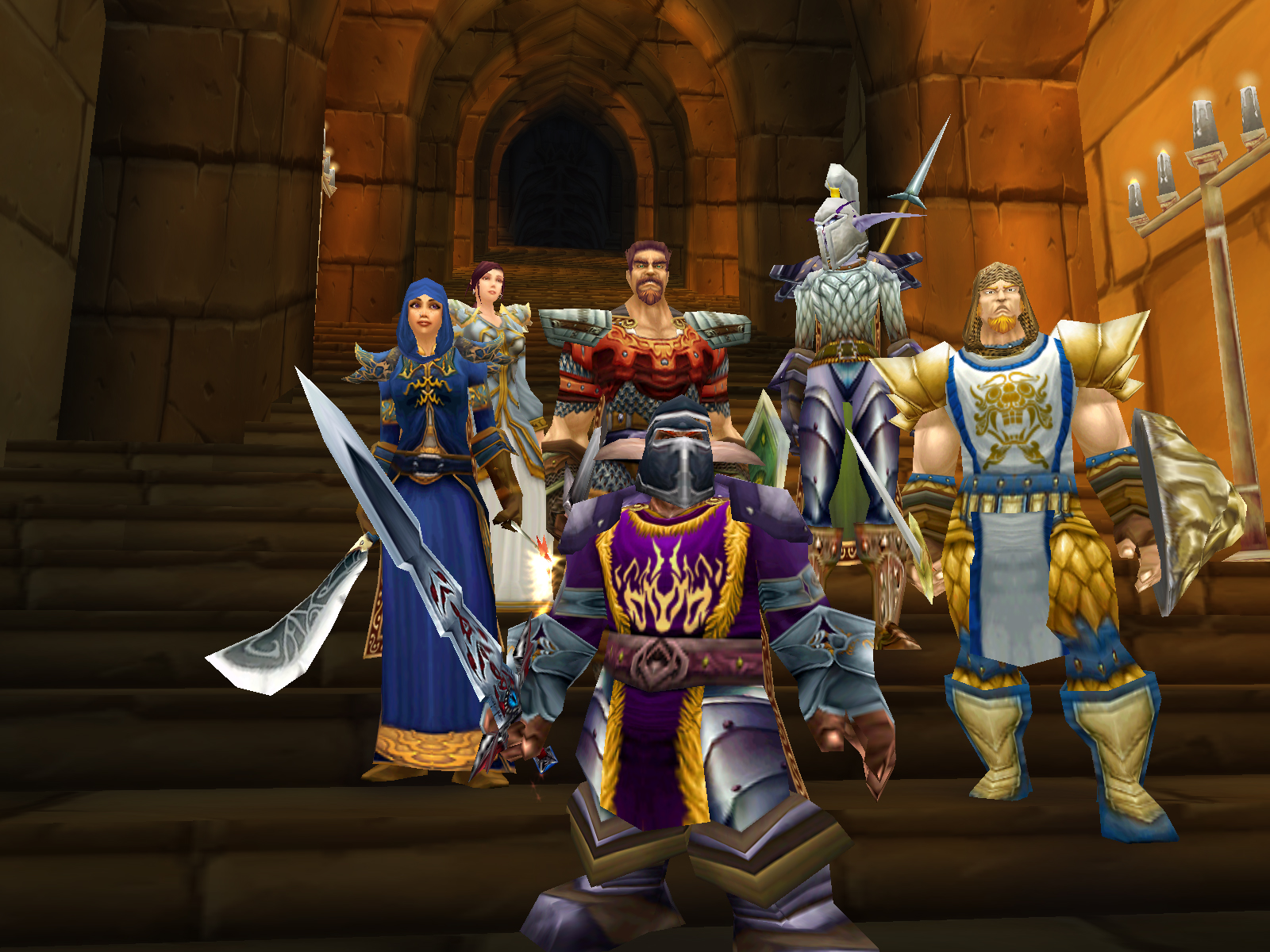 you might notice that i added a sidebar feature that includes a rotating pool of literacy-related videos posted on youtube and videogoogle. i was doing some additional searching for such clips and found the following video.
literacy & world of warcraft (13:10)
(a project assigned by mark warschauer, whose work is well worth checking out, if you haven't done so already)
i suppose we can expect more of this - literacies "homework" online - to come as profs and students explore and blur the lines of what counts as knowledge, work, research, effort... this is of particular interest to me as i venture into these acts of blurring, myself, both in the requirements i design for my classes, as well as in the kinds of academic publishing i'm engaging in (dangling preposition, notwithstanding!).
so i return to this video about world of warcraft (WoW): i learned a lot about the game, rules, and sensibilities of one particular player. much of the 'learning' came from direct dialogue from either the interviewer/video-maker, or the young man being interviewed for a large part of the video. the author also uses captions to add important background information to what is being said, to support the WoW neophyte's comprehension. all of this in service of a question posed at the beginning of the video:
what kinds of social interactions are present in-game? (referring to the inside playing environment of WoW)
but i'm left wondering about the author's stance on, as he claims at the beginning of the video, what "literacies [are necessary] for social interaction to be truly effective?" how is he defining or understanding literacies as existing beyond print - at one point in the video he comments on the literacy opportunities available when typing in-world. the data is there, in his video, but i'm less sure about the analysis. which brings me to a larger question about the representation of analysis in video, audio, and other multimodal and non-print formats...
i find the possibilities are exciting, but they can also be frustrating when the inevitable questions of evaluation and assessment are brought to the surface. we know how to scaffold someone's inclusion of primary and secondary sources when writing literature reviews and other academic papers. but how prepared are we to support our students' as well as our own forays into new academic playgrounds of the fourth kind...?
10.05.2007
on youth, education, race
a recent piece from "talk of the town" in the new yorker that discusses the issues of race and education surrounding what has come to be known as the case of the "jena 6":
disparities
and a couple of editorials by bob herbert of the new york times that resonate with above piece:
the school to prison pipeline
our schools must do better
disparities
and a couple of editorials by bob herbert of the new york times that resonate with above piece:
the school to prison pipeline
our schools must do better
10.03.2007
blog updates and other thoughts
due to all the other writing that's consumed my time, my blog writing has suffered. however, i've been playing around with some of the new add-on features that blogger provides and am especially jazzed about the video searches. i also added a section for announcements related to upcoming conferences and calls for papers that i find out about that look interesting. if you know of others, please pass along.
a note about the previous post - it's a call for proposals for the 2008 nctear conference that will be held in bloomington, indiana. it's one of my favorite conferences - small, generative of good talk and new ideas, and manageable in size and scope. this year's theme is particularly exciting because the combination of strands within the context of the theme - literacy research in communities - offers a chance to bring together the past three years' themes which were, respectively:
2005 - literacies across time, space and place: new directions in literacy research for political action
2006 - literacy as a civil right: reclaiming social justice in literacy research and teaching
2007 - what counts as literacy: living literacies of the body and image
im hoping for papers and presentations that consider literacies representation across new media as/for social justice; and the pedagogical implications of literacies research with adolescents across home/school/community boundaries; and an exploration of how new forms of communication across virtual and physical geographies shapes and informs individuals' sense of community/ies...
that is, for so long, the conversations about new literacies and social justice and critical pedagogy have remained tri-chotomized (if you will allow me the imagery), despite the overlap of these areas of focus in many scholars' work. why can't innovation also address equity and social inclusion? how might a critical perspective on literacy engage social networking spaces and digital communicative modalities? the reality is that these intersections are also readily present in the work and intentions of many young people. they understand that the theory/practice split is a farce. so should we all...
a note about the previous post - it's a call for proposals for the 2008 nctear conference that will be held in bloomington, indiana. it's one of my favorite conferences - small, generative of good talk and new ideas, and manageable in size and scope. this year's theme is particularly exciting because the combination of strands within the context of the theme - literacy research in communities - offers a chance to bring together the past three years' themes which were, respectively:
2005 - literacies across time, space and place: new directions in literacy research for political action
2006 - literacy as a civil right: reclaiming social justice in literacy research and teaching
2007 - what counts as literacy: living literacies of the body and image
im hoping for papers and presentations that consider literacies representation across new media as/for social justice; and the pedagogical implications of literacies research with adolescents across home/school/community boundaries; and an exploration of how new forms of communication across virtual and physical geographies shapes and informs individuals' sense of community/ies...
that is, for so long, the conversations about new literacies and social justice and critical pedagogy have remained tri-chotomized (if you will allow me the imagery), despite the overlap of these areas of focus in many scholars' work. why can't innovation also address equity and social inclusion? how might a critical perspective on literacy engage social networking spaces and digital communicative modalities? the reality is that these intersections are also readily present in the work and intentions of many young people. they understand that the theory/practice split is a farce. so should we all...
10.01.2007
CFP: NCTEAR 2008
Literacy Research in Communities
The Assembly for Research of the National Council of Teachers of English announces a conference on Literacy Research in Communities, to be held February 15-17, 2008 at Indiana University in Bloomington, IN. In this call, we would like researchers and educators to consider what it means to do literacy research in and with communities, both communities that are familiar to the researcher and those that are not. We define communities broadly (i.e., classrooms, virtual communities, schools, neighborhoods, community centers etc.). One goal is to begin a conversation about the various ways that researchers represent and capture the voices of those we study and the challenges and tensions associated with doing so. Questions that guide the conference can be broken down into three related strands: 1) Representation and Relationships; 2) Methodological, Theoretical, and Epistemological Issues; 3) Ethical Dilemmas and Issues.
We invite proposals that address the following issues, topics and questions that will frame our Midwinter Conference for 2008.
Representation and Relationships
Proposals (no more than 2 single-spaced pages) should address the following:
The research question(s), methodology, findings/issues/questions for discussion, and how the research will contribute to the conference conversation. If your paper is a conceptual/theoretical one, please describe your theoretical framework and argument and tell how it will contribute to the conference conversation. Please indicate in the opening lines of the proposal whether you intend to focus on empirical or conceptual/theoretical questions.
Cover Page - Include the following information for all presenters:
- Name(s)
- Affiliation(s)
- Mailing address(es)
- Telephone number(s)
- E-mail address(es)
- Title of presentation
- Indicate whether this is a round table or poster session.
- Audio-visual requests (overheads, TV/VCRs supplied without charge and upon request)
Review Process: Review criteria will include the quality of the proposal and the degree to which it addresses the conference theme.
Submit proposals via email to: LELLC@indiana.edu
Please include “NCTEAR Proposal” as the subject line. Proposals must be received by November 2, 2007.
Address any questions to Conference Co-chairs Stephanie Carter or Gerald Campano to: LELLC@indiana.edu
The Assembly for Research of the National Council of Teachers of English announces a conference on Literacy Research in Communities, to be held February 15-17, 2008 at Indiana University in Bloomington, IN. In this call, we would like researchers and educators to consider what it means to do literacy research in and with communities, both communities that are familiar to the researcher and those that are not. We define communities broadly (i.e., classrooms, virtual communities, schools, neighborhoods, community centers etc.). One goal is to begin a conversation about the various ways that researchers represent and capture the voices of those we study and the challenges and tensions associated with doing so. Questions that guide the conference can be broken down into three related strands: 1) Representation and Relationships; 2) Methodological, Theoretical, and Epistemological Issues; 3) Ethical Dilemmas and Issues.
We invite proposals that address the following issues, topics and questions that will frame our Midwinter Conference for 2008.
Representation and Relationships
- How do researchers and educators engage in doing literacy research in communities, especially those which consist of marginalized or historically underrepresented groups?
- What are the various relationships between researchers /educators and the community members with whom they study and work? What role do these relationships play in the research process?
- How do community members participate in creating scholarship with researchers?
- What role do community members play in the dissemination of this research and scholarship as it is made public to various audiences?
- What methodological and theoretical tools do researchers use to problematize their own assumptions and to ensure that they justly represent the communities in which they study?
- What have researchers/educators learned about the knowledge and experiences of various communities as a result of their literacy research and how has that knowledge impacted their scholarship, the communities in which they study, policy, and the field.
- How do educational researchers/educators define and understand their work with diaspora communities, communities in transition, transnational communities, virtual communities, and undocumented communities?
- How do educational researchers/educators conceptualize “the literacies of communities”?
- How do researchers/ educators value and incorporate the voices and represent the knowledge and experiences of the people in the communities that we work and study?
- To what extent does the scholarship that researchers/educators create help the communities in which we study? Who is the work done for? And for what purposes?
- What are some of the challenges of doing research in communities? What ethical dilemmas do researchers and educators face as they engage in studying the literacy of communities, particularly communities of historically underrepresented groups?
- What ethical responsibilities do researchers and educators have in representing communities and the literacies within them in their scholarship and programming?
Proposals (no more than 2 single-spaced pages) should address the following:
The research question(s), methodology, findings/issues/questions for discussion, and how the research will contribute to the conference conversation. If your paper is a conceptual/theoretical one, please describe your theoretical framework and argument and tell how it will contribute to the conference conversation. Please indicate in the opening lines of the proposal whether you intend to focus on empirical or conceptual/theoretical questions.
Cover Page - Include the following information for all presenters:
- Name(s)
- Affiliation(s)
- Mailing address(es)
- Telephone number(s)
- E-mail address(es)
- Title of presentation
- Indicate whether this is a round table or poster session.
- Audio-visual requests (overheads, TV/VCRs supplied without charge and upon request)
Review Process: Review criteria will include the quality of the proposal and the degree to which it addresses the conference theme.
Submit proposals via email to: LELLC@indiana.edu
Please include “NCTEAR Proposal” as the subject line. Proposals must be received by November 2, 2007.
Address any questions to Conference Co-chairs Stephanie Carter or Gerald Campano to: LELLC@indiana.edu
9.10.2007
on writing...
two more reasons why i enjoy elizabeth gilbert:
(from her website, the section titled "thoughts on writing"):
"The other thing to realize is that all writers think they suck."
"I never promised the universe that I would write brilliantly; I only promised the universe that I would write. So I put my head down and sweated through it, as per my vows."
(from her website, the section titled "thoughts on writing"):
"The other thing to realize is that all writers think they suck."
"I never promised the universe that I would write brilliantly; I only promised the universe that I would write. So I put my head down and sweated through it, as per my vows."
8.22.2007
hope, with strings attached, might not really be hope at all
earlier this summer, i was invited back to the program where i have been a participant observer and teacher for the last two+ years to serve in a different capacity: as a guest speaker in a class about college. it was one of the rare times when i've readily discussed my role as a faculty member while at this organization, but was happy to share what insights i could about my own college experiences and as someone who contributes to admissions decisions at the graduate level. all of the participants in the class had been at the program for at least three months and had either already obtained their high school diplomas or had taken the GED test. most of the young men in the class were awaiting scores.
i went in prepared to engage the group in a discussion about what college meant to them, what role they saw it playing in their lives, and how they envisioned the path to achieving their higher education goals. i should note here, if i haven't done so already, that i am excited about the existence of this class within the context of a program for court-involved youth, for whom educational opportunities are significantly less accessible than they ought to be. (more on that another time)
our conversation humbled me in a way that i didn't expect to be humbled. i used a "college by the numbers" approach to initiating conversation and allowing time for their questions. on a large chart paper i wrote down prompts like, "age you entered school," "# of years you've spent attending formal education," "# of mentors you've had," etc. my goal was to point out the vast range of experiences each participant undoubtedly has already had that he might build upon when moving forward; i wanted them to see that they weren't starting at zero; they had/have a wealth of experiences to draw on when writing entrance essays, going on interviews, making plans for the future. as the program notes, they (and i) strove to create experiences of success while participants were enrolled in classes here. we moved through these exercises together and then the conversation took a turn. i asked them to consider the questions: "what kind of life do i want to lead? what will get me there?"
what resulted was a conversation laden with angst:
-how can i pursue my education when i keep getting stopped for just walking in my neighborhood?
- i can't just leave my family; my friends; my life
- i want freedom. how will going to college help me with that? how can i have freedom when everyone and everything around me won't let me have it?
- in here isn't the same as out there
- the people around me, the neverending police searches - they'll lead me straight to prison
- i want to lead a life that's free; a life of freedom.
i went in prepared to engage the group in a discussion about what college meant to them, what role they saw it playing in their lives, and how they envisioned the path to achieving their higher education goals. i should note here, if i haven't done so already, that i am excited about the existence of this class within the context of a program for court-involved youth, for whom educational opportunities are significantly less accessible than they ought to be. (more on that another time)
our conversation humbled me in a way that i didn't expect to be humbled. i used a "college by the numbers" approach to initiating conversation and allowing time for their questions. on a large chart paper i wrote down prompts like, "age you entered school," "# of years you've spent attending formal education," "# of mentors you've had," etc. my goal was to point out the vast range of experiences each participant undoubtedly has already had that he might build upon when moving forward; i wanted them to see that they weren't starting at zero; they had/have a wealth of experiences to draw on when writing entrance essays, going on interviews, making plans for the future. as the program notes, they (and i) strove to create experiences of success while participants were enrolled in classes here. we moved through these exercises together and then the conversation took a turn. i asked them to consider the questions: "what kind of life do i want to lead? what will get me there?"
what resulted was a conversation laden with angst:
-how can i pursue my education when i keep getting stopped for just walking in my neighborhood?
- i can't just leave my family; my friends; my life
- i want freedom. how will going to college help me with that? how can i have freedom when everyone and everything around me won't let me have it?
- in here isn't the same as out there
- the people around me, the neverending police searches - they'll lead me straight to prison
- i want to lead a life that's free; a life of freedom.
7.16.2007
can literacies be digital?
"digital literacy" is a phrase that has been cropping up everywhere i read and look recently. the use of literacy, to indicate the ability to navigate a particular discursive realm - in this case, the "digital" realm(s) - has always left me feeling a bit uncomfortable. particularly for those of us who conceptualize and actively engage a concept of literacy as social practice. i "get" literacy in a digital age. i can wrap my head around our evolving digital communicative landscape. but what are we really saying when we talk about literacy that is inherently digital - as implied by the phrase "digital literacy"? when we talk about the digital literacies of adolescents, are we really referring to the literacies that we observe in the daily lives of young people who are living and interacting with an increasingly digitized world? and if so, is that the same thing as "digital literacies"?
perhaps i'm getting bogged down with semantics and possibly missing the entire point...
perhaps...
or perhaps we dilute or oversimplify the phenomenon when we gloss over a complicated and diverse emerging landscape of literacy and communicative practices when we simply say digital.
and perhaps it's just a code for like minded "digital literacy" folks to give a silent nod to one another. if the literacy research world were configured like a series of gangs - instead of camps, as we politely note in mixed company - might "DL" be our insignia, our secret handshake, a way of weeding out and letting in...
couldn't the same be said for other adjectives we use to mark and demarcate areas of literacy studies? absolutely. for some reason, this has stuck with me recently b/c i, myself, use the phrase and went off on quite a tangent while writing an explanatory section on this notion for a paper i'm writing. naturally, i wanted to share my confused musings and solicit any and all guidance. we seem to be on a precipice... but, of what??
perhaps i'm getting bogged down with semantics and possibly missing the entire point...
perhaps...
or perhaps we dilute or oversimplify the phenomenon when we gloss over a complicated and diverse emerging landscape of literacy and communicative practices when we simply say digital.
and perhaps it's just a code for like minded "digital literacy" folks to give a silent nod to one another. if the literacy research world were configured like a series of gangs - instead of camps, as we politely note in mixed company - might "DL" be our insignia, our secret handshake, a way of weeding out and letting in...
couldn't the same be said for other adjectives we use to mark and demarcate areas of literacy studies? absolutely. for some reason, this has stuck with me recently b/c i, myself, use the phrase and went off on quite a tangent while writing an explanatory section on this notion for a paper i'm writing. naturally, i wanted to share my confused musings and solicit any and all guidance. we seem to be on a precipice... but, of what??
7.15.2007
hope for the middle?
headlines from july 5th:
Baby survives being buried alive
Shunned from society, widows flock to city to die
despite having a history of strong female leaders, indian institutions and customs continue to devalue the lives of female children and women. given these historical and institutional frames, and regardless of a burgeoning middle class and new opportunities for young women, what hope is there for adolescent girls and young women in the middle of the life cycle? having read my sister's recent posts from her time in india - she's interviewing women in rural india about their lives and about their views and interest in education, job training, etc. - it's difficult to the gap between (historical/cultural) conventions and (contemporary/human) agency narrowing.
Baby survives being buried alive
Shunned from society, widows flock to city to die
despite having a history of strong female leaders, indian institutions and customs continue to devalue the lives of female children and women. given these historical and institutional frames, and regardless of a burgeoning middle class and new opportunities for young women, what hope is there for adolescent girls and young women in the middle of the life cycle? having read my sister's recent posts from her time in india - she's interviewing women in rural india about their lives and about their views and interest in education, job training, etc. - it's difficult to the gap between (historical/cultural) conventions and (contemporary/human) agency narrowing.
7.04.2007
summer sights and sounds
a couple of weeks ago, we officially entered the summer season. if the heat doesn't give it away, the throngs of kids out and about in the middle of the day surely should. i have to curb my impulse to ask them why they aren't in school - not that i do that during the traditional school year, but the impulse is there. so what are kids in my neighborhood up to whilst i sit and type, type, type away?
- they walk in groups and eat pizza
- share music by splitting headphone feeds from one ipod
- flirt
- ride bikes
- shop, purchase, preen
- laugh, giggle, and more laughing
kids laugh. teens laugh. scream with laughter. giggle, chuckle, hoot, holler, chortle...
several years ago, while on a train from paris to visit the chartres cathedral, i had a thought that was brought on by the sounds being made by teenagers at the other end of the train car: what do youth sound like?
more recently, as i've been working hard to conceptualize, operationalize, and put down on paper and image the notion of engaging youths' voices, i find myself thinking a lot about that train ride and asking myself the following related questions:
- they walk in groups and eat pizza
- share music by splitting headphone feeds from one ipod
- flirt
- ride bikes
- shop, purchase, preen
- laugh, giggle, and more laughing
kids laugh. teens laugh. scream with laughter. giggle, chuckle, hoot, holler, chortle...
several years ago, while on a train from paris to visit the chartres cathedral, i had a thought that was brought on by the sounds being made by teenagers at the other end of the train car: what do youth sound like?
more recently, as i've been working hard to conceptualize, operationalize, and put down on paper and image the notion of engaging youths' voices, i find myself thinking a lot about that train ride and asking myself the following related questions:
- what does youth voice look like?
- what does it mean to listen to young people? to see them, and not just look at them?
- what does youth engagement in research look like? feel like? what does it compromise? what does it engender?
- how do researchers and educators create spaces for youth to voice themselves? pay attention to the spaces they are already voicing? engage in collective voicing with youth?
- which voices - words, pitches, timbres, accents - are sought? heard? included?
6.30.2007
lines

this week, there's been a lot of hype about people, lines, and the iphone and all manner of news has been peppered with images that look like this one - an AP wire photo had the following caption on cnn.com:
Martin Perez, left, and Erika Puquirre, right, are at the head of a line in front of an Apple Store in Santa Monica, Calif.
here are some other human lines...

to the right is a photograph of people waiting to vote in Sierra Leone

to the left is one that depicts people waiting in line for coal in Amsterdam in 1956

the soup kitchen line during the great depression

waiting for a wiggles concert at disney land, in california
malawians waiting in line for food rations

6.17.2007
hot dog fingers and learning to question
when adults today are skeptical of adolescents' ability to "learn from tv," i can't help but think back to my own experiences as a gawky adolescent who learned with and from the characters, plots, dilemmas, and dialogue on tv. perhaps that's exactly what the fear is about. of course i relished the evenings spent watching hunter and murder she wrote with my grandmother, and was confounded by my immigrant parents' disdain for the precociousness of the cosby kids and the offspring of elyse and steve keaton on family ties. but i most remember the lessons i learned while watching afternoon tv programming, lying on the carpet in the front of the glowing box. i was reminded of one particular lesson this past week when i read the numerous eulogizing accounts of don herbert, the mr. wizard of mr. wizard's world.
picture this: mr. wizard wearing goggles the overtook the top half of his nearly-completely-bald head, dressed in trademark collared shirt under a v-neck sweater, and wearing thick rubber gloves. in front of him a large bucket with smoke emerging from the top.
the lesson: direct contact with liquid nitrogen can cause frostbite and potential amputation of affected body part.
the demonstration: mr. wizard holds up a hot dog and asks us, his viewers, to imagine that the hot dog is a human finger. (we do) mr. wizard gingerly picks up the naked frank with long metal tongs and drops it into the bucket of liquid nitrogen. after several seconds (maybe 10? 15? 30? the details are a bit fuzzy - it was over twenty years ago...) mr. wizard retrieves the hot dog with the tongs. he reminds us that the hot dog is meant to simulate a human finger. (we remember) with his goggles still on he taps the dog on the edge of the counter top (or with a hammer or some other tool - again, time has passed...) and the hot dog shatters in two. (not sure if something can shatter in two, but that's what i see in my mind's eye).
the impact: i have never gone near liquid nitrogen without taking the proper precautionary measures.
but beyond that, thanks to the optimistic hokeyness of this show (and other shows that i watched in secret), i can't go very long without asking why or how. that's tv worth watching.
picture this: mr. wizard wearing goggles the overtook the top half of his nearly-completely-bald head, dressed in trademark collared shirt under a v-neck sweater, and wearing thick rubber gloves. in front of him a large bucket with smoke emerging from the top.
the lesson: direct contact with liquid nitrogen can cause frostbite and potential amputation of affected body part.
the demonstration: mr. wizard holds up a hot dog and asks us, his viewers, to imagine that the hot dog is a human finger. (we do) mr. wizard gingerly picks up the naked frank with long metal tongs and drops it into the bucket of liquid nitrogen. after several seconds (maybe 10? 15? 30? the details are a bit fuzzy - it was over twenty years ago...) mr. wizard retrieves the hot dog with the tongs. he reminds us that the hot dog is meant to simulate a human finger. (we remember) with his goggles still on he taps the dog on the edge of the counter top (or with a hammer or some other tool - again, time has passed...) and the hot dog shatters in two. (not sure if something can shatter in two, but that's what i see in my mind's eye).
the impact: i have never gone near liquid nitrogen without taking the proper precautionary measures.
but beyond that, thanks to the optimistic hokeyness of this show (and other shows that i watched in secret), i can't go very long without asking why or how. that's tv worth watching.
6.13.2007
5.31.2007
it's baaack....

that's right - the 7th annual media that matters film festival is now online. they put it best:
"An image captures a feeling, a story shares a message, a movie becomes a movement. Media That Matters brings you 16 inspiring shorts by filmmakers committed to changing the world."
check it out!
5.23.2007
unity (through) hope (might equal) peace


i took these photos outside of truce, a youth development and media organization located in harlem and part of the harlem children's zone. they have an excellent public arts project going on right now and are developing a garden and several more of these fence messages. the others read:
build love
build power
build hope
[build unity]
build peace
the message is hopeful, thoughtful, and curious. which comes first? i've listed the phrases as they appeared from left to right on the fences on either side of the truce building. i'm eager to see the project and the messages unfold, particularly as they are youth directed and youth produced. more pics to follow.
(note: my camera and the sunlight were not too sympatico on this particular afternoon, so i'm aiming to shoot the fences again.)
5.01.2007
it's a bird, it's a plane...
 it's another piece of digital technology banned from schools!
what?
the ipod (and other digital media players)
why?
b/c it has the potential to be an instrument of cheating.
seriously?
seriously.
at least seriously according to the principal at mountain view high school in idaho. the article also notes:
"The practice is not limited to the United States: St. Mary's College, a high school in Sault Ste. Marie, Ontario, Canada, banned cell phones and digital medial players this year, while the University of Tasmania in Australia prohibits iPods, electronic dictionaries, CD players and spell-checking devices."
wouldn't it be lovely if we could be ahead of the curve on this one and think creatively about what assessment means in an age of instantaneous information acquisition and dissemination? at a dissertation hearing this morning, a committee member posed the question of assessment this way:
how can we assess what kids are doing (and learning) in this digital age?
to that i would add the following:
what are we assessing? and what does it mean to assess?
who is assessing what?
what do tests and other measures actually test and measure?
who is being evaluated when a student's performance on an instrument is measured?
codes are published for quicker advancement through levels of video games. we learn shortcuts for making simple things simpler. you can buy precut, pre-marinated, pre-cooked vegetables at the super market and live a completely heat-n-eat lifestyle. we live in an age of the spanx revolution, SAT tutoring franchises, and professional editors. where do we draw the cheating line? and who draws it? i'm not wholly anti-test or timed assessments. they're clearly helpful for olympic training and i was certainly the beneficiary of numerous 1st place "wins" on timed multiplication tables (the external motivation that always worked on me was the promise of leaving the classroom with a library pass or a resource room getaway - that made cramming for fierce competition with my fellow 3rd graders seem like a small price to pay). still, i wonder whether we sacrifice real meaning making and engagement with texts for the sake of time and curriculum coverage. at the dissertation hearing today, the issue of "real deadlines" in the "real world" came up, and naturally we all agreed that sometimes all of us must negotiate multiple timelines - and timescales - in our everyday lives. but are multiple choice tests or other "easily cheatable" tests the answer? the *only* answer?
and is it just coincidence that if we switch the 't' and the 'ch' teaching becomes cheating, and vice versa?
4.30.2007
tech culture and cultural techs
an article in cnn.com's technology section caught my eye this morning:
Social-networking sites link Hispanic youth (posted 4.27.07)
in brief, the article explores the growth of social networking sites aimed at a spanish speaking, self-identified as latin and/or hispanic audience such as elhood.com and vostu. according to the article, "ElHood is sort of a bilingual MySpace promoting the latest in Latin music, and for Miami-based [Indie rocker Eric] Monterrosa, it has become a personal and professional lifeline. It is also the latest in a wave of Hispanic social-networking sites building links across the U.S., Latin America and Spain, all hoping to capture coveted advertising dollars."
other excerpts from the article that have me thinking and wondering about the intersections (and working definitions) of technology, culture, and youth:
Social-networking sites link Hispanic youth (posted 4.27.07)
in brief, the article explores the growth of social networking sites aimed at a spanish speaking, self-identified as latin and/or hispanic audience such as elhood.com and vostu. according to the article, "ElHood is sort of a bilingual MySpace promoting the latest in Latin music, and for Miami-based [Indie rocker Eric] Monterrosa, it has become a personal and professional lifeline. It is also the latest in a wave of Hispanic social-networking sites building links across the U.S., Latin America and Spain, all hoping to capture coveted advertising dollars."
other excerpts from the article that have me thinking and wondering about the intersections (and working definitions) of technology, culture, and youth:
- "About 56 percent of Hispanics in the United States use the Internet, compared with 71 percent of non-Hispanic whites and 60 percent of non-Hispanic blacks, according to the Pew Internet and American Life Project. But the number of Hispanics online jumps to 67 percent among 18- to 27-year-olds -- the group most likely to visit social-networking sites and one coveted by advertisers."
- Another site, Vostu.com, presents itself as an alternative to Facebook.com, where students post profiles of themselves visible to a mini-network of their college or high school classmates. ... Dan Kafie, the 24-year-old Honduran native who co-founded Vostu, believes his site can compete with the larger ones because it's specially tailored to the needs of a relatively small but affluent group. ... "There's similar types of sites, but they don't capture the cultural subtleties," Kafie said. "We thought there's an opportunity."
- But are technology, culture and language enough to draw people away from MySpace, Facebook or Google Inc.'s YouTube?
- "More young people come to this country and don't have a family," Monterrosa said. "They are here to strive or to study and they need contacts. They don't have money to go to shows or clubs, but they can reach out to people who also like the same things," he said. As for those in Latin America, they can connect with music and youth scenes that are difficult to find outside the big cities.
- "The youth, they want it to be fast. They want it to be hip, and they want to see themselves in it -- but not just themselves,"
4.27.2007
fictive kinship
 when the identity of the shooter in the virginia tech killings was revealed, a couple of the young men who are enrolled in a digital media class i co-teach made the following statements:
"i'm glad he wasn't black."
"the new york times probably wouldn't have printed it if he had been, anyway."
both young men are african american and had just made claims about the ny times being a newspaper for white people, unlike the daily news, which, in their opinion, had stories that mattered to them: "to black people."
elaine richardson, during a colloquium delivered at teacher's college this week, spoke of fictive kinship when responding to a question about her talk, in which she explored african american young women's engagement with hip hop lyrics and video imagery. she noted that despite diverse opinions that may exist within a minority or marginalized group of people, there tends to be, in some of those communities, a sense of wanting to protect someone who looks like you from those who don't look like you; similarly, when someone who looks like you does something you wish they didn't, you feel the pain on behalf of everyone who looks like you. thus, the young women that richardson talked about expressed critique in response to the images represented nelly's "tip drill" song and video, while at the same time finding messages of empowerment and accommodating this text.
the limits of my own fictive kinship were tested this past week when the country in which i was born and where many of my relatives still live made me cringe with a mix of embarrassment and frustration. should people be displaying awkward public affection in the manner that richard gere performed on stage at a fundraiser last week? probably not - i say this not for reasons of "morality," but rather because the whole mess looked more like a poorly choreographed sequence from dancing with the stars than a playful "star"-to-"star" kiss on the order of brody-on-berry at the '03 oscars.

these are moments of self-definition borne out of public performances in which ethnicity and race take center stage. as an adolescent, i don't recall feeling excluded from the literature i was reading or the television i was watching - a claim i sometimes i take up in my classes in response to how young people engage with such texts. however, i was keenly aware of when "people who looked like me" did something that mortified and disappointed me:
- watching the funeral of indira gandhi and knowing that she was gunned down by her own bodyguards
- watching earth, a film by deepa mehta
- reading the karma of brown folk, by vijay prashad
...
recently in class we listened to a youth radio podcast by ayesha walker, a young woman reflecting on the v-tech shootings. the last lines of her piece are as follows:
"Here, our tragedy is so embedded in the city that it doesn't make the headlines. It's just what we're known for."
is there room to change what "we" are known for? and what informs the ways in which young people make sense of themselves? what leaves lasting impressions? and which are the moments, words, images, and interactions that last a lifetime?
4.22.2007
online findings and sitings
check out this series of very excellent interactive multimedia stories: inanimate alice
(thanks for the link, angela!)

the birth of wiki-man - see also other words-to-music by verytasteful.com
also, my favorite wiki hosting service, pbwiki, is now ad-free for educational wikis!!

(thanks for the link, angela!)
the birth of wiki-man - see also other words-to-music by verytasteful.com
also, my favorite wiki hosting service, pbwiki, is now ad-free for educational wikis!!
4.07.2007
arresting developments
a few weeks ago, a 7 year old boy was arrested for being in possession of a banned dirt bike - it was motorized and that's not allowed in baltimore, where the boy lives.
it's bad enough (horrific, actually) that we're suspending kids as young as 4 for "improper touching" - remember the hug-gone-bad story? - but can't we (and by we, i mean law enforcement, lawmakers, adults in positions of power) find ways other than physical and verbal intimidation to communicate with elementary school age children?
in the spirit of multiple perspectives and sources, i leave you to read the following re: the bike story and ask you to think about what is being educated to the young boy at the center of it all:
Arrest of 7-Year-Old Draws Condemnation
HANDCUFFS, TOO: Baltimore police arrest 7-year-old bike rider
Groups clash over child’s arrest
it's bad enough (horrific, actually) that we're suspending kids as young as 4 for "improper touching" - remember the hug-gone-bad story? - but can't we (and by we, i mean law enforcement, lawmakers, adults in positions of power) find ways other than physical and verbal intimidation to communicate with elementary school age children?
in the spirit of multiple perspectives and sources, i leave you to read the following re: the bike story and ask you to think about what is being educated to the young boy at the center of it all:
Arrest of 7-Year-Old Draws Condemnation
HANDCUFFS, TOO: Baltimore police arrest 7-year-old bike rider
Groups clash over child’s arrest
4.05.2007
with words like this, who can sleep?

Where the FUCK did you learn to drive? Jerkoff!
Words spoken by a baseball cap wearing, ruddy complexioned, Bluetooth headsetted driver of a navy blue SUV to my turbaned cab driver in response to the bopping and weaving the cabbie was guilty of as he tried to jot down a phone number of a car for sale while driving at high speeds down the West Side Highway, all the while as I clutched the Mac I was transporting for use in our digital media class.
You’ll never have to lift anything heavy with all these men around in here.
Words spoken by a female staff member at the alternative to incarceration program where I conduct fieldwork and occasionally teach classes as I walked in with my arms full of the cardboard box containing the Mac I had risked my life for just a few minutes earlier.
It’s not me, but it’s me, you know? You'll see...
Words spoken by a graduate of the above noted program after giving me his Myspace url.
JESUS is my boss
Words embroidered into the navy blue cap worn by a man who looked at me strangely as I was recording field notes into my digital voice recorder as I headed home from fieldwork on the subway.
4.04.2007
adding to my list of favorite blogs...

drop that knowledge - authored by youth radio's education director and senior producer lissa soep. if you haven't already done so, check out the youth radio website, subscribe to their podcasts, and visit dtk frequently to engage in conversation with an emerging leader in youth media discourse and dialogue.
Subscribe to:
Posts (Atom)